Kibale National Park / Kibale Forest
Kibale National Park / Kibale Forest
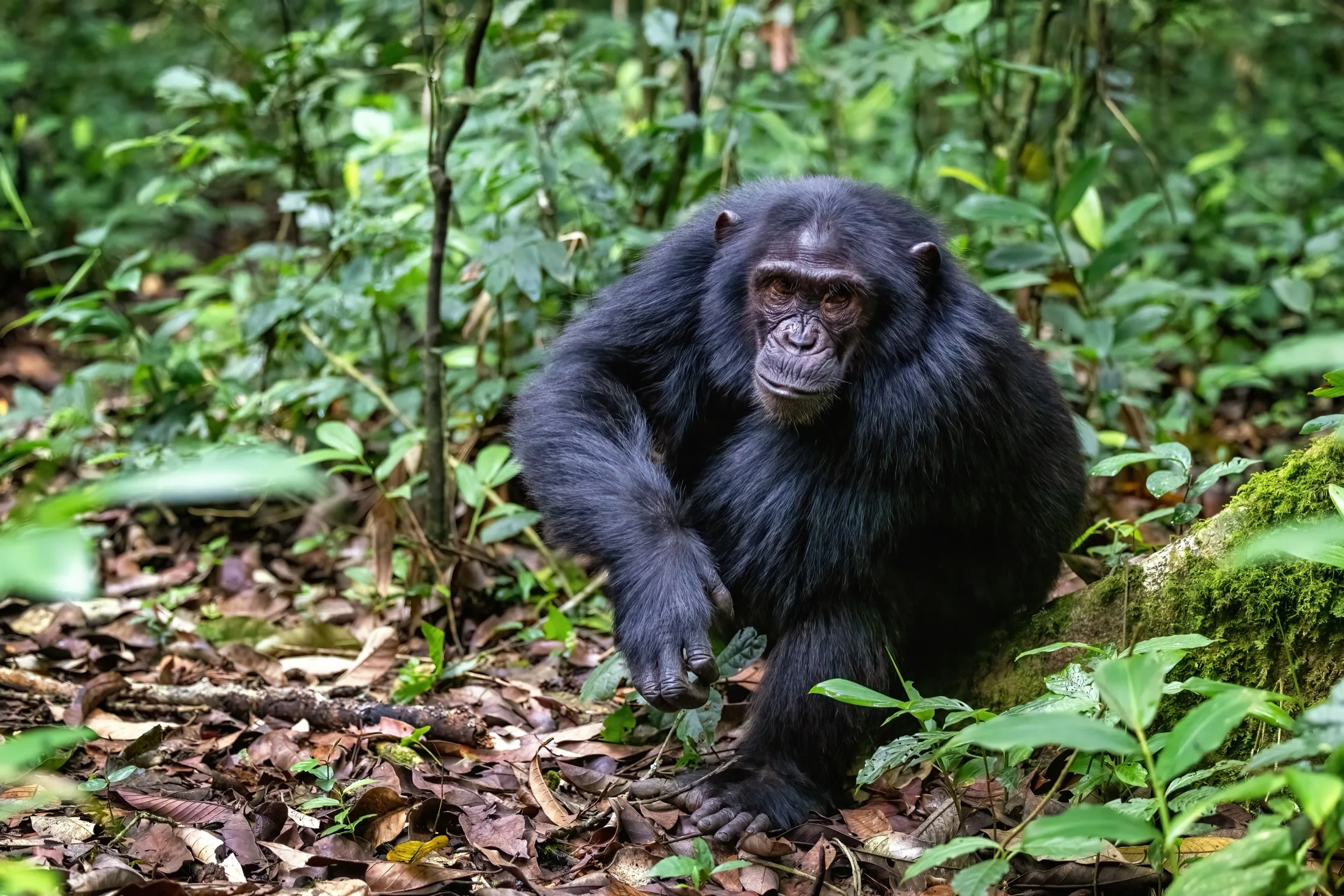
Kibale National Park holds the highest density of primates in Africa, a tract of moist tropical forest in western Uganda where thirteen primate species live alongside the continent's most reliably tracked chimpanzees. It is strongest for travelers who want a chimpanzee encounter to pair with gorillas further south.
Where to find the wildlife
Kibale's chimpanzee communities around the main trailhead have been studied and habituated for decades, which is why the trek here works so well: the animals are used to people, researchers know roughly where each community is, and finding them is a matter of walking rather than luck.
The Kanyanchu area is where standard tracking happens, with treks departing at fixed times through the day. Groups walk with ranger guides for anywhere from under an hour to several, and the success rate is high — well above ninety per cent on most reports. Once you find them you have one hour, usually with chimps feeding overhead, moving on the ground and calling in the pant-hoot chorus that carries through the forest.
The habituation experience is the deeper option: a full day with a community still being accustomed to humans, joining researchers from before dawn when the chimps leave their night nests until they build new ones. It is harder, longer and more expensive, and it shows you the process rather than the product.
The forest generally holds the other twelve primates — red colobus, black-and-white colobus, grey-cheeked mangabey, L'Hoest's monkey and more — along with an excellent bird list including green-breasted pitta, a species birders travel specifically for.
The Bigodi Wetland Sanctuary next door is a community-run project with a boardwalk through papyrus swamp, excellent for primates, birds and a very different habitat. It is one of the better community tourism schemes in Uganda.
Permits and practicalities
A standard chimpanzee permit costs 250 US dollars for foreign non-residents and buys one hour with the chimps; the habituation experience costs 300 dollars for a full day. Uganda also runs reduced low-season rates in April, May and November. Book six to eight weeks ahead for the peak months.
Kibale sits on the western Uganda circuit between Queen Elizabeth and Fort Portal, and combines naturally with Bwindi. Forest walking is muddy and hot; long trousers, proper boots and a mask when close to the chimps are all sensible — they share our diseases.
Gallery
Wildlife Species
Chimpanzees with habituated tracking groups
UncommonMammal · Best time: Year-round, especially drier trekking periods
Red colobus, L''Hoest''s monkey, black-and-white colobus, and other primates
CommonMammal · Best time: Morning forest walks
Forest birds including Albertine Rift specialties and greenbuls, pittas, and hornbills
UncommonBird · Best time: Early morning with specialist birding effort
Forest elephants, duikers, and shy rainforest mammals
RareMammal · Best time: Occasional and luck-dependent
Geography
- Terrain
- Tropical rainforest, swamp forest, woodland edge, crater-lake surroundings, primate trekking trails
- Elevation
- About 1100-1600m
- Climate
- Humid tropical forest climate
- Area
- About 795 km2 national park
Weather
- Best Months
- DecemberJanuaryFebruaryJuneJulyAugustSeptember
- Avg. Temperature
- 12-30°C
- Rainfall
- Drier months are easier for trekking, though chimp tracking operates year-round and forest birding can be rewarding in wetter periods too
- Humidity
- 55-100%
Getting There
Entebbe with overland transfer via Fort Portal or domestic flights into western Uganda before road transfer
Quite workable as part of a western Uganda circuit, but longer road travel, health burden, limited evacuation depth outside main cities, and Uganda''s current advisory level all pull the safety picture down
- Chimpanzee tracking permit trip
- Chimp habituation experience
- Combined Kibale, Queen Elizabeth, and Bwindi itinerary
(Affiliate link — we may earn a commission.)
Tours & Experiences
Local guides substantially improve Chimpanzees with habituated tracking groups sighting odds — compare independent operators and dates for Kibale National Park / Kibale Forest below.
(Affiliate links — we may earn a commission.)
Where to Stay
Forest lodges and safari camps near Kanyanchu and crater-lake sectors
Mid-range to PremiumLodge or Camp · Best practical base for chimp tracking and forest excursions
Check availability on Booking.com →Fort Portal hotels and guesthouses
Budget to Mid-rangeHotel or Guesthouse · Good regional base with longer daily transfers
Check availability on Booking.com →(Affiliate links — we may earn a commission.)