Bialowieza Forest
Bialowieza Forest
Białowieża Forest is the last large fragment of the primeval lowland forest that once covered the European plain, straddling the Polish-Belarusian border and holding the continent's largest free-living population of European bison. It is strongest for travelers who want genuinely old-growth forest and Europe's most impressive mammal.
Where to find the wildlife
What makes Białowieża extraordinary is not a species list but a structure: multi-layered old-growth with enormous fallen trunks left to decay, supporting fungi, beetles and woodpeckers that have disappeared from managed forests. The wildlife is genuinely wild and mostly nocturnal, so seeing mammals takes early starts and patience.
The Strict Reserve of the Polish national park is the core — the piece that has never been logged. Entry is only permitted with a licensed guide, on a walk of a few hours, and it is the reason to come: 40-metre spruces, oaks centuries old, and deadwood everywhere.
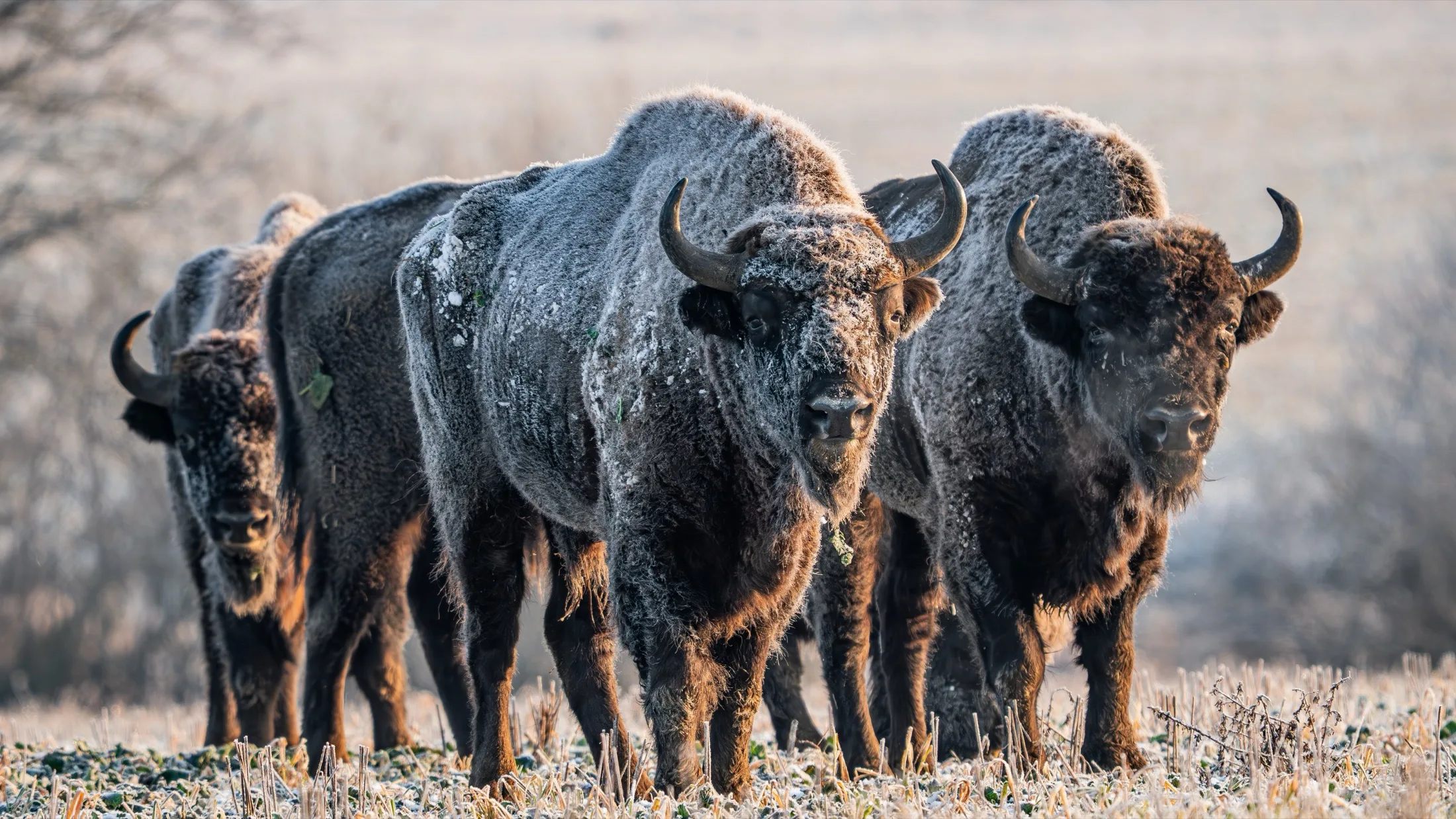
The forest edges and meadows at dawn are where bison are most often seen, particularly in the Białowieża glade and along the roads through the surrounding forest in winter when they come out to feed. The bison here are free-living descendants of animals reintroduced after the species went extinct in the wild.
The reserve's woodpecker sites are a serious birding draw: white-backed and three-toed woodpeckers, pygmy owl, hazel grouse and collared flycatcher, all specialists of old forest.
The European Bison Show Reserve near the village holds bison, wolves, lynx and tarpan-type horses in large enclosures — a fallback rather than a wild encounter, but useful for seeing animals you will probably not find in the forest.
Winter is the best season for mammals: bison are easier to find, tracks show in snow, and the forest is quiet. Spring brings woodpeckers drumming and migrants.
Practicalities
Białowieża village is around four hours by road from Warsaw. Local guides are compulsory for the Strict Reserve and worth hiring for the wider forest — several are outstanding naturalists.
The forest sits directly on the EU's eastern border, and a border barrier constructed in recent years cuts through the ecosystem, with real consequences for the movement of bison, wolves and lynx. Access to some areas near the border has been restricted at times. Check the current position before travelling.
Gallery
Wildlife Species
European Bison
CommonMammal · Best time: Early Morning
Gray Wolf
RareMammal · Best time: Dawn or Dusk
Eurasian Lynx
Very RareMammal · Best time: Dawn or Dusk
White-backed Woodpecker
UncommonBird · Best time: Morning
Geography
- Terrain
- Ancient lowland forest, meadows, river valleys, wet woodland
- Elevation
- 135-200m
- Climate
- Cool continental forest
- Area
- Large transboundary primeval forest
Weather
- Best Months
- MayJuneSeptemberOctober
- Avg. Temperature
- -8 to 25°C
- Rainfall
- Moderate
- Humidity
- 55-90%
Getting There
Warsaw Airport
Long road transfer to Bialowieza village
- Drive from Warsaw or Bialystok
- Local forest guiding
- Early morning mammal drives and walks
(Affiliate link — we may earn a commission.)
Tours & Experiences
Local guides substantially improve Gray Wolf sighting odds — compare independent operators and dates for Bialowieza Forest below.
(Affiliate links — we may earn a commission.)
Where to Stay
Guesthouses in Bialowieza village
Budget to Mid-rangeGuesthouse · Near forest entry points
Check availability on Booking.com →Forest hotels and manor stays nearby
Mid-rangeHotel · Short drive to guiding zones
Check availability on Booking.com →(Affiliate links — we may earn a commission.)