Olympic National Park
Olympic National Park
Olympic National Park protects an entire peninsula in Washington State, containing temperate rainforest, glaciated peaks, and a wild Pacific coastline within a single boundary. It is strongest for travelers who want three distinct ecosystems, endemic mammals, and some of the largest trees on Earth.
Where to find the wildlife
Olympic is really three parks that share a name, separated by mountains and connected only by a highway looping the whole peninsula. Driving between them takes hours, so the practical approach is to treat each as its own destination rather than trying to see everything from one base.
The Hoh and Quinault rainforests on the western side are the temperate rainforest — moss-draped Sitka spruce and western hemlock under three metres of annual rain. Roosevelt elk, the largest elk subspecies and the animal the park was originally created to protect, browse the river flats; the Hoh River trail at dawn is the reliable place to find them.
Hurricane Ridge, high above Port Angeles, is the alpine zone. Black-tailed deer graze the meadows unbothered, Olympic marmots — found on this peninsula and nowhere else on Earth — whistle from the rocks, and the summer wildflowers are exceptional.
The Pacific coast strip at Rialto, Ruby and Second Beach is where sea otters raft offshore, bald eagles perch on the sea stacks, and tide pools hold anemones, ochre stars and urchins. Time low tide and the pools become the main event.
The rivers throughout hold returning salmon in autumn, with the Elwha now recovering after the largest dam removal in United States history — salmon are returning to a river that was blocked for a century.
Summer, roughly June to September, is the driest and most accessible. Autumn brings the elk rut and salmon runs; winter closes the high roads and brings serious rain to the rainforest, which is arguably when it is at its best.
Practicalities
The park is a few hours from Seattle including a ferry. Hurricane Ridge road closes in winter and can shut in storms; check status before driving up.
Wilderness permits and bear canisters are required for backcountry camping, and coastal hiking must be planned around tide tables — headlands become impassable at high water and people are cut off every year.
Gallery
Wildlife Species
Roosevelt Elk
CommonMammal · Best time: Morning or Evening
Sea Otter
UncommonMammal · Best time: Calm Marine Conditions
Bald Eagle
CommonBird · Best time: All Day
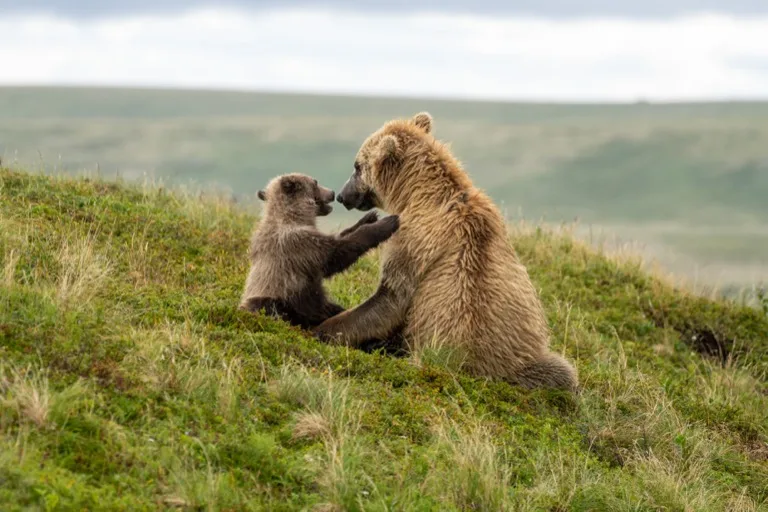
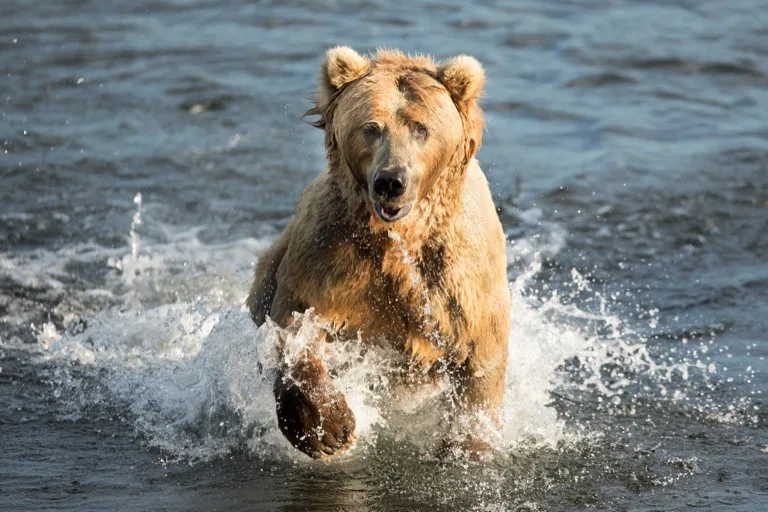
Black Bear
UncommonMammal · Best time: Summer and Early Autumn
Geography
- Terrain
- Temperate rainforest, rugged Pacific coast, alpine mountains, rivers, lakes
- Elevation
- Sea level to 2428m
- Climate
- Cool maritime to alpine
- Area
- About 3700 km2
Weather
- Best Months
- MayJuneJulyAugustSeptember
- Avg. Temperature
- -5-24°C
- Rainfall
- Very high in rainforest zones, lower in the summer season
- Humidity
- 60-100%
Getting There
Seattle or regional airports followed by ferry or long road loops around the peninsula
Moderately long drives are typical because the park is spread across multiple sectors
- Self-drive between coast, forest, and mountain zones
- Wildlife viewing from beaches, valleys, and tidepools
- Boat trips in nearby marine areas for additional species
(Affiliate link — we may earn a commission.)
Tours & Experiences
Local guides substantially improve Sea Otter sighting odds — compare independent operators and dates for Olympic National Park below.
(Affiliate links — we may earn a commission.)
Where to Stay
Lodges around Lake Crescent, Kalaloch, and nearby gateway towns
Mid-range to PremiumLodge · Spread across major park sectors
Check availability on Booking.com →Campgrounds and cabins on the peninsula
Budget to Mid-rangeCamp · Close to trailheads, beaches, and forest valleys
Check availability on Booking.com →(Affiliate links — we may earn a commission.)