Azores
Azores
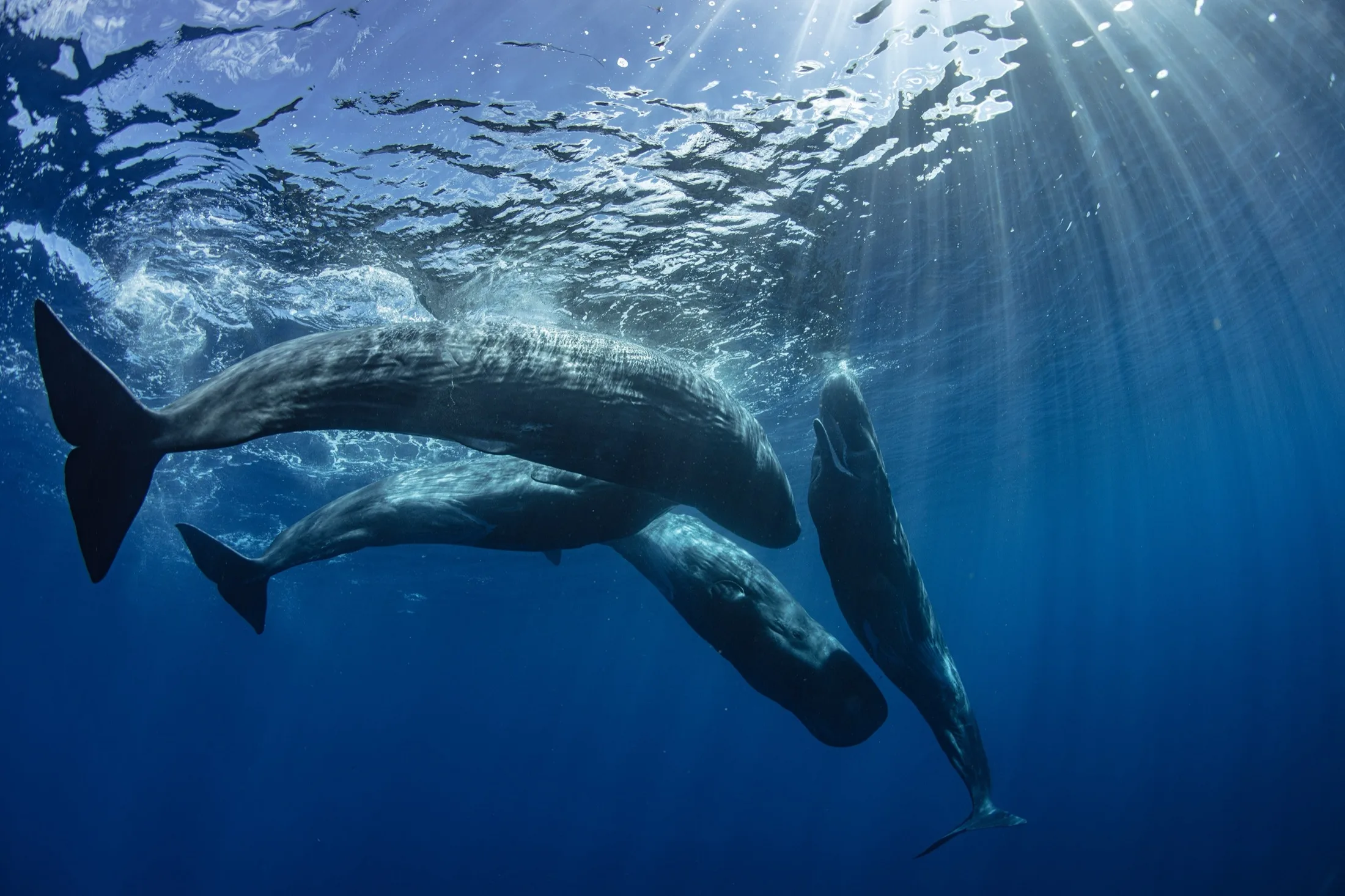
The Azores are the Atlantic's premier whale-watching destination, nine volcanic islands where deep water close to shore brings sperm whales year-round and blue whales past in spring. They are strongest for travelers who want big cetaceans in a European setting with mild weather and easy logistics.
Where to find the wildlife
The Azores work because the seabed drops away almost immediately: deep-water species can be reached in twenty or thirty minutes from harbour. Traditional whale lookouts — the vigias built for the old whaling industry — are still used to spot blows from the clifftops and direct boats, which is why success rates here are so high.
The waters off Pico and Faial are the classic grounds. The channel between the two islands has the deepest water closest to shore and is the preferred base for the spring migration; Pico's whaling museums and the lookout system give the context for what you are watching.
Sperm whales are resident year-round and are the archipelago's signature animal — social groups of females and calves at the surface between dives, and the tail fluke going vertical as they descend. Numbers rise in summer.
The spring passage in April and May is when the great migratory baleen whales come through: blue whales — the largest animals that have ever existed — along with fin and sei whales, feeding on the spring plankton bloom. This is a genuinely short window and the reason many people book specifically for those weeks.
The year-round dolphins include common, bottlenose, striped, Risso's and spotted, often in large fast pods, and several operators run in-water swims with them under permit.
The islands themselves add Cory's shearwaters nesting in the cliffs in their tens of thousands, calling eerily at night, and the endemic Azores bullfinch on São Miguel — one of Europe's rarest birds, found only in the Pico da Vara laurel forest.
Practicalities
São Miguel, Pico, Faial and Terceira all run whale trips; Pico and Faial are the specialists' choice. Direct flights reach São Miguel from Lisbon and several European cities, with inter-island flights and ferries onward.
Whale watching is regulated: boats must approach from behind at low speed, keep at least 50 metres away — more from mothers with calves — and no more than three boats may be near a group at a time, for a limited period. Choose an operator with a biologist aboard; the difference in what you learn is substantial.
Gallery
Wildlife Species
Sperm Whale
CommonMammal · Best time: Morning
Common Dolphin
CommonMammal · Best time: Morning
Cory Shearwater
CommonBird · Best time: Summer
Blue Shark
UncommonFish · Best time: Summer
Geography
- Terrain
- Volcanic islands, oceanic waters, cliffs, crater lakes
- Elevation
- Sea level to 2351m
- Climate
- Mild oceanic
- Area
- Atlantic archipelago
Weather
- Best Months
- AprilMayJuneJulyAugustSeptember
- Avg. Temperature
- 12-25°C
- Rainfall
- Moderate
- Humidity
- 65-90%
Getting There
Ponta Delgada and other island airports
Inter island travel depends on chosen island
- Whale watching boat trips
- Pelagic seabird trips
- Volcanic island road travel
(Affiliate link — we may earn a commission.)
Tours & Experiences
Local guides substantially improve Blue Shark sighting odds — compare independent operators and dates for Azores below.
(Affiliate links — we may earn a commission.)
Where to Stay
Hotels and guesthouses on Sao Miguel and Pico
Budget to Mid-rangeHotel · Island bases
Check availability on Booking.com →Whale watching lodges and rural stays
Mid-rangeGuesthouse · Near harbors
Check availability on Booking.com →(Affiliate links — we may earn a commission.)