Bale Mountains National Park
Bale Mountains National Park
Bale Mountains National Park protects Ethiopia's greatest Afroalpine landscape, a high plateau and cloud forest holding more than half the world's Ethiopian wolves along with a remarkable set of endemic mammals and birds. It is strongest for travelers who want a genuinely rare predator and a highland ecosystem that exists almost nowhere else.
Where to find the wildlife
Bale is really three parks stacked by altitude: the Gaysay grasslands at the bottom, the Sanetti Plateau on top, and the Harenna forest dropping down the southern side. They hold almost entirely different species, and the road that crosses all three — among the highest all-weather roads in Africa — makes them accessible in a couple of days.
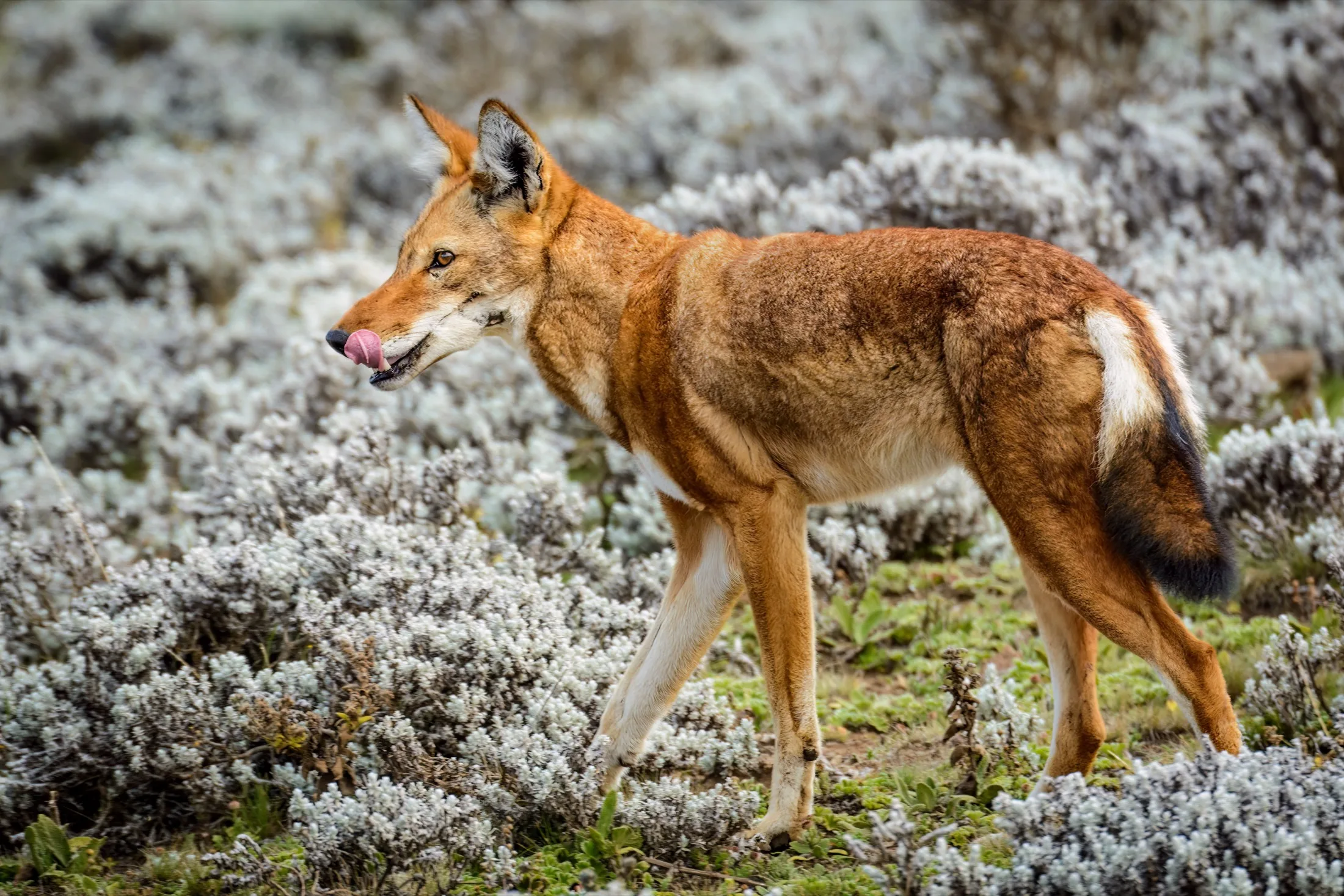
The Sanetti Plateau, above 4,000 metres, is the Ethiopian wolf's stronghold. This is the rarest canid on Earth, and Bale holds over half the global population — a slender, rufous, fox-like animal that hunts giant molerats in open Afroalpine moorland. Sightings here are close to reliable, which is remarkable for a species numbering in the hundreds worldwide.
The Web Valley, at slightly lower altitude, is the other wolf area and is generally better for watching pack behaviour and, in the October to February breeding season, pups around dens.
The Gaysay grasslands near the park headquarters hold mountain nyala — a large endemic antelope found only in this corner of Ethiopia — along with Menelik's bushbuck, warthog and the raptors that quarter the slopes.
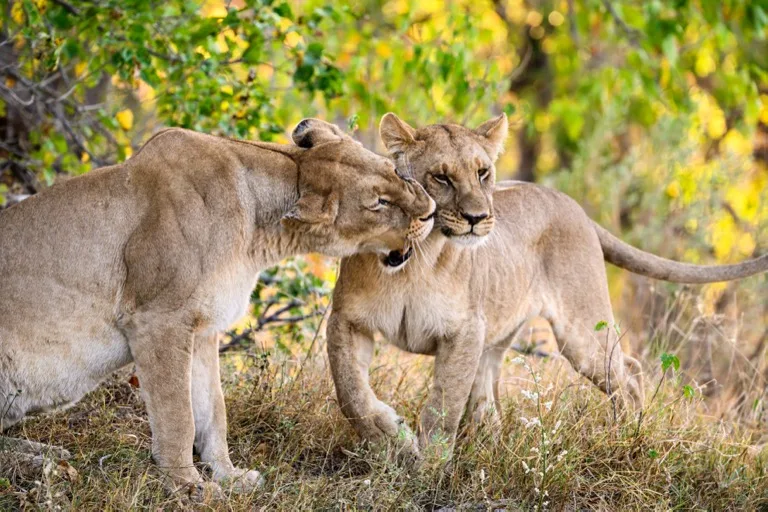
The Harenna forest, on the southern escarpment, is a moss-draped cloud forest with lion and leopard present but rarely seen, plus bamboo forest, Bale monkeys and outstanding forest birding.
The endemic bird list is a draw in itself: blue-winged goose, spot-breasted lapwing, Rouget's rail and wattled ibis are all Ethiopian endemics found readily here.
The dry seasons of November to February and June to September give the best access. Nights on the plateau are genuinely cold.
Practicalities
Dinsho is the park headquarters, around a day's drive from Addis Ababa, with Goba the usual base for the plateau. Altitude matters — the plateau road tops 4,000 metres and altitude sickness is a real risk if you ascend straight from Addis.
Worth knowing: the wolf population has been hit repeatedly by rabies and canine distemper from domestic dogs, and vaccination campaigns run by the local conservation programme are the reason the species still exists. Do not approach dens.
Gallery
Wildlife Species
Ethiopian Wolf
RareMammal · Best time: Early Morning
Mountain Nyala
UncommonMammal · Best time: Morning or Late Afternoon
Menelik's Bushbuck
UncommonMammal · Best time: Morning
Blue-winged Goose
UncommonBird · Best time: Morning
Geography
- Terrain
- Afroalpine plateau, moorland, cloud forest, escarpments, high valleys
- Elevation
- About 1500-4377m
- Climate
- Cool tropical highland
- Area
- About 2200 km2
Weather
- Best Months
- OctoberNovemberDecemberJanuaryFebruary
- Avg. Temperature
- 0-20C depending on altitude
- Rainfall
- Seasonal with wetter months affecting road conditions
- Humidity
- 35-90%
Getting There
Bole International Airport via Addis Ababa, then domestic or overland transfer toward Dinsho and the Bale highlands
Usually a long overland journey or mixed domestic flight and road transfer
- Road transfer from Addis Ababa or Hawassa corridor
- Guided wildlife drives and hikes from Dinsho and Sanetti Plateau bases
- Multi-day highland naturalist itineraries
(Affiliate link — we may earn a commission.)
Tours & Experiences
Local guides substantially improve Ethiopian Wolf sighting odds — compare independent operators and dates for Bale Mountains National Park below.
(Affiliate links — we may earn a commission.)
Where to Stay
Simple lodges around Dinsho and Goba
Budget to Mid-rangeLodge · Used as bases for the northern park sectors
Check availability on Booking.com →Basic community and park lodges
BudgetEco Lodge · Near trailheads and highland access areas
Check availability on Booking.com →(Affiliate links — we may earn a commission.)