Big Bend National Park
Big Bend National Park
Big Bend National Park protects a vast, empty stretch of the Chihuahuan Desert where the Rio Grande carves deep canyons and an isolated mountain range rises out of the desert floor. It is strongest for travelers who want desert wildlife, exceptional birding, and some of the darkest night skies in North America.
Where to find the wildlife
Big Bend's wildlife is organised by elevation. The desert floor, the river corridor and the Chisos Mountains are three separate ecosystems within an hour of each other, and each holds species the others do not — which is why this remote park has one of the longest bird lists of any in the United States.
The Chisos Basin, high in the mountains, is the biological island. Black bear and mountain lion both live here, having recolonised naturally, and the Colima warbler — found nowhere else in the United States — breeds up the Pinnacles and Boot Canyon trails from April to September. It is a genuine hike to reach them.
Rio Grande Village and the river corridor hold the water-dependent species. The nature trail there at dawn is the park's best general birding, with vermilion flycatchers, javelina coming to drink, and beaver in the river — an unexpected species in a desert.
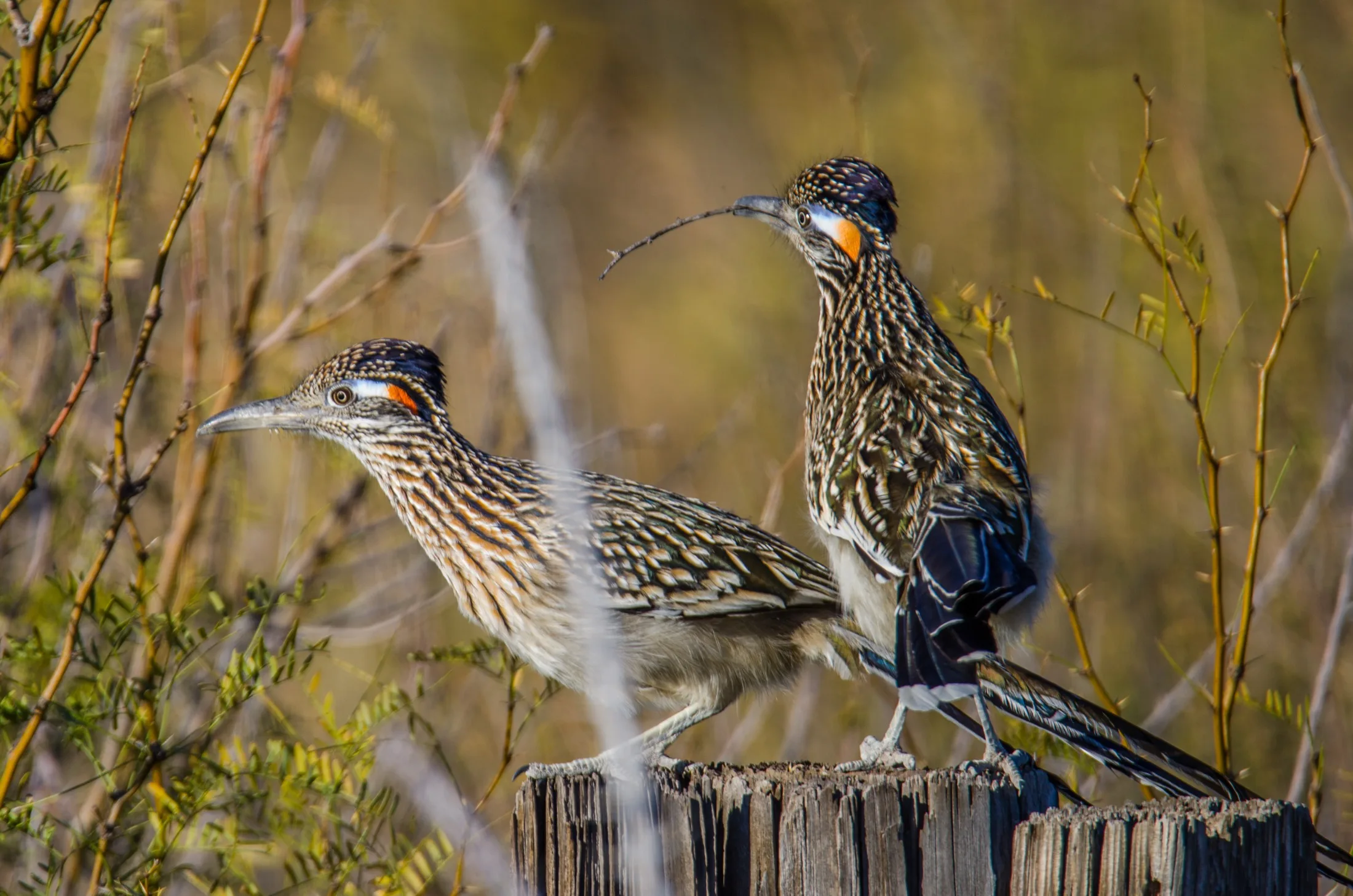
The open desert along the roads and at Dugout Wells produces roadrunner, jackrabbit, kit fox at night, and the reptiles the park is quietly famous for. Drive slowly after dark and you will find far more than by day.
Santa Elena Canyon, where the river cuts a 460-metre slot through the limestone, is the landscape set piece, best at the end of the day when light reaches into the gorge.
Spring, roughly March to May, is the best all-round season: migrant birds, flowering ocotillo and cactus, and tolerable temperatures. Summer is dangerously hot on the desert floor. Winter is quiet, clear and excellent in the Chisos.
Practicalities
Big Bend is genuinely remote — the nearest airports are hours away and services inside the park are limited, so arrive with fuel, water and supplies. The park is an International Dark Sky Park and among the least light-polluted places in the lower 48; the Milky Way here is a reason to visit in its own right. Carry far more water than feels necessary, particularly for any hike below the mountains.
Gallery
Wildlife Species
Collared Peccary
UncommonMammal · Best time: Morning or Evening
Greater Roadrunner
CommonBird · Best time: All Day
Javelina
UncommonMammal · Best time: Morning or Evening
Colima Warbler
RareBird · Best time: Late Spring and Summer
Geography
- Terrain
- Desert basins, river canyons, mountain islands, scrub, riparian corridors
- Elevation
- About 550-2385m
- Climate
- Hot desert to cooler mountain climate
- Area
- About 3200 km2
Weather
- Best Months
- OctoberNovemberDecemberJanuaryFebruaryMarchApril
- Avg. Temperature
- 2-38°C
- Rainfall
- Low overall, with heat and flash-flood risk shaping travel conditions
- Humidity
- 15-65%
Getting There
El Paso, Midland, or regional West Texas gateways followed by a long road transfer
Remote by lower-forty-eight standards, with several hours of driving required
- Self-drive scenic loops
- River and canyon outings
- Birding and wildlife watching across desert, riparian, and mountain zones
(Affiliate link — we may earn a commission.)
Tours & Experiences
Local guides substantially improve Collared Peccary sighting odds — compare independent operators and dates for Big Bend National Park below.
(Affiliate links — we may earn a commission.)
Where to Stay
Park lodges and rooms in the Chisos Basin or Rio Grande Village
Mid-rangeLodge · Inside the park
Check availability on Booking.com →Motels and guesthouses in Terlingua and Study Butte
Budget to Mid-rangeGuesthouse · Main outside base
Check availability on Booking.com →(Affiliate links — we may earn a commission.)