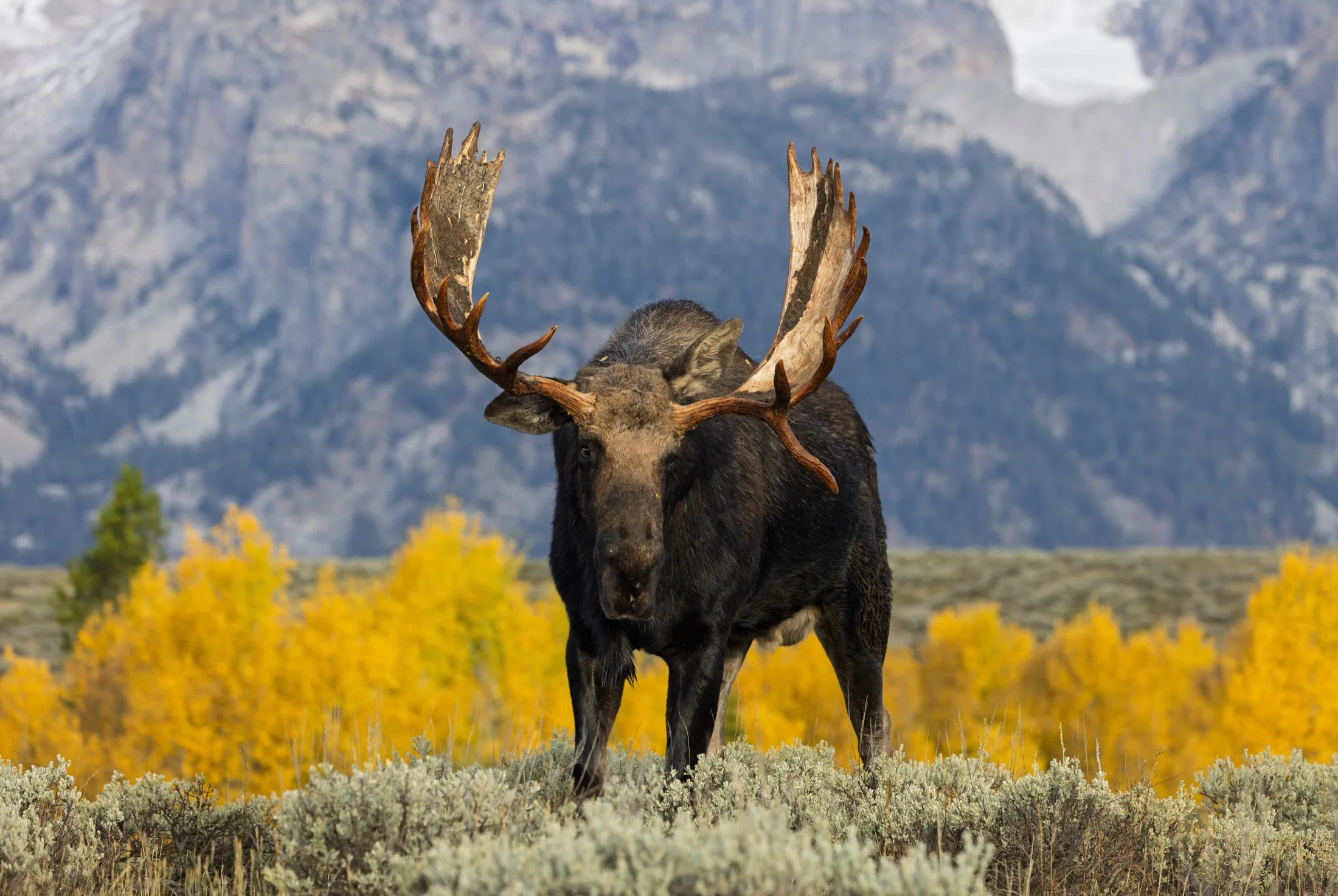
Grand Teton National Park
Grand Teton National Park
Grand Teton National Park pairs the most dramatic mountain front in the American Rockies with an exceptionally accessible valley floor where moose, bison, pronghorn, elk, and both bear species are seen from the roadside. It is strongest for travelers who want big mammals and iconic landscape photography in the same short drive.
Where to find the wildlife
The Tetons rise straight off the floor of Jackson Hole with no foothills, so the valley is a narrow band of sagebrush flats, willow bottoms, and river corridor squeezed against the range. Everything lives in that band, which is why the wildlife here is so much easier to find than in the vast plateau country of Yellowstone next door.
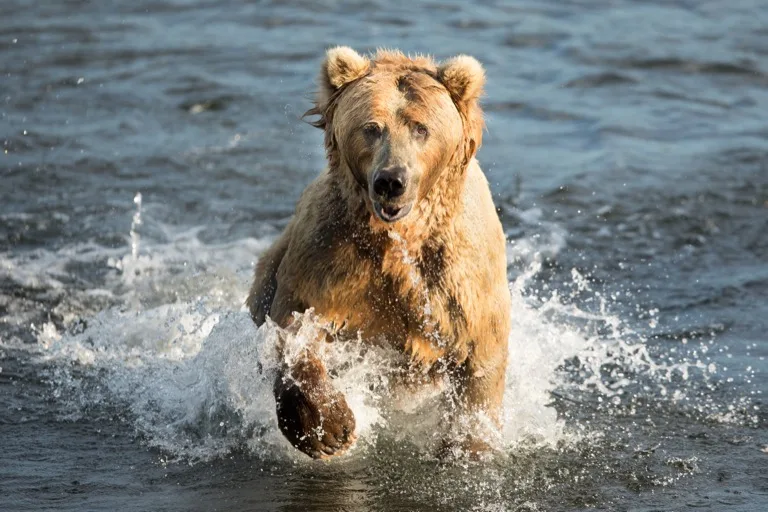
The Moose-Wilson Road is the park's densest wildlife corridor, running through willow and berry patches where moose feed morning and evening and where black bears — and sometimes grizzlies — work the chokecherries in late summer. It is narrow, slow and often congested, which is exactly why it produces.
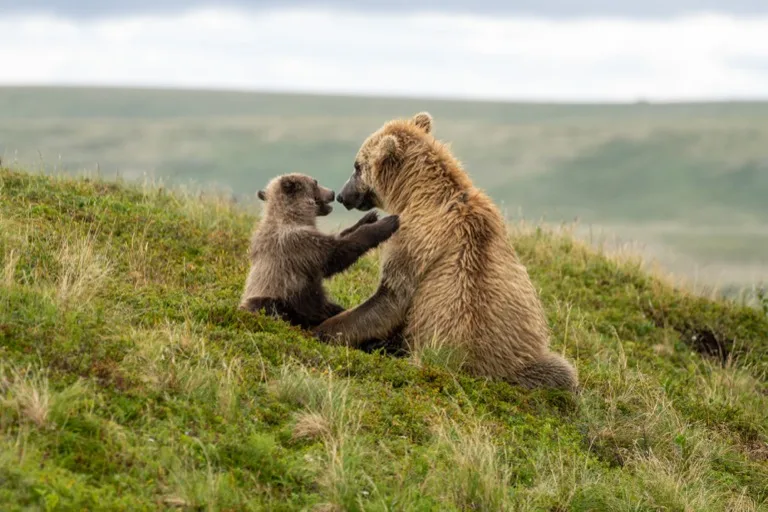
Oxbow Bend and Willow Flats, near Jackson Lake Junction, are the classic dawn stops: moose in the shallows, beaver, otter, trumpeter swans and the reflected mountain if the water is still. Grizzlies with cubs are regularly seen along the Pilgrim Creek area nearby.
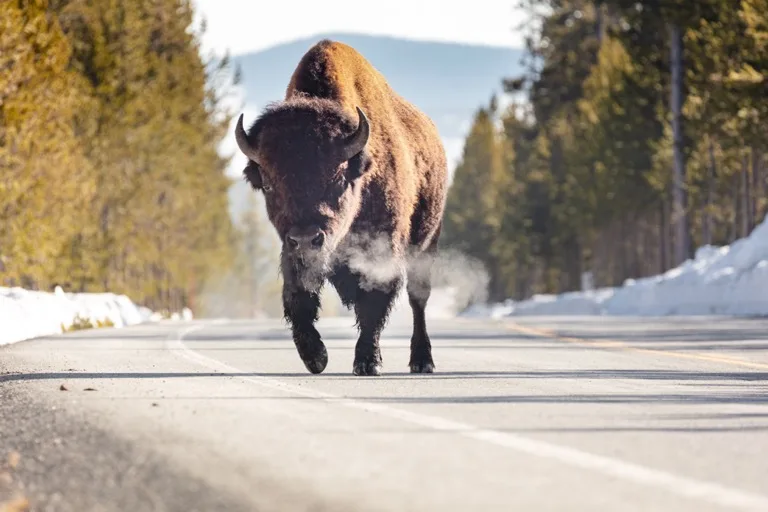
Antelope Flats and Mormon Row hold the open-country species — bison herds, pronghorn that migrate here from the south each summer, and coyotes hunting the sage. This is also the best area for the classic barn-and-mountain photograph at sunrise.
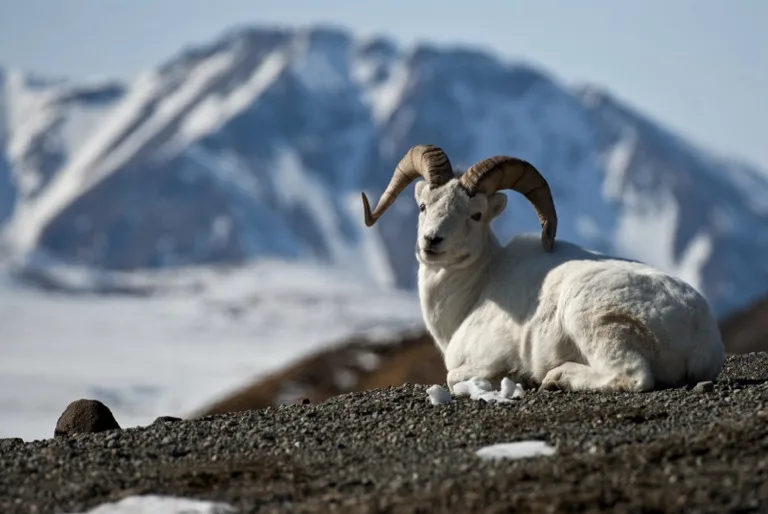
The National Elk Refuge just south of the park is a winter destination in its own right, holding thousands of elk from roughly December to March, with sleigh rides among them and wolves and bighorn sheep nearby.
Dawn and the last hour of light are decisive here, particularly for moose and bears. May and June bring newborn animals and green valley floors; September brings the elk rut and its bugling.
Practicalities
Jackson Hole airport is inside the park boundary, which makes this one of the easiest wildlife destinations in North America to reach. Grand Teton and Yellowstone connect directly via the John D. Rockefeller Jr. Memorial Parkway, and most itineraries combine them.
This is bear country: carry spray, know how to use it, and keep the legally required distances — 100 yards from bears and wolves, 25 from everything else. Roadside crowds form fast at sightings, and rangers move them along.
Gallery
Wildlife Species
Moose
UncommonMammal · Best time: Morning or Evening
Bison
UncommonMammal · Best time: All Day
Grizzly Bear
RareMammal · Best time: Spring to Autumn
Trumpeter Swan
UncommonBird · Best time: Spring and Summer
Geography
- Terrain
- Jagged mountains, sage flats, rivers, lakes, willow thickets, alpine slopes
- Elevation
- About 1900-4200m
- Climate
- Continental mountain climate
- Area
- About 1250 km2
Weather
- Best Months
- MayJuneJulyAugustSeptemberOctober
- Avg. Temperature
- -15-28°C
- Rainfall
- Moderate, with spring and summer weather shifts affecting visibility and wildlife movement
- Humidity
- 30-80%
Getting There
Jackson Hole Airport sits at the edge of the park, with excellent road access
One of the easiest top-tier wildlife parks in the U.S. to reach
- Self-drive and roadside wildlife loops
- Dawn and dusk photography circuits
- Combined trip with Yellowstone
(Affiliate link — we may earn a commission.)
Tours & Experiences
Local guides substantially improve Moose sighting odds — compare independent operators and dates for Grand Teton National Park below.
(Affiliate links — we may earn a commission.)
Where to Stay
Hotels and lodges in Jackson and park lodges
Mid-range to PremiumLodge · Main bases around and inside the park
Check availability on Booking.com →Campgrounds in the valley
BudgetCamp · Close to core wildlife areas
Check availability on Booking.com →(Affiliate links — we may earn a commission.)