Channel Islands National Park
Channel Islands National Park
Channel Islands National Park protects five islands off the southern California coast, an isolated archipelago with endemic species, vast seabird colonies, and some of the richest kelp forest in the Pacific. It is strongest for travelers who want an undeveloped wilderness within sight of Los Angeles.
Where to find the wildlife
The islands have been separated from the mainland long enough to evolve their own species, and they have no roads, no lodges and almost no facilities. Everything is done from a boat, and each island is a separate trip with its own character — day visits work, but camping is what the park is really built for.
Santa Cruz Island, the largest, is where most visitors go. The island fox — a cat-sized endemic that recovered from near-extinction in one of the fastest carnivore recoveries ever recorded — is now common and often seen around the campground at Scorpion Anchorage. Island scrub-jays, found on this island and nowhere else on Earth, work the oak scrub above the landing.
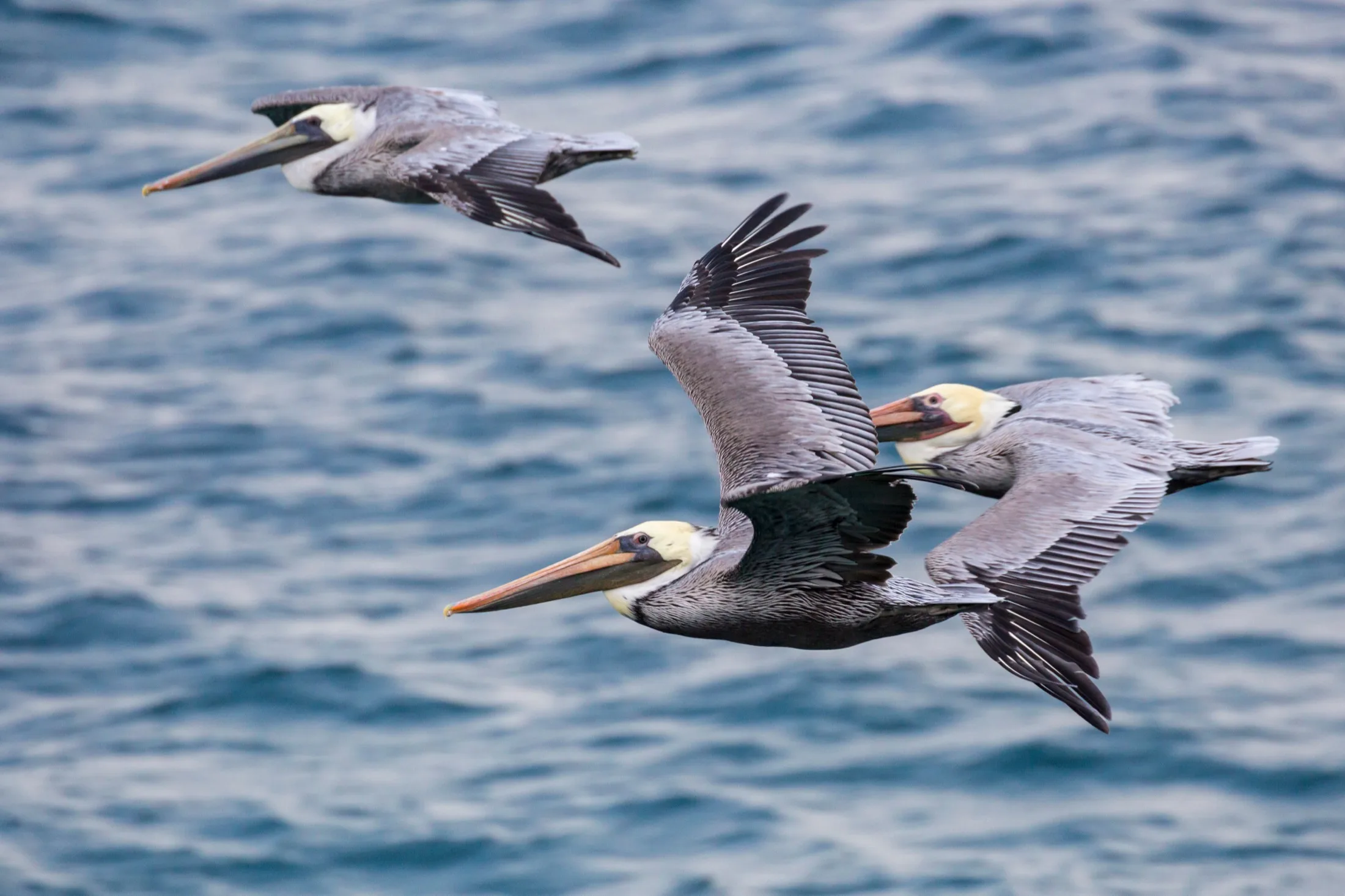
Anacapa Island holds the seabirds: the largest breeding colony of California brown pelicans in the United States, along with western gulls nesting beside the trail. It is a small island, easily walked in a few hours, with a lighthouse at the end.
The kelp forests around all the islands are the marine draw — giant kelp, garibaldi, sea lions playing around divers and snorkellers, and some of the best cold-water diving in North America.
The channel crossing itself is a wildlife trip. Blue whales — the largest animals that have ever lived — feed here from roughly July to September, with humpbacks alongside them, and common dolphins in pods that can number in the thousands.
Spring brings wildflowers and calm seas; summer and early autumn bring the whales; winter brings grey whales migrating past and rougher crossings.
Practicalities
Boats run from Ventura and Oxnard, with the crossing taking one to three hours depending on the island. There is no water, no food and no shelter on most islands — you carry everything, including water, and campsites must be reserved in advance.
Crossings are frequently rough and are cancelled for weather; build flexibility into any plan that depends on being picked up on a particular day.
Gallery
Wildlife Species
Island Fox
UncommonMammal · Best time: Morning or Evening
Humpback Whale
UncommonMammal · Best time: Summer
Brown Pelican
CommonBird · Best time: All Day
Common Dolphin
CommonMammal · Best time: Boat Crossings
Geography
- Terrain
- Volcanic islands, sea cliffs, coastal scrub, kelp forests, productive marine waters
- Elevation
- Sea level to rugged island ridges
- Climate
- Mild Mediterranean maritime
- Area
- Five islands and surrounding marine ecosystems
Weather
- Best Months
- MarchAprilMayJuneJulyAugustSeptember
- Avg. Temperature
- 10-24°C
- Rainfall
- Low to moderate, with sea state shaping access more than rainfall totals
- Humidity
- 55-95%
Getting There
Los Angeles, Burbank, or Santa Barbara with boat access from Ventura and nearby harbors
Usually reached by road to coastal departure points and then ferry or concession boat
- Day boats to the islands
- Kayak and snorkeling trips
- Whale watching in surrounding channel waters
Tours & Experiences
Local guides substantially improve Island Fox sighting odds — compare independent operators and dates for Channel Islands National Park below.
(Affiliate links — we may earn a commission.)
Where to Stay
Hotels in Ventura and Oxnard
Mid-range to PremiumHotel · Main boat departure bases
Check availability on Booking.com →Island campgrounds
BudgetCamp · At wildlife sites but with basic facilities
Check availability on Booking.com →(Affiliate links — we may earn a commission.)