Damaraland
Damaraland
Damaraland is Namibia's great desert-adapted wildlife region, a vast expanse of rock, ephemeral riverbeds, and open gravel plain in the northwest where elephants and black rhinos survive in country that should not support them. It is strongest for travelers who want desert landscapes and genuinely hard-won wildlife.
Where to find the wildlife
There are no fences and no reliable water here. Wildlife follows the ephemeral rivers — dry sand for most of the year with subsurface water and green vegetation along them — which means finding animals is a matter of tracking along riverbeds rather than driving loops.
The Huab, Aba-Huab and Ugab riverbeds are where the desert-adapted elephants are found. These are ordinary African elephants that have learned to survive on very little water, walking long distances between feeding areas and digging in the sand for water. Herds move constantly and finding them takes a guide who has been tracking that week.
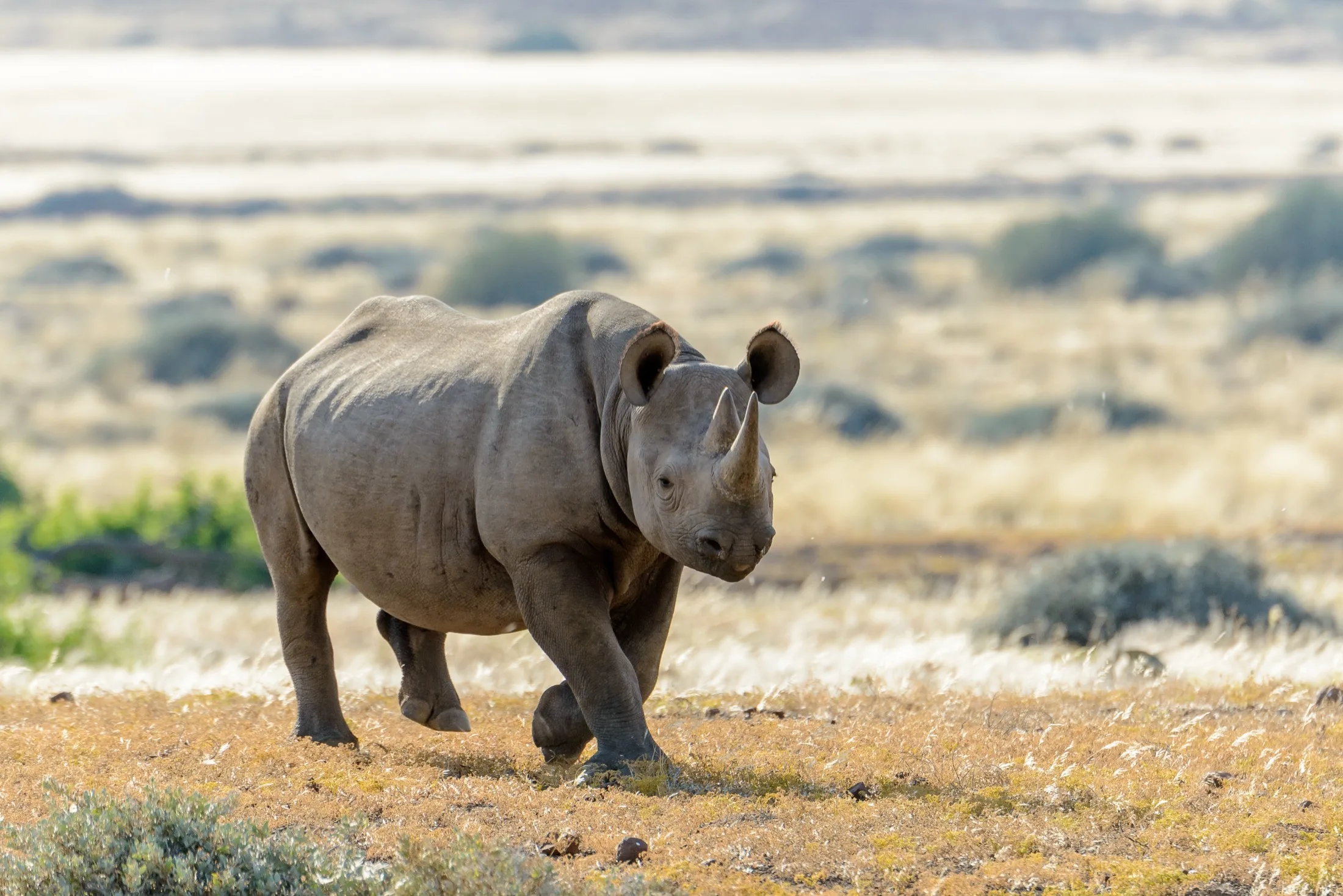
The Palmwag concession holds the largest free-ranging black rhino population left on Earth — animals living outside any fence. Rhino tracking here is done on foot with trackers from the local conservancy and the trust that has protected them for decades, and it is one of the most serious wildlife experiences in southern Africa.
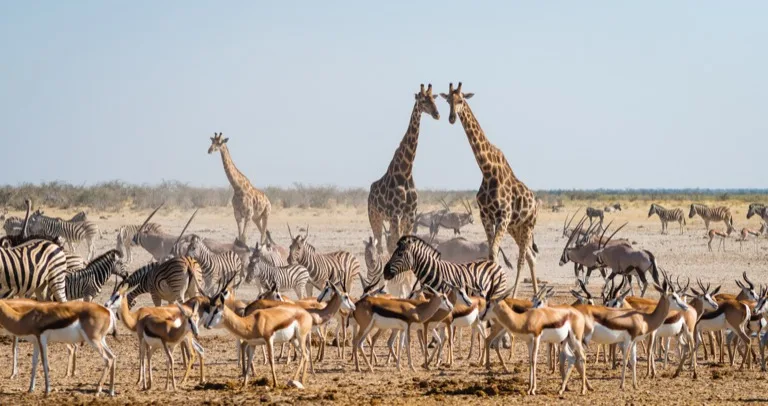
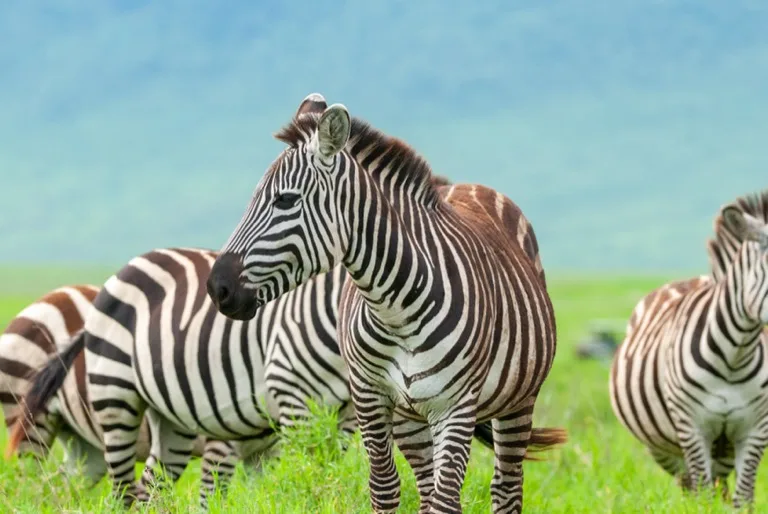
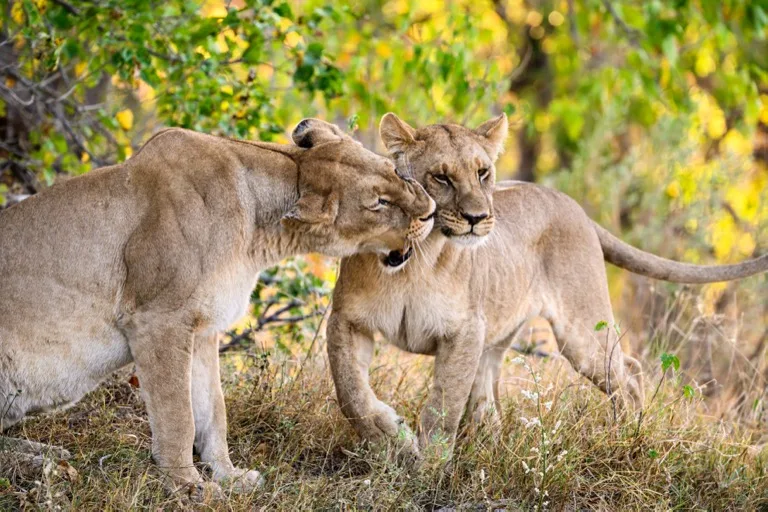
The gravel plains and koppies hold Hartmann's mountain zebra, springbok, gemsbok, and the desert-adapted lions that occasionally move through from the north — a small, closely monitored population.
Twyfelfontein, in the same area, holds thousands of rock engravings made by people who hunted these same species over millennia — worth a morning for the perspective it gives.
The dry season from May to October concentrates animals along the rivers. Summer heat is severe and the rare rains can make riverbeds impassable.
Practicalities
Most of Damaraland is communal conservancy land rather than national park, and that model — communities earning income from wildlife and employing their own rangers — is why the elephants and rhinos are still there. Choosing a camp that is a genuine conservancy joint venture matters here more than in most places.
Self-drive is possible on the main gravel routes with a high-clearance vehicle, but finding elephants without a local tracker is unlikely. Rhino tracking must be arranged through the authorised operators.
Gallery
Wildlife Species
Desert-adapted elephant
UncommonMammal · Best time: Dry season near riverbeds
Black rhino
RareMammal · Best time: Guided tracking
Oryx, springbok, giraffe, and desert ungulates
CommonMammal · Best time: Morning and late afternoon
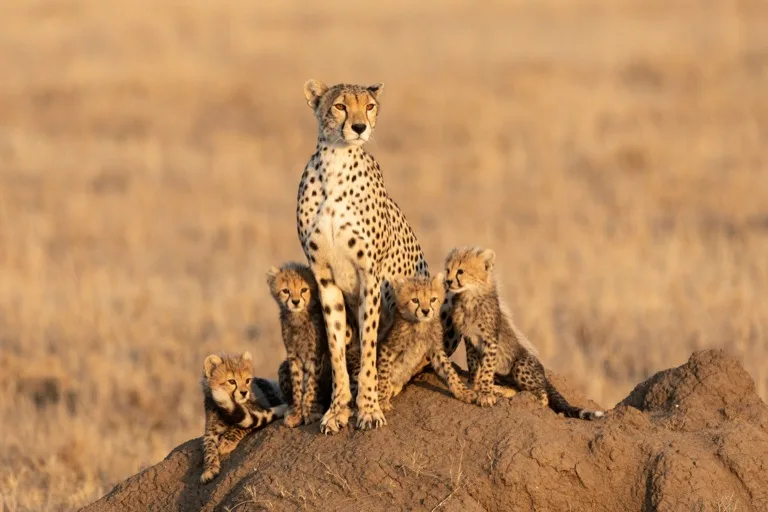
Desert lions and brown hyena
RareMammal · Best time: Luck-dependent
Geography
- Terrain
- Desert mountains, dry riverbeds, gravel plains, rocky valleys, mopane scrub
- Elevation
- Arid uplands and valleys
- Climate
- Hot arid desert
- Area
- Large conservancy landscape in northwest Namibia
Weather
- Best Months
- MayJuneJulyAugustSeptemberOctober
- Avg. Temperature
- 5-38°C
- Rainfall
- Dry season is best for tracking and desert travel
- Humidity
- 10-55%
Getting There
Windhoek with long self-drive or fly-in lodge transfer
Remote but well-established on Namibia lodge and self-drive routes
- Desert-adapted elephant route
- Rhino tracking with conservancy guides
- Namibia northwest photography circuit
(Affiliate link — we may earn a commission.)
Tours & Experiences
Local guides substantially improve Desert-adapted elephant sighting odds — compare independent operators and dates for Damaraland below.
(Affiliate links — we may earn a commission.)
Where to Stay
Remote desert lodges and conservancy camps
Mid-range to LuxuryLodge or Camp · Best wildlife access
Check availability on Booking.com →Self-drive campsites and guest farms
Budget to Mid-rangeCamp or Guest Farm · Useful on longer Namibia routes
Check availability on Booking.com →(Affiliate links — we may earn a commission.)