Etosha National Park
Etosha National Park
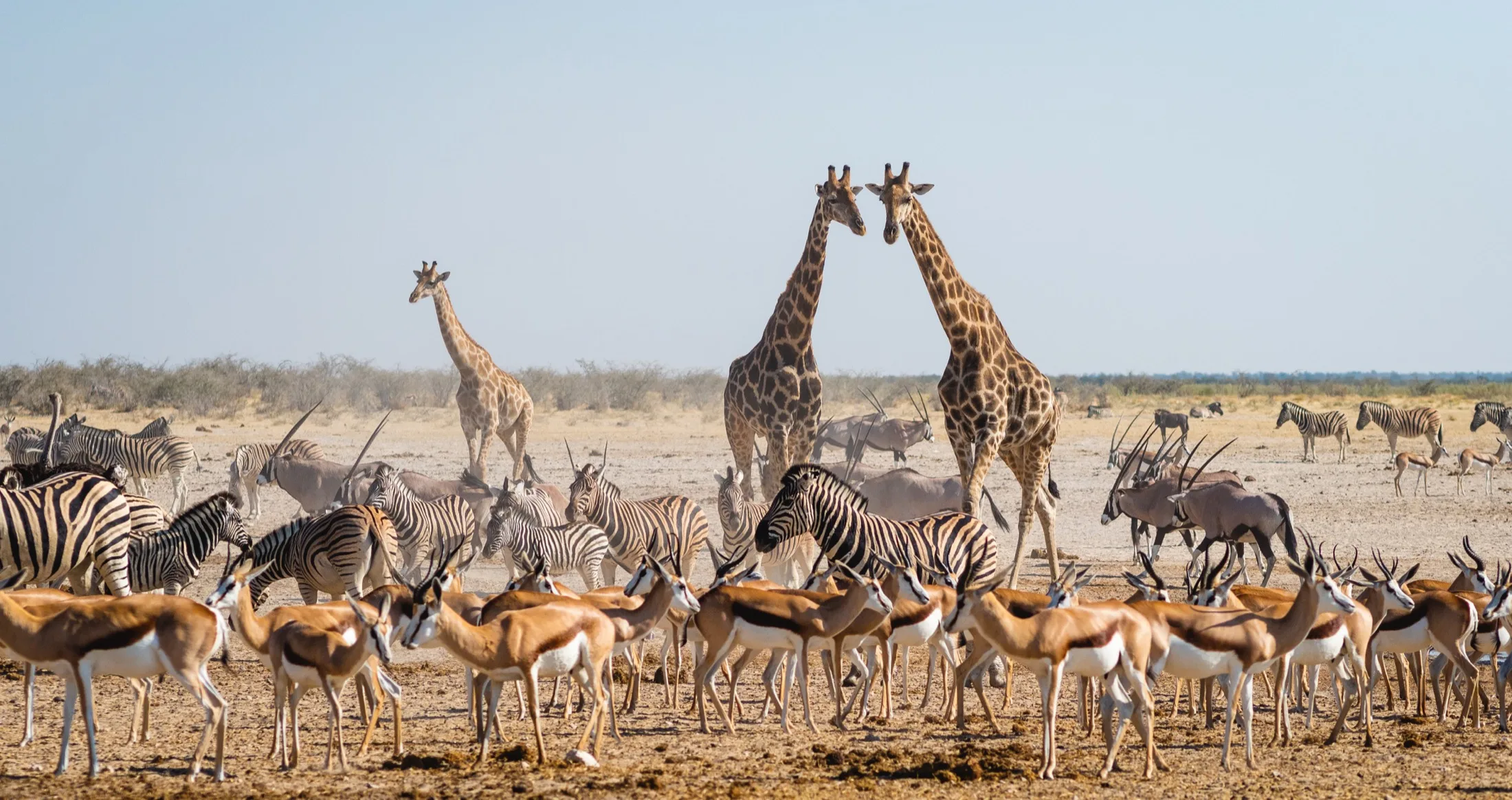
Etosha National Park is Namibia's flagship reserve, built around a vast salt pan whose fringing waterholes concentrate elephant, black rhino, and plains game in numbers that make it one of Africa's most reliable dry-season parks. It is strongest for self-drive travelers and for anyone who wants to watch wildlife come to water rather than search for it.
Where to find the wildlife
Etosha inverts the usual safari method. Rather than driving to find animals, you park at a waterhole and let the park come to you — in a landscape this arid, every animal must drink, and the waterholes along the pan's southern edge are effectively the only water for miles. Choosing your waterhole and staying put is the whole technique.
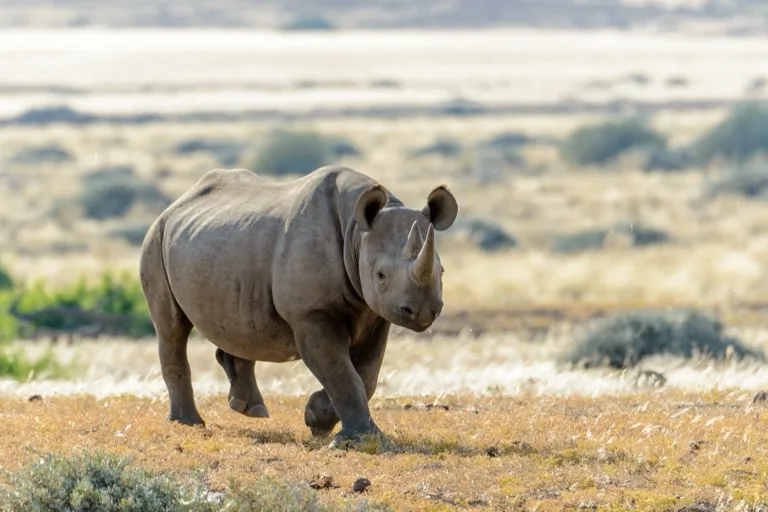
The floodlit waterholes at the rest camps are Etosha's signature and the reason to sleep inside the park. Okaukuejo's is the most famous: it is walkable from your room after dark, and black rhino come in on most nights through the late evening, sometimes several at once, alongside elephant and lion. Halali's sits among boulders and is the best of the three for leopard; Namutoni's is quieter and strongest for birds.
The waterholes along the pan edge between the camps are the daytime work. Each has its own character and it is worth asking at camp reception which have been productive that week, since a waterhole that is busy in one month can be deserted the next when a nearby pan holds rain.
The pan itself is a glaring white void for most of the year and largely empty, but after good rains it holds shallow water and draws flamingos and pelicans in numbers — a completely different park for a few weeks.
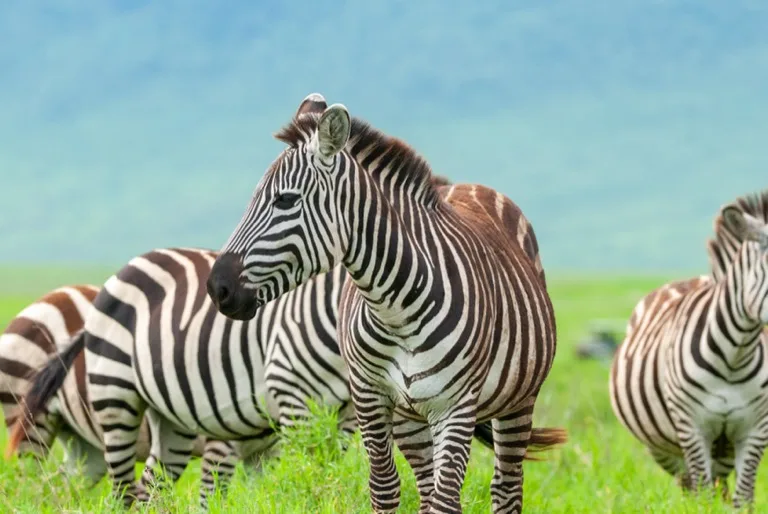
The western sections beyond Okaukuejo are less visited and hold black-faced impala and mountain zebra, the drier-country specialities not found in the eastern half.
The dry season from June to October is when this works best, with concentrations building to a peak in the last months before the rains. Midday is genuinely productive at waterholes here, which makes Etosha unusually forgiving of a lie-in.
Practicalities
Etosha is one of Africa's most self-drive-friendly parks: the main routes are graded gravel manageable in an ordinary car, distances between camps are moderate, and the park is malaria-risk-reduced compared with wetter regions. Book the inside camps well ahead specifically for the floodlit waterhole access — it is the single biggest difference between a good Etosha trip and an ordinary one. Gates open at sunrise and close at sunset, and being caught out after closing carries a fine.
Gallery
Wildlife Species
African Elephant
CommonMammal · Best time: All Day
Black Rhino
UncommonMammal · Best time: Night or Early Morning
Springbok
AbundantMammal · Best time: All Day
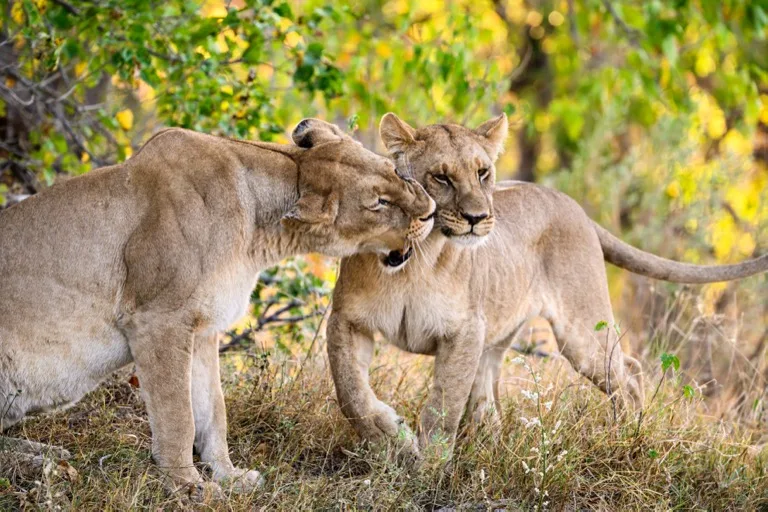
African Lion
UncommonMammal · Best time: Morning or Evening
Geography
- Terrain
- Salt pan, grassland, mopane woodland, semi arid savanna
- Elevation
- 1000-1100m
- Climate
- Semi arid
- Area
- About 22270 km2
Weather
- Best Months
- JuneJulyAugustSeptemberOctober
- Avg. Temperature
- 6-35°C
- Rainfall
- Very low in dry season
- Humidity
- 20-60%
Getting There
Windhoek Airport with overland transfer
Long drive to Anderson or eastern gates
- Self drive circuit
- Guided lodge transfer
- Waterhole based game viewing
(Affiliate link — we may earn a commission.)
Tours & Experiences
Local guides substantially improve Black Rhino sighting odds — compare independent operators and dates for Etosha National Park below.
(Affiliate links — we may earn a commission.)
Where to Stay
Park camps at Okaukuejo, Halali, and Namutoni
Budget to Mid-rangeRest Camp · Inside the park
Check availability on Booking.com →Private lodges around the park gates
Mid-range to PremiumLodge · Near entrances
Check availability on Booking.com →(Affiliate links — we may earn a commission.)