Kgalagadi Transfrontier Park
Kgalagadi Transfrontier Park
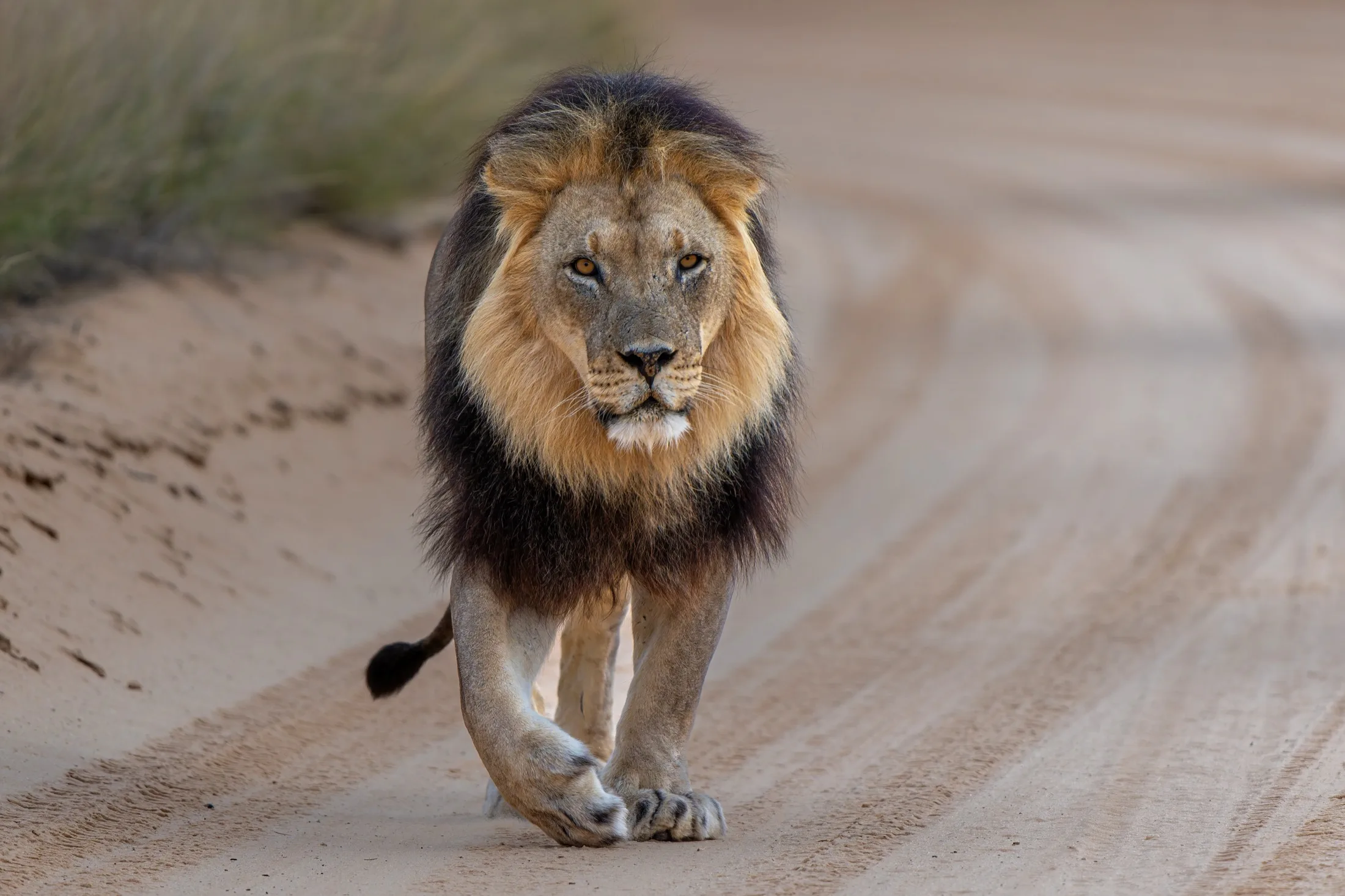
Kgalagadi Transfrontier Park spans the South Africa-Botswana border across the red dunes of the southern Kalahari, where two fossil river valleys and their waterholes concentrate black-maned lions, cheetah, and raptors in a desert landscape of extraordinary clarity. It is strongest for self-drive travelers and photographers who want predators in open country.
Where to find the wildlife
The park is essentially two dry riverbeds meeting in a V, with roads running along each and a handful of dune tracks connecting them. Because the surrounding dunes hold no surface water, everything comes to the boreholes in the riverbeds — which means the game viewing is a matter of driving those two roads slowly and stopping at every waterhole.
The Auob valley, running northwest from Twee Rivieren to Mata Mata, has more vegetation and generally more game: gemsbok, springbok, blue wildebeest and the lions that follow them. It is the more reliable of the two for a first visit.
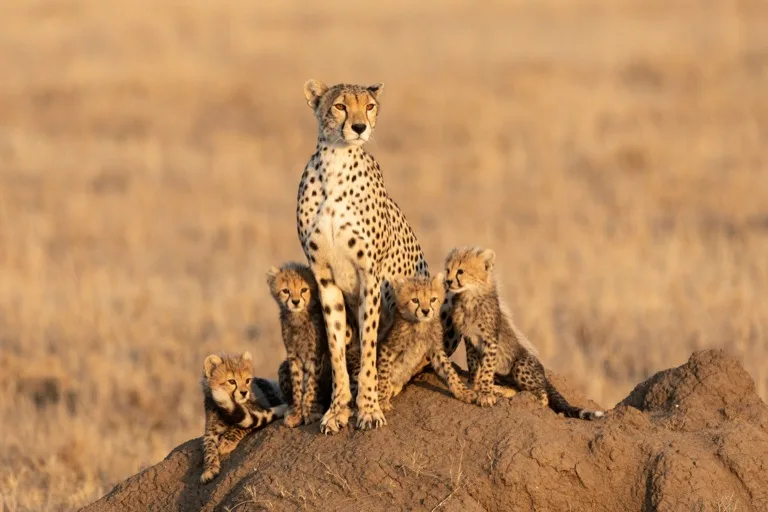
The Nossob valley, running north to Nossob camp and beyond, is starker and quieter, with a reputation for cheetah on the open flats and for the park's best leopard sightings in the camel-thorn trees along the bed.
The waterholes themselves are the whole method. Sit at one for an hour rather than driving between five — sandgrouse come to drink in flocks in the morning, raptors follow them, and predators use the same water later in the day.
The dunes and the trees hold what makes Kgalagadi distinctive: sociable weaver nests the size of haystacks with pygmy falcons living in them, bat-eared foxes, meerkats, and one of the finest raptor lists in Africa — martial and tawny eagles, and the lanner and red-necked falcons that hunt the doves at water.
March to May, after the summer rains, brings green grass, newborn antelope and the best raptor numbers. The dry winter months concentrate game hardest at the waterholes but bring bitterly cold nights. Midsummer is extremely hot.
Practicalities
This is one of Africa's great self-drive parks. The main riverbed roads are manageable in a two-wheel-drive vehicle in good conditions, though a high-clearance vehicle is far more comfortable and is required for the dune tracks and wilderness trails. Rest camps and the remote wilderness camps book out months ahead, and Nossob and the northern camps are a long drive from the gate — carry fuel, water and spares.
Gallery
Wildlife Species
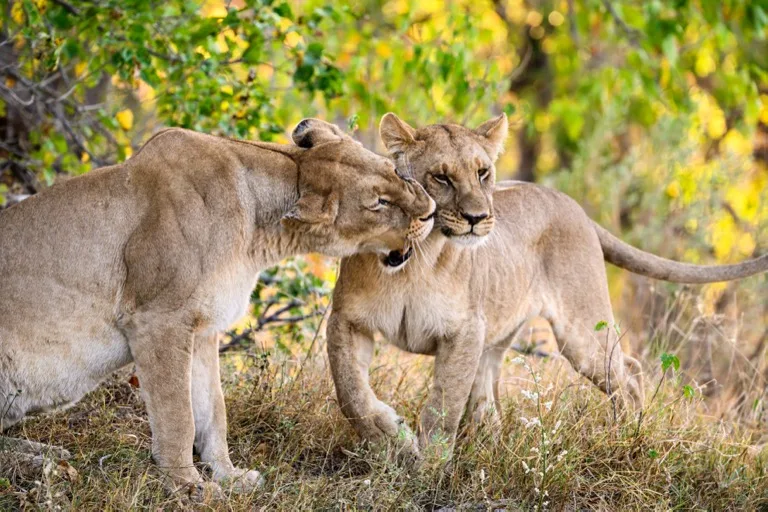
Black-maned lions
UncommonMammal · Best time: Morning and late afternoon
Cheetah and leopard
UncommonMammal · Best time: Dry clear conditions
Secretarybirds, vultures, and raptors
UncommonBird · Best time: Daylight hours
Gemsbok and arid antelope
CommonMammal · Best time: All day
Geography
- Terrain
- Red dunes, dry riverbeds, arid savanna, salt pans, thorn scrub
- Elevation
- Low Kalahari basin
- Climate
- Hot arid desert-savanna
- Area
- Very large transfrontier desert park
Weather
- Best Months
- MayJuneJulyAugustSeptember
- Avg. Temperature
- 0-40°C
- Rainfall
- Usually low, with visibility and road conditions strongly shaped by dry weather
- Humidity
- 15-50%
Getting There
Upington or regional gateways with long self-drive access
Remote but well-established for self-drive or lodge-supported travel
- Self-drive desert safari
- Predator and raptor photography trip
- Stay at rest camps and wilderness camps
(Affiliate link — we may earn a commission.)
Tours & Experiences
Local guides substantially improve Black-maned lions sighting odds — compare independent operators and dates for Kgalagadi Transfrontier Park below.
(Affiliate links — we may earn a commission.)
Where to Stay
Rest camps and wilderness camps inside the park
Budget to Mid-rangeCamp · Spread across the core riverbeds
Check availability on Booking.com →Desert lodges outside the park
Mid-range to PremiumLodge · Useful for regional circuits
Check availability on Booking.com →(Affiliate links — we may earn a commission.)