Masai Mara
Masai Mara
The Masai Mara is Kenya's flagship reserve and the northern end of the great wildebeest migration, an expanse of open savanna where predator densities and sheer visibility make for some of the most consistent big-cat viewing in Africa. It is strongest for travelers who want lions, cheetahs, and the drama of the Mara river crossings.
Where to find the wildlife
The Mara ecosystem is really three things sharing one landscape: the national reserve, the Mara Triangle in its western third, and a ring of private conservancies leased from Maasai landowners. They hold much the same wildlife but operate under very different rules, and choosing between them shapes the trip more than any other decision.
The national reserve is the core, with the highest game densities and the classic Mara scenery. It is also the busiest: a good sighting can draw a crowd of vehicles, and off-road driving, night drives and walking are not permitted.
The Mara Triangle, managed separately by the Mara Conservancy, covers the west between the Mara river and the Oloololo escarpment. Rules are enforced more tightly and vehicle numbers are lower, which for many visitors makes the same wildlife a better experience.
The conservancies — Naboisho, Olare Motorogi, Mara North and others — cap the number of beds per hectare and permit what the reserve does not: off-road driving to a sighting, night drives, and guided walking. You pay a nightly conservancy fee on top of your accommodation, and in exchange you often have a leopard or a cheetah to yourself.
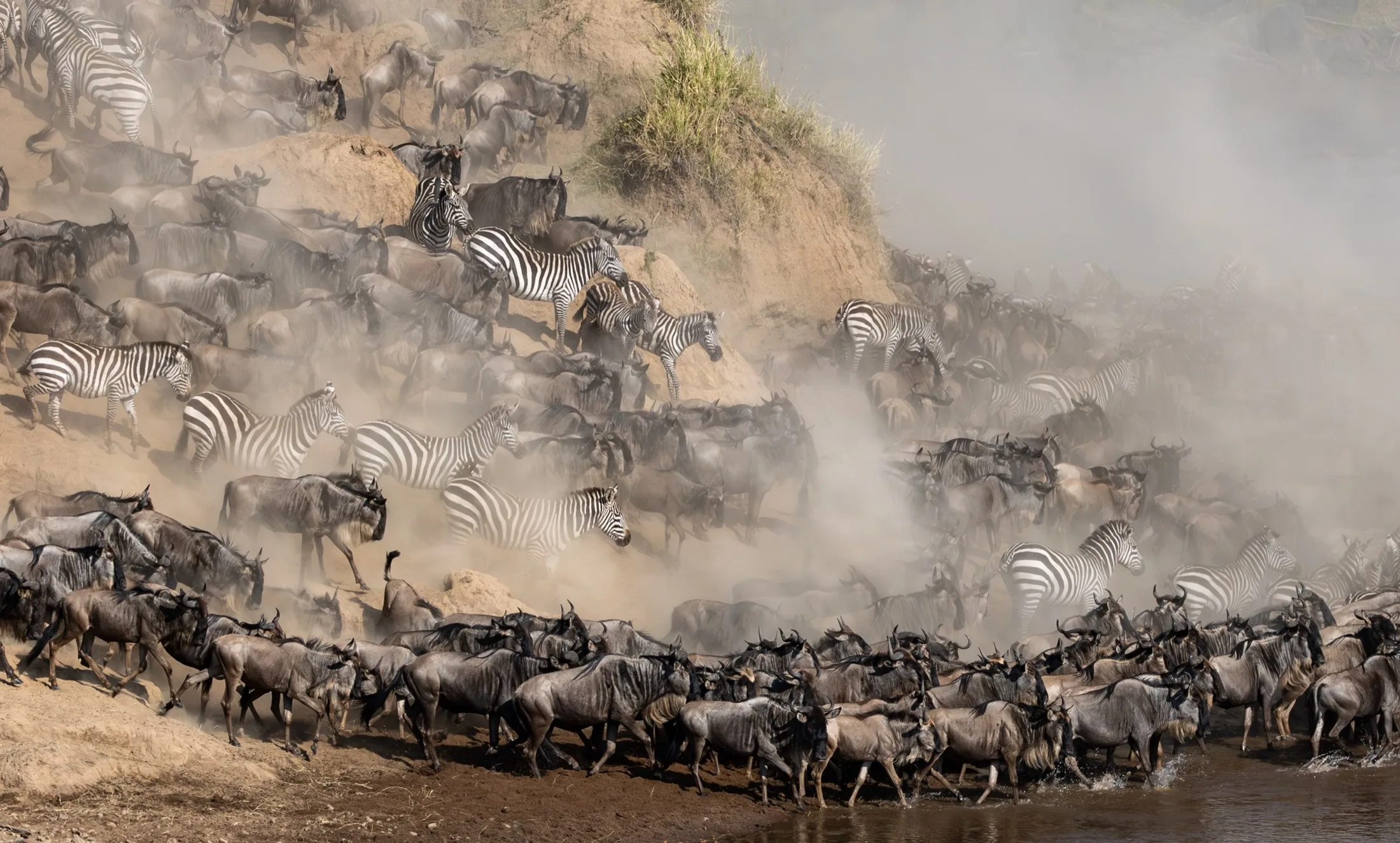
The Mara river is where the crossings happen, roughly July to October. Herds gather at traditional crossing points and may wait hours or days before one animal commits; the rest is chaos, current and crocodiles. It cannot be timetabled, so give yourself several days.
Big cats are resident year-round and do not depend on the migration — lion prides and cheetah on the open plains are as reliable in February as in August. First and last light are decisive, and cheetah in particular hunt earlier in the morning than most people expect.
Practicalities
Reserve entry is charged per person per day and rises steeply in the July-to-December high season; the Mara Triangle charges the same rates but is cashless, taking cards and mobile money only. Note that the fee covers a 12-hour day rather than a full 24 hours, which matters if you are staying outside the gates. Nairobi is a 45-minute flight or a five-to-six-hour drive away.
Gallery
Wildlife Species
African Lion
CommonMammal · Best time: Morning
African Elephant
CommonMammal · Best time: All Day
Leopard
UncommonMammal · Best time: Dawn/Dusk
Wildebeest
AbundantMammal · Best time: Migration Season
Cheetah
UncommonMammal · Best time: Morning
Geography
- Terrain
- Savanna grasslands with scattered acacia trees
- Elevation
- 1,500-2,170m
- Climate
- Tropical savanna
- Area
- 1,510 km²
Weather
- Best Months
- JulyAugustSeptemberOctober
- Avg. Temperature
- 20-28°C
- Rainfall
- Low in dry season
- Humidity
- 50-70%
Getting There
Jomo Kenyatta International Airport (Nairobi)
270km from Nairobi
- Domestic flight to Mara airstrips
- Road transfer (5-6 hours)
- Charter flight available
(Affiliate link — we may earn a commission.)
Tours & Experiences
Local guides substantially improve Leopard sighting odds — compare independent operators and dates for Masai Mara below.
(Affiliate links — we may earn a commission.)
Where to Stay
Mara Serena Safari Lodge
$$$Luxury Lodge · Inside reserve
Check availability on Booking.com →Governors Camp
$$$$Tented Camp · Inside reserve
Check availability on Booking.com →Tented camps in the Masai Mara
$$$ to $$$$Tented Camp · Inside reserve
Check availability on Booking.com →Basecamp Masai Mara
$$Eco Camp · 5km from gate
Check availability on Booking.com →(Affiliate links — we may earn a commission.)