Mahale Mountains / Gombe Stream National Parks
Mahale Mountains / Gombe Stream National Parks
Mahale Mountains National Park rises straight out of Lake Tanganyika in remote western Tanzania, a forested range where wild chimpanzees have been studied for more than half a century and where the beach and the forest meet with no road for hundreds of kilometres. It is strongest for travelers who want the most beautiful chimpanzee destination in Africa and are willing to pay for the remoteness.
Where to find the wildlife
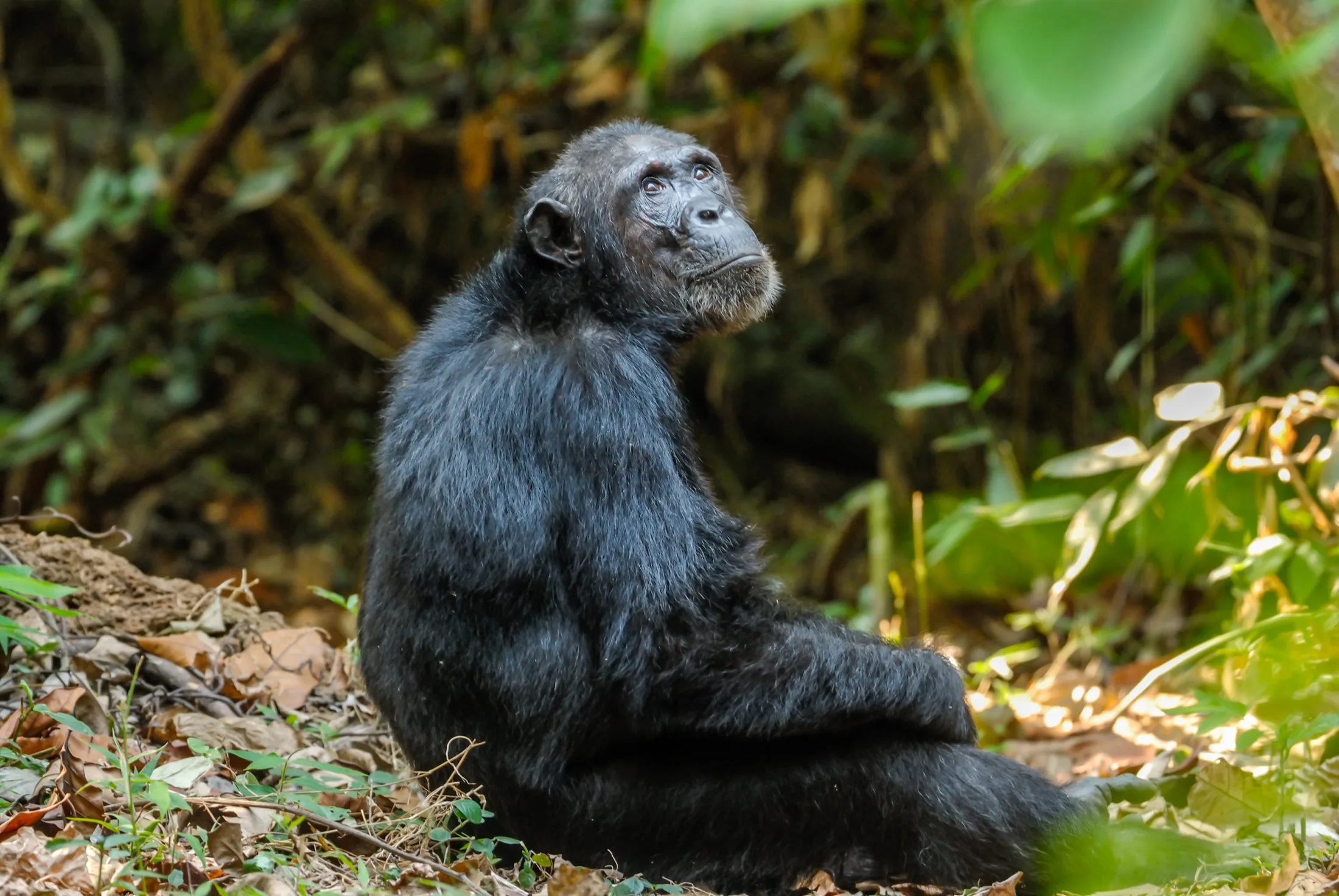
There is no road to Mahale and no vehicles in the park; you arrive by boat and everything is done on foot. The chimpanzees of the Mimikire community have been habituated since Japanese researchers began work here in the 1960s, and tracking them is the whole reason to make the journey.
The forested slopes behind the beach are where the chimps are. Trackers locate the group in the morning and radio their position; the walk in can be short and flat or several hours of steep, humid climbing, depending entirely on where the community has moved. Time with them is limited to an hour and masks are required.
The lakeshore itself is the other half of the experience — white sand, absurdly clear water and hundreds of endemic cichlid species that make snorkelling straight off the beach genuinely worthwhile. Tanganyika is the second-deepest lake on Earth and its fish fauna is a textbook case of evolutionary radiation.
The forest generally holds red colobus, red-tailed and blue monkeys, and yellow baboons on the beach, while the mountains behind hold species that few visitors ever reach.
The lake at dusk brings the fishing boats out with lamps, a line of lights across the water that is one of the region's defining sights.
The dry season from May to October is the practical window, when chimps tend to be lower on the slopes and the walking is easier. The heaviest rains make trekking difficult and many camps close.
Practicalities
Access is by charter flight from Arusha or Dar es Salaam to an airstrip up the lake, then a boat transfer of an hour or more. It is expensive and slow, and the small number of camps must be booked far ahead.
Mahale is often paired with Katavi National Park, a genuinely wild and little-visited savanna park on the same charter circuit — the combination is one of the great safari itineraries in Africa.
Gallery
Wildlife Species
Chimpanzees in Mahale and Gombe
UncommonMammal · Best time: Dry-season treks
Red colobus, blue monkey, red-tailed monkey, and olive baboon
CommonMammal · Best time: Forest walks and lakeshore trails
Tanganyika shoreline birds, forest birds, and raptors
UncommonBird · Best time: Morning
Leopard, bushpig, and shy forest mammals
RareMammal · Best time: Rare and luck-dependent
Geography
- Terrain
- Lake Tanganyika shoreline, tropical forest, steep mountains, beach-fringed coves, streams, woodland edges
- Elevation
- Lake edge to steep forested mountains
- Climate
- Tropical lake-and-mountain climate
- Area
- Western Tanzania chimpanzee landscape combining remote Mahale and smaller Gombe near Kigoma
Weather
- Best Months
- JuneJulyAugustSeptemberOctober
- Avg. Temperature
- 15-31°C
- Rainfall
- Dry season is the standard and most practical chimp trekking period, with easier trails and more reliable lake transfers
- Humidity
- 40-95%
Getting There
Kigoma for Gombe access, or specialist domestic flights and boat transfers for Mahale
Gombe is usually reached by boat from Kigoma, while Mahale remains a highly remote fly-in or boat-based primate destination where lake conditions and camp logistics shape the trip
- Chimpanzee tracking in Gombe and Mahale
- Lake Tanganyika forest-and-beach primate itinerary
- Western Tanzania specialist trip via Kigoma
(Affiliate link — we may earn a commission.)
Tours & Experiences
Local guides substantially improve animal sighting odds — compare independent operators and dates for Mahale Mountains / Gombe Stream National Parks below.
(Affiliate links — we may earn a commission.)
Where to Stay
Exclusive Mahale lakeside safari camps
Premium to LuxuryCamp or Lodge · Best base for Mahale chimp trekking
Gombe rest houses, lodges, and Kigoma hotels
Budget to Mid-rangeGuesthouse, Lodge, or Hotel · Practical base combination for Gombe access
Check availability on Booking.com →Transit hotels in western Tanzania gateways
Budget to Mid-rangeHotel · Used before and after lake transfers
Check availability on Booking.com →(Affiliate links — we may earn a commission.)