Monterey Bay
Monterey Bay
Monterey Bay is one of the world's great marine wildlife destinations, a deep submarine canyon reaching almost to the California shore that brings whales, sea otters, and enormous seabird numbers within a few kilometres of land. It is strongest for travelers who want reliable whale watching and sea otters on a short boat trip or even from the beach.
Where to find the wildlife
The reason Monterey works is geological. The Monterey Submarine Canyon is as deep and steep as the Grand Canyon and comes close inshore, so upwelling brings cold nutrient-rich water and the deep-ocean food chain right to the coastline. Boats reach whale habitat in twenty minutes, not two hours.
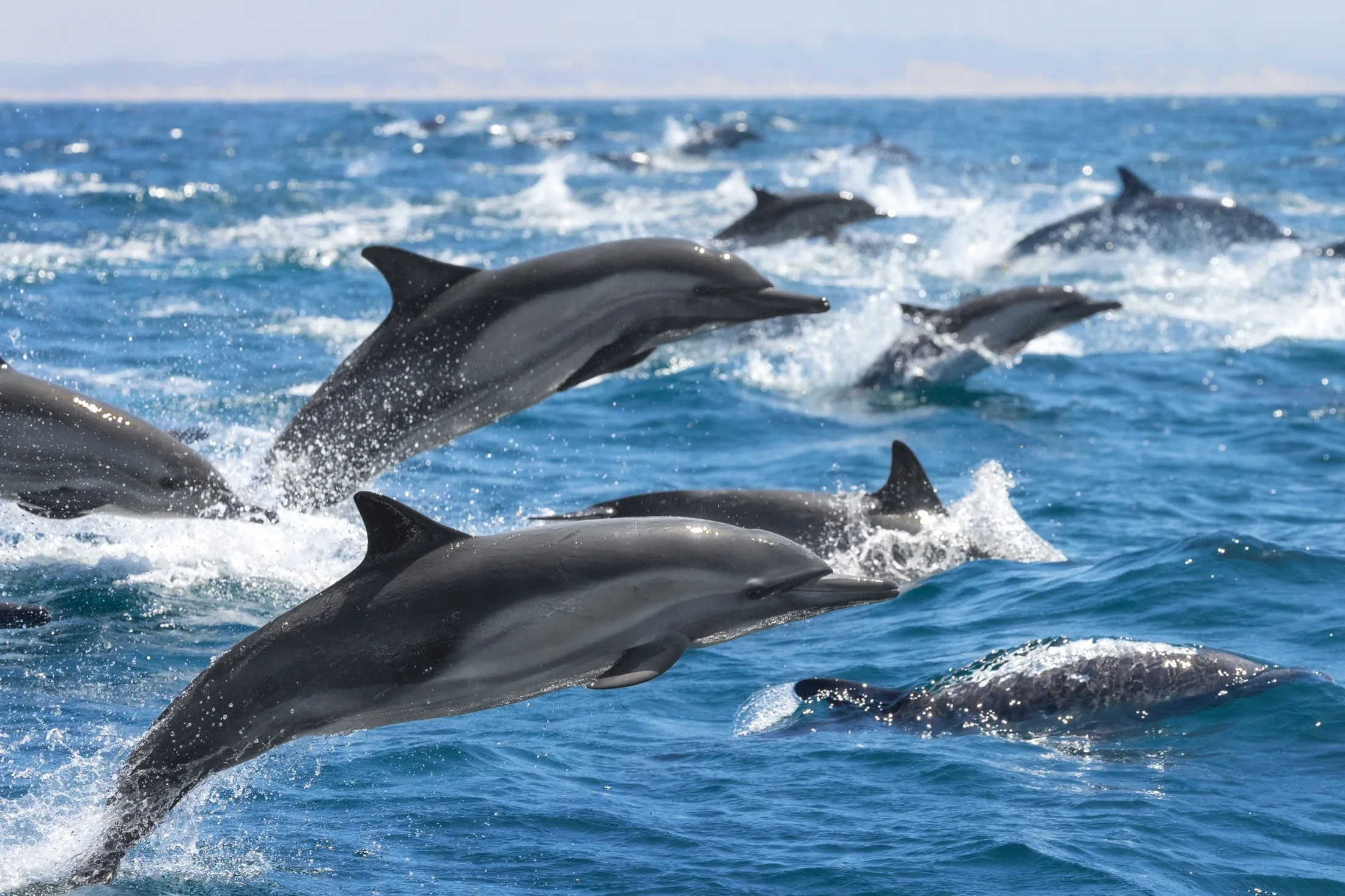
The canyon edge offshore is the whale-watching ground. Humpbacks are present much of the year and feed spectacularly on anchovy schools; blue whales arrive in summer and autumn; grey whales pass close inshore on migration between December and April, northbound mothers with calves hugging the coast in spring.
Moss Landing and Elkhorn Slough are the sea otter destination. The slough holds one of the densest otter concentrations in California, watched from kayaks or a small boat at close range alongside harbour seals and sea lions hauled out on the mudflats.
Point Lobos State Reserve, just south of Carmel, is the shore-based option and one of the finest coastal walks in California — otters in the kelp below the trail, harbour seals pupping in spring, and cormorant and brown pelican colonies on the rocks.
The kelp forest itself is the habitat that supports all of it, and the Monterey Bay Aquarium's kelp exhibit is the best explanation of what you are looking at from the boat.
A particular event worth timing for: orcas gather at the canyon head in April and May to hunt grey whale calves as the migration passes — grim, extraordinary, and among the most sought-after wildlife encounters on the Pacific coast.
Practicalities
Whale watching runs year-round from Monterey and Moss Landing, and the operators here are unusually research-connected. Trips are two to five hours and the bay can be rough — take seasickness precautions seriously.
Otters are protected by federal law: keep the required distance in a kayak, and never approach a resting animal.
Gallery
Wildlife Species
Humpback whale, gray whale, blue whale, and dolphins
CommonMarine Mammal · Best time: Seasonal boat trips
Sea otter, sea lion, and harbor seal
CommonMarine Mammal · Best time: Shoreline and kelp areas
Albatrosses, shearwaters, auklets, and jaegers
UncommonBird · Best time: Pelagic trips
Shorebirds and coastal raptors
CommonBird · Best time: Tides and migration
Geography
- Terrain
- Deep submarine canyon, kelp forests, beaches, rocky shore, estuaries
- Elevation
- Sea level coastal and offshore
- Climate
- Cool Mediterranean coastal
- Area
- Central California bay and marine ecosystem
Weather
- Best Months
- AprilMayJuneJulyAugustSeptemberOctober
- Avg. Temperature
- 8-22°C
- Rainfall
- Dry season is most comfortable, but marine wildlife is productive across much of the year
- Humidity
- 55-90%
Getting There
Monterey, San Jose, or San Francisco with easy road access
Very accessible with frequent whale-watching and pelagic birding departures
- Whale and sea otter photography
- Pelagic seabird trip
- California coast wildlife route
(Affiliate link — we may earn a commission.)
Tours & Experiences
Local guides substantially improve animal sighting odds — compare independent operators and dates for Monterey Bay below.
(Affiliate links — we may earn a commission.)
Where to Stay
Monterey and Pacific Grove hotels
Budget to LuxuryHotel · Best access to harbor and coast
Check availability on Booking.com →Santa Cruz and Carmel accommodation
Mid-range to LuxuryHotel or Inn · Good wider bay bases
Check availability on Booking.com →(Affiliate links — we may earn a commission.)