Picos de Europa
Picos de Europa
Picos de Europa National Park protects a compact limestone massif in northern Spain, rising abruptly from the Cantabrian coast into peaks and gorges that hold chamois, wolves, and the last brown bears in the Cordillera Cantábrica. It is strongest for travelers who want mountain wildlife alongside serious walking.
Where to find the wildlife
The Picos are three limestone blocks separated by deep gorges, and the wildlife divides by altitude and by how disturbed each valley is. The accessible core gives spectacular walking and reliable chamois; the wilder western sectors and the neighbouring valleys are where the bears and wolves are.
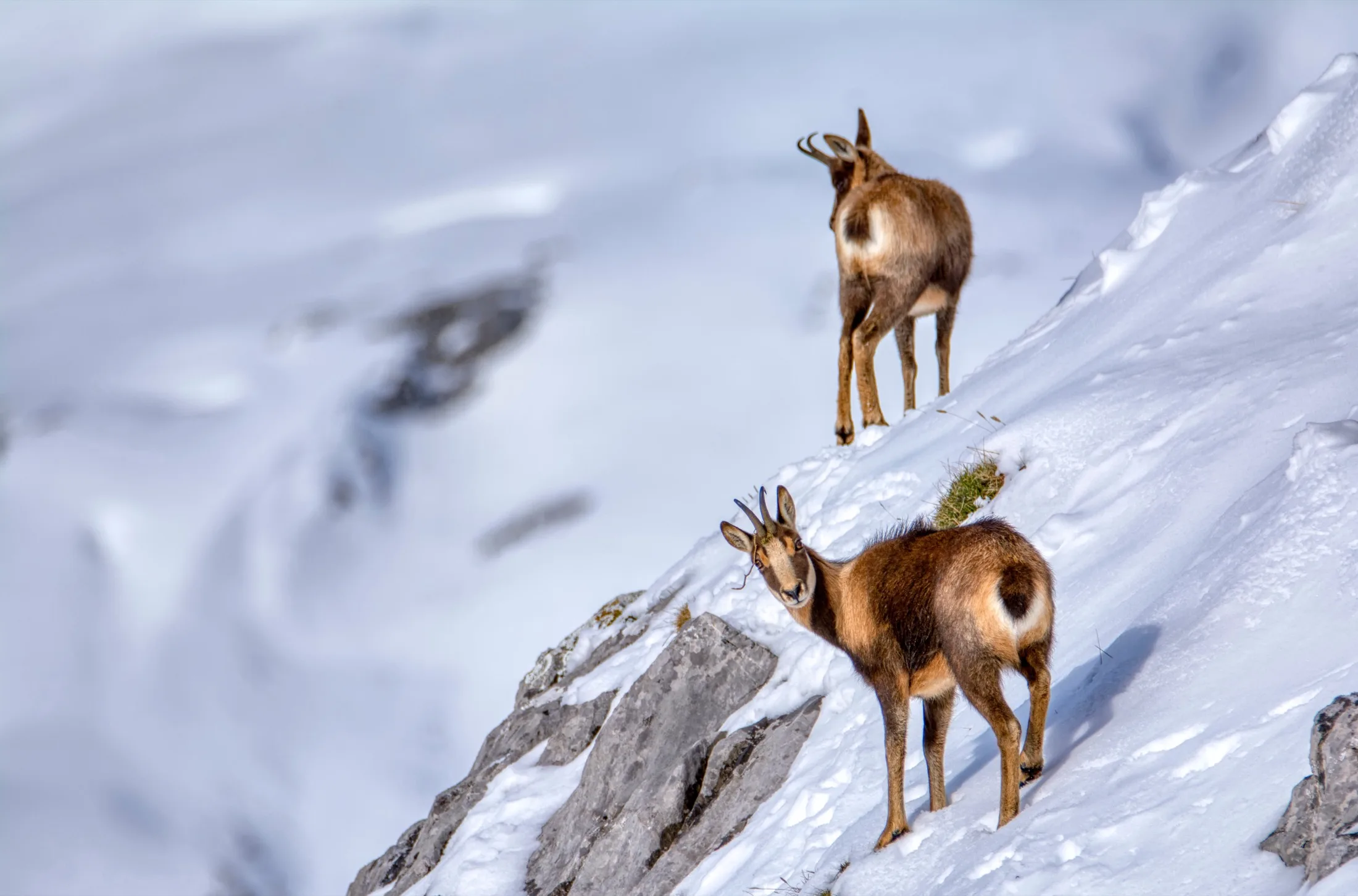
The high limestone around Fuente Dé and the Cares gorge holds Cantabrian chamois, which are common and often approachable on the upper slopes. The cable car at Fuente Dé lifts you into their habitat in minutes, and the Cares gorge path — cut into a cliff face above a river — is the classic walk.
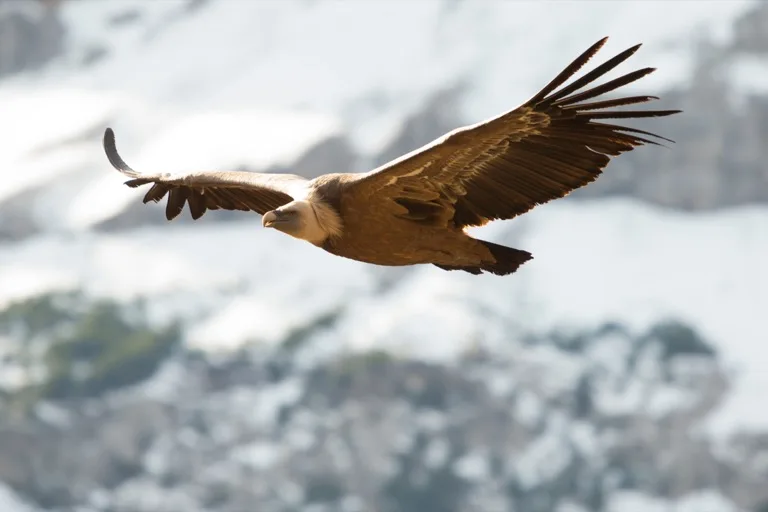
The cliffs and skies hold griffon vultures at close range, Egyptian vultures in summer, golden eagles, and the bearded vulture that has been reintroduced to the range and is now seen with increasing regularity.
The beech and oak forest in the lower valleys holds roe deer, wild boar and the elusive Cantabrian capercaillie, along with middle spotted and black woodpeckers.
The Somiedo and Fuentes del Narcea areas, west of the park proper in Asturias, are the bear destination. The Cantabrian brown bear population has recovered substantially, and organised watching from ridgetop viewpoints with telescopes in spring and autumn produces regular sightings — particularly females with cubs in spring.
May and June bring flowers, active bears and long days; September and October bring the deer rut and the bears feeding hard on berries before denning.
Practicalities
The park sits between Asturias, Cantabria and León, with Cangas de Onís, Potes and Arenas de Cabrales the usual bases. Roads through the gorges are narrow and busy in August.
Bear watching is best arranged with the specialist guides in Somiedo, who know the current den and feeding areas. Weather here is Atlantic and changeable — the mountains make their own cloud, and a clear morning is not a promise about the afternoon.
Gallery
Wildlife Species
Cantabrian Chamois
UncommonMammal · Best time: Morning
Griffon Vulture
CommonBird · Best time: Midday thermals
Golden Eagle
UncommonBird · Best time: Morning
Red Deer
UncommonMammal · Best time: Dawn or Dusk
Geography
- Terrain
- Limestone mountains, deep valleys, gorges, alpine pastures, Atlantic forest edge
- Elevation
- About 100-2648m
- Climate
- Atlantic mountain climate
- Area
- About 670 km2
Weather
- Best Months
- MayJuneSeptemberOctober
- Avg. Temperature
- 0-24°C
- Rainfall
- Moderate to high with quickly changing mountain weather
- Humidity
- 55-95%
Getting There
Bilbao, Santander, or Asturias airports with overland access to the mountain valleys
Usually reached by road from northern Spanish gateway cities
- Self-drive through main valleys and miradors
- Cable car and hiking routes
- Guided wildlife and landscape photography trips
(Affiliate link — we may earn a commission.)
Tours & Experiences
Local guides substantially improve Cantabrian Chamois sighting odds — compare independent operators and dates for Picos de Europa below.
(Affiliate links — we may earn a commission.)
Where to Stay
Hotels and guesthouses in mountain villages
Budget to Mid-rangeGuesthouse · Main bases around the park
Check availability on Booking.com →Rural lodges in valley settlements
Mid-rangeLodge · Near trailheads and scenic routes
Check availability on Booking.com →(Affiliate links — we may earn a commission.)