Saguaro National Park / Sonoran Desert
Saguaro National Park / Sonoran Desert
Saguaro National Park protects two districts of Sonoran Desert either side of Tucson, where the giant saguaro cactus forms a forest that supports an unexpectedly rich desert fauna. It is strongest for travelers who want desert wildlife, extraordinary plants, and easy access from a city.
Where to find the wildlife
The Sonoran is the wettest and most biologically diverse of North America's deserts, and its wildlife is a matter of timing rather than searching — almost everything is active at dawn, dusk and night, and invisible through the middle of the day.
The saguaro forest itself is the habitat. Gila woodpeckers and gilded flickers excavate nest holes in the cactus trunks, which elf owls — the world's smallest owl — and purple martins then occupy. Watching a saguaro at dusk in early summer produces a sequence of tenants.
The desert washes lined with mesquite and palo verde are where the mammals move: javelina in family groups, coyote, black-tailed jackrabbit, and bobcat at either end of the day.
The Rincon Mountains in the eastern district climb from desert to pine forest, and the trails up hold a completely different fauna — black bear, white-tailed deer, and montane birds within a few hours' walk of cactus.
The nights are when the desert lives: rattlesnakes, kangaroo rats, ringtails and the extraordinary insect life. Ranger-led night programmes are the safe way to experience it.
The summer monsoon, from July to September, transforms everything — toads emerge from years underground to breed in temporary pools, and the desert greens within days.
Spring, from February to April, is the best all-round season with wildflowers, comfortable temperatures and cactus flowering in May. Summer daytime heat is genuinely dangerous.
Practicalities
Both districts are within half an hour of Tucson and are visited by scenic loop drives with trails leading off them. The Arizona-Sonora Desert Museum between them is one of the best natural history institutions in the country and the single most useful stop for understanding what you are looking at.
Carry far more water than seems necessary, hike early, and watch where you put your hands and feet — rattlesnakes are common and generally want nothing to do with you.
Gallery
Wildlife Species
Gila woodpecker, gilded flicker, cactus wren, and elf owl
CommonBird · Best time: Spring mornings around cactus forest
Greater roadrunner, Gambel''s quail, curve-billed thrasher, and desert raptors
CommonBird · Best time: Morning and late afternoon
Javelina, coyote, bobcat, mule deer, and desert cottontail
UncommonMammal · Best time: Dawn, dusk, and quiet washes
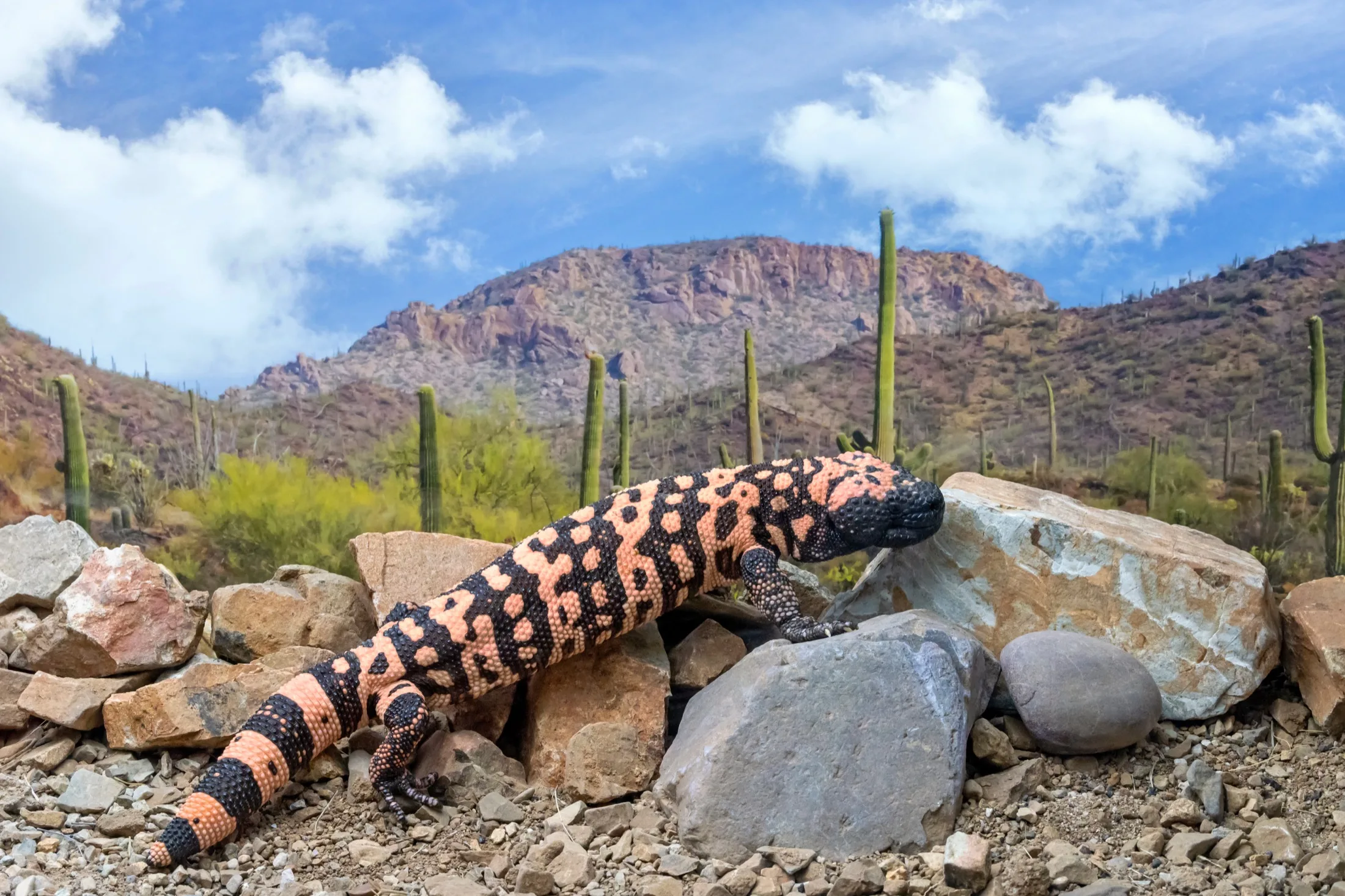
Gila monster, desert tortoise, rattlesnakes, horned lizards, and other reptiles
UncommonReptile · Best time: Warm spring and monsoon periods
Geography
- Terrain
- Sonoran Desert cactus forest, bajadas, rocky foothills, desert washes, riparian pockets, sky-island edges
- Elevation
- Low desert around Tucson to mountain foothills
- Climate
- Hot arid desert with summer monsoon influence
- Area
- Saguaro National Park east and west districts plus nearby Tucson Sonoran Desert habitat
Weather
- Best Months
- FebruaryMarchAprilMayAugustSeptemberOctoberNovember
- Avg. Temperature
- 5-40°C
- Rainfall
- Late winter and spring are best for flowers and comfortable hiking; summer monsoon can be excellent for dramatic skies, reptiles, and desert activity but brings heat and storms
- Humidity
- 10-70%
Getting There
Tucson International Airport, with Phoenix as a larger regional gateway
Very accessible by road from Tucson, with short scenic drives, trailheads, and nearby desert preserves
- Sunrise and sunset cactus-forest photography
- Desert birding around Saguaro and Tucson washes
- Reptile, macro, and monsoon-season natural history trip
(Affiliate link — we may earn a commission.)
Tours & Experiences
Local guides substantially improve animal sighting odds — compare independent operators and dates for Saguaro National Park / Sonoran Desert below.
(Affiliate links — we may earn a commission.)
Where to Stay
Tucson hotels, lodges, and guesthouses
Budget to LuxuryHotel or Lodge · Best all-round base for both Saguaro districts
Check availability on Booking.com →Desert resorts and rental homes near park edges
Mid-range to LuxuryResort or Rental · Useful for sunrise, sunset, and night-sky photography
Check availability on Booking.com →(Affiliate links — we may earn a commission.)