Svalbard
Svalbard
Svalbard is the most accessible high Arctic on Earth, a Norwegian archipelago at 78 degrees north where polar bears, walrus, and vast seabird cliffs sit within reach of a scheduled flight. It is strongest for travelers who want genuine Arctic wildlife and pack ice without a polar expedition's cost in time.
Where to find the wildlife
Almost all Svalbard wildlife viewing happens from a ship. The archipelago has barely any roads, most of it is protected, and the animals are along the coasts and on the ice — so the itinerary, the ice conditions and the vessel decide what you see far more than any particular site.
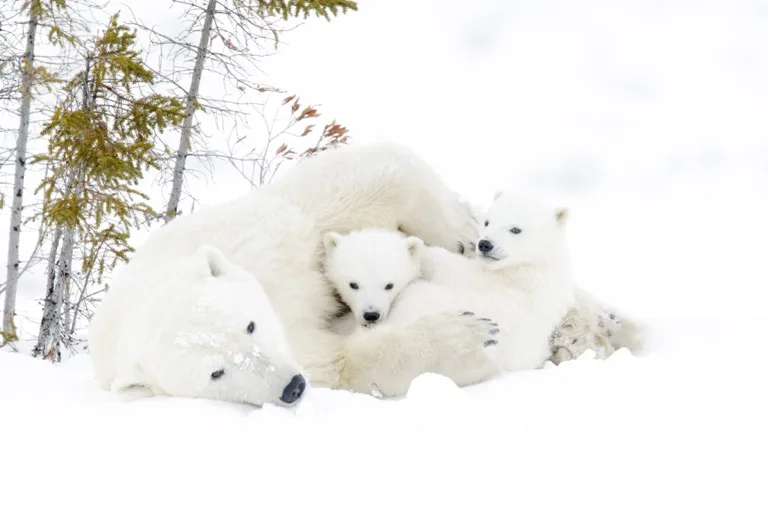
The pack ice north and east is where polar bears are most reliably found, hunting seals along the floe edge. Late season voyages that push north as the ice retreats generally have the best success; bears are also seen on shore and on glacier fronts throughout.
The bird cliffs — Alkefjellet above all — hold hundreds of thousands of Brünnich's guillemots on vertical basalt, with kittiwakes, glaucous gulls and Arctic foxes patrolling the scree below for fallen chicks. It is among the great seabird spectacles of the northern hemisphere.
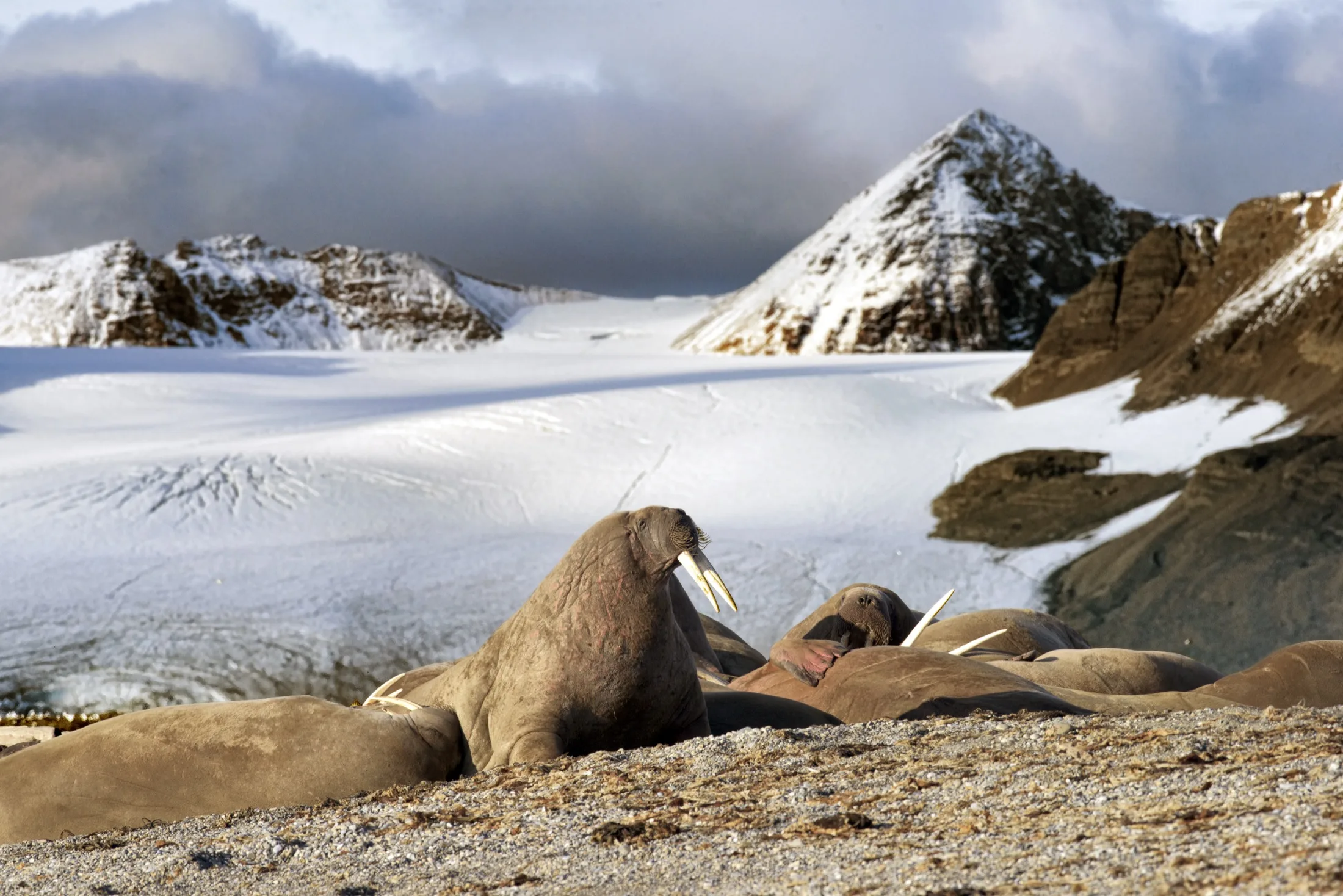
The walrus haulouts at Poolepynten, Torellneset and elsewhere hold groups of animals piled on the beach, watched from a set distance on shore.
The fjords and glacier faces hold bearded and ringed seals, beluga whales in shallow water, and in the outer waters blue, fin and humpback whales through the summer.
The tundra around Longyearbyen adds Svalbard reindeer — a short-legged endemic subspecies — along with ptarmigan and breeding waders, all accessible on foot with an armed guide.
June to August is the main season, with 24-hour daylight; late season gives the best ice and whale numbers. Winter brings snowmobile and dog-sled trips under the northern lights.
New rules worth knowing
Norway tightened Svalbard's environmental regulations from the start of 2025, and they shape every trip. Visitors must keep at least 300 metres from polar bears between July and February, and 500 metres from March to June; walrus haulouts require 150 metres. Landings in the national parks and nature reserves are restricted to a fixed list of authorised sites, vessels carrying more than 200 passengers cannot land at all, and drones are effectively banned in protected areas.
Outside Longyearbyen, carrying a firearm for polar bear protection is required — which in practice means going with a guide. Book operators that are properly licensed and expect the rules to be enforced.
Gallery
Wildlife Species
Polar Bear
UncommonMammal · Best time: Summer
Arctic Fox
CommonMammal · Best time: All Day
Walrus
UncommonMammal · Best time: Summer
Svalbard Reindeer
CommonMammal · Best time: All Day
Arctic Tern
AbundantBird · Best time: Summer
Geography
- Terrain
- Glaciers, tundra, fjords, mountains
- Elevation
- 0-1,713m
- Climate
- Arctic
- Area
- 61,022 km²
Weather
- Best Months
- JuneJulyAugust
- Avg. Temperature
- -20 to 10°C
- Rainfall
- Low (mostly snow)
- Humidity
- 75-85%
Getting There
Svalbard Airport, Longyearbyen
Direct flights from Oslo/Tromsø
- Expedition cruises
- Guided tours required outside settlements
- Snowmobile tours
(Affiliate link — we may earn a commission.)
Tours & Experiences
Local guides substantially improve Polar Bear sighting odds — compare independent operators and dates for Svalbard below.
(Affiliate links — we may earn a commission.)
Where to Stay
Basecamp Explorer
$$$Adventure Hotel · Longyearbyen
Check availability on Booking.com →Radisson Blu Polar Hotel
$$$Hotel · Longyearbyen
Check availability on Booking.com →Coal Miners Cabins
$$Historic Cabins · Longyearbyen
Check availability on Booking.com →Hotels in Longyearbyen
$$ to $$$Hotel · Main settlement
Check availability on Booking.com →(Affiliate links — we may earn a commission.)