Yasuni National Park
Yasuni National Park
Yasuní National Park is among the most biodiverse places on Earth, a stretch of Ecuadorian Amazon where Andean, equatorial, and Amazonian influences meet to produce record-breaking numbers of species in a single hectare. It is strongest for travelers who want serious rainforest biodiversity, clay licks, and canopy access rather than a safari-style big-mammal trip.
Where to find the wildlife
Yasuní's reputation rests on numbers that are hard to picture: a single hectare here can hold more tree species than the whole of North America, and the park's amphibian and insect lists are equally extreme. But biodiversity is not the same as visibility, and what you actually see depends on using the three places where the forest opens up — the clay licks, the canopy towers, and the water.
The parrot clay licks are Yasuní's signature. Cobalt-winged parakeets arrive in dense flocks, with mealy and yellow-crowned amazons and scarlet macaws among them, feeding on mineral clay in the early morning. The best-known licks sit within community-owned land near the Añangu area, and activity is much stronger on mornings without rain.
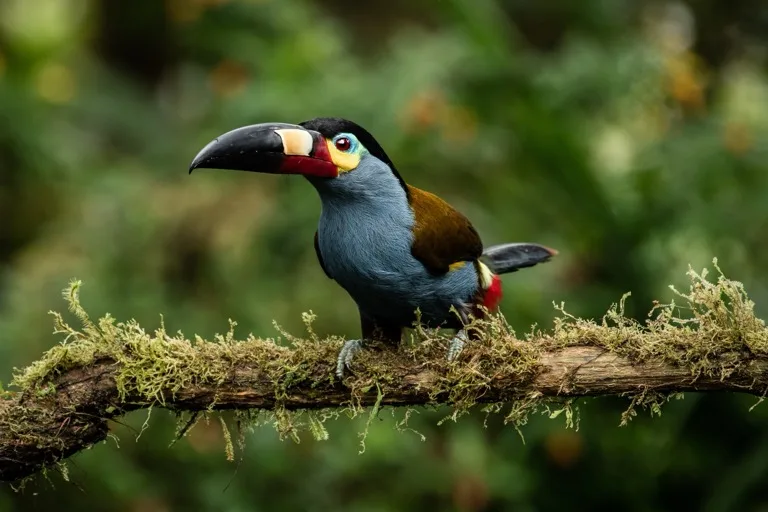
The canopy towers are how you convert biodiversity into sightings. From platform height you look across the treetops at mixed flocks, toucans, cotingas and, with real luck, a harpy eagle — a bird present in Yasuní but rare enough that no lodge can promise one.
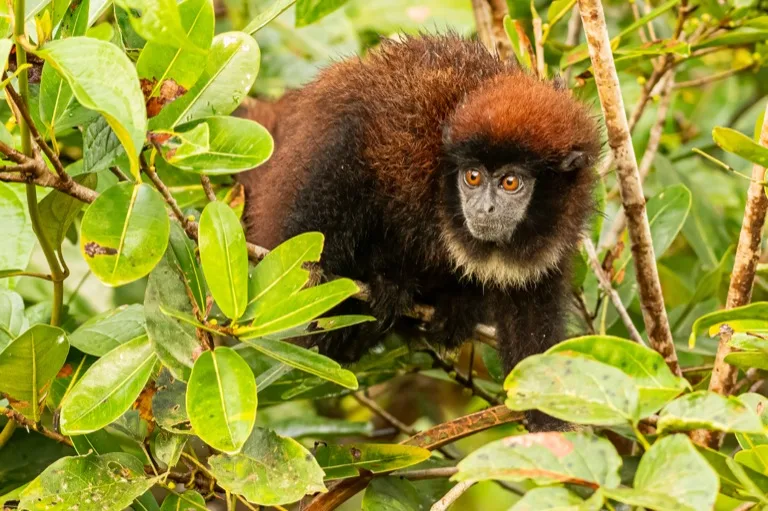
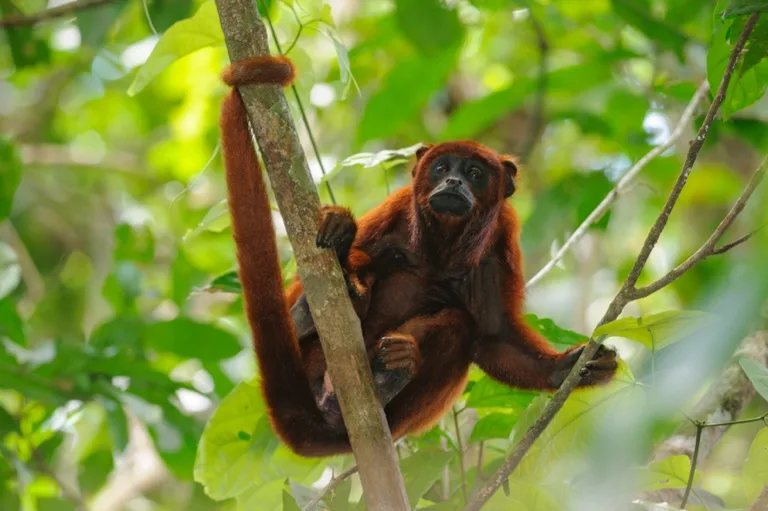
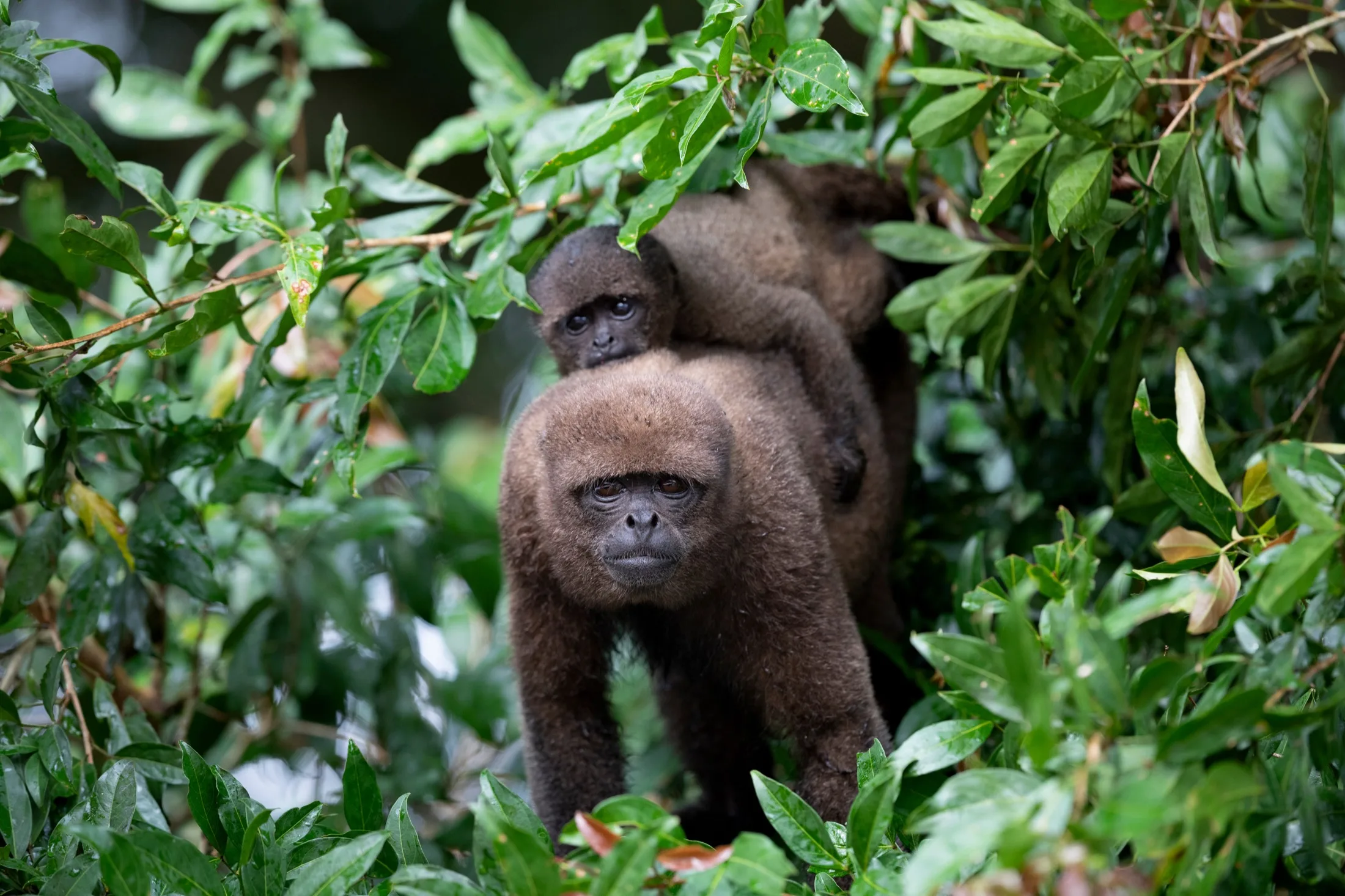
The blackwater creeks and oxbow lakes hold giant otters, hoatzin, caiman and the park's most approachable primates. Squirrel and woolly monkey troops come down to the water's edge, and a paddled canoe at dawn puts you among them without engine noise.
December to January and August to September are the drier windows and the best times to visit, though this is rainforest and rain is a certainty in any month. Dawn is decisive here more than anywhere: clay lick activity, primate movement and bird song all peak in the first two hours, and the forest goes quiet by mid-morning.
Practicalities
Access is via Coca, a short flight from Quito, then a motorised canoe down the Napo river — typically two to three hours — and often a further paddled canoe into a lodge's own creek. There is no self-guided visiting: you stay at a lodge and go out with its naturalist guides.
Several of the best lodges are owned and staffed by the Kichwa communities whose land they sit on, and choosing one of those is the most direct way for a visit to support the people defending this forest — a live issue in a park that also sits above substantial oil reserves.
Gallery
Wildlife Species
Squirrel Monkey
CommonMammal · Best time: Morning
Harpy Eagle
RareBird · Best time: Morning
Scarlet Macaw
UncommonBird · Best time: Early Morning
Giant Otter
UncommonMammal · Best time: Morning
Geography
- Terrain
- Lowland Amazon rainforest, blackwater streams, rivers, canopy
- Elevation
- 190-400m
- Climate
- Humid equatorial
- Area
- About 9820 km2
Weather
- Best Months
- DecemberJanuaryAugustSeptember
- Avg. Temperature
- 21-32°C
- Rainfall
- High year round
- Humidity
- 80-100%
Getting There
Quito to Coca by air, then river transfer
River access from Coca
- Boat to Amazon lodges
- Canopy towers and trails
- Multi-day rainforest stays
(Affiliate link — we may earn a commission.)
Tours & Experiences
Local guides substantially improve Harpy Eagle sighting odds — compare independent operators and dates for Yasuni National Park below.
(Affiliate links — we may earn a commission.)
Where to Stay
Amazon lodges along the Napo and Yasuni access rivers
Mid-range to PremiumLodge · Boat access only
Check availability on Booking.com →Research oriented eco lodges
Mid-rangeEco Lodge · Near trail networks
Check availability on Booking.com →(Affiliate links — we may earn a commission.)