Galápagos Islands
Galápagos Islands
The Galápagos Islands are the world's most famous wildlife destination, a volcanic archipelago on the equator where animals evolved without land predators and show almost no fear of people. It is unmatched for close encounters with giant tortoises, marine iguanas, boobies, and sea lions, in a setting that shaped how we understand life on Earth.
Where to find the wildlife
The thing to understand about the Galápagos is that the islands are not interchangeable. Each one has its own endemic species and its own set of landing sites, and what you see is decided almost entirely by the itinerary you book. Comparing routes island by island matters far more here than choosing between boats.
Española, in the far southeast, is the only breeding site in the world for the waved albatross, present roughly from April to December. Its Punta Suárez trail also delivers the archipelago's most colourful marine iguanas and a blowhole-backed cliff of nesting seabirds.
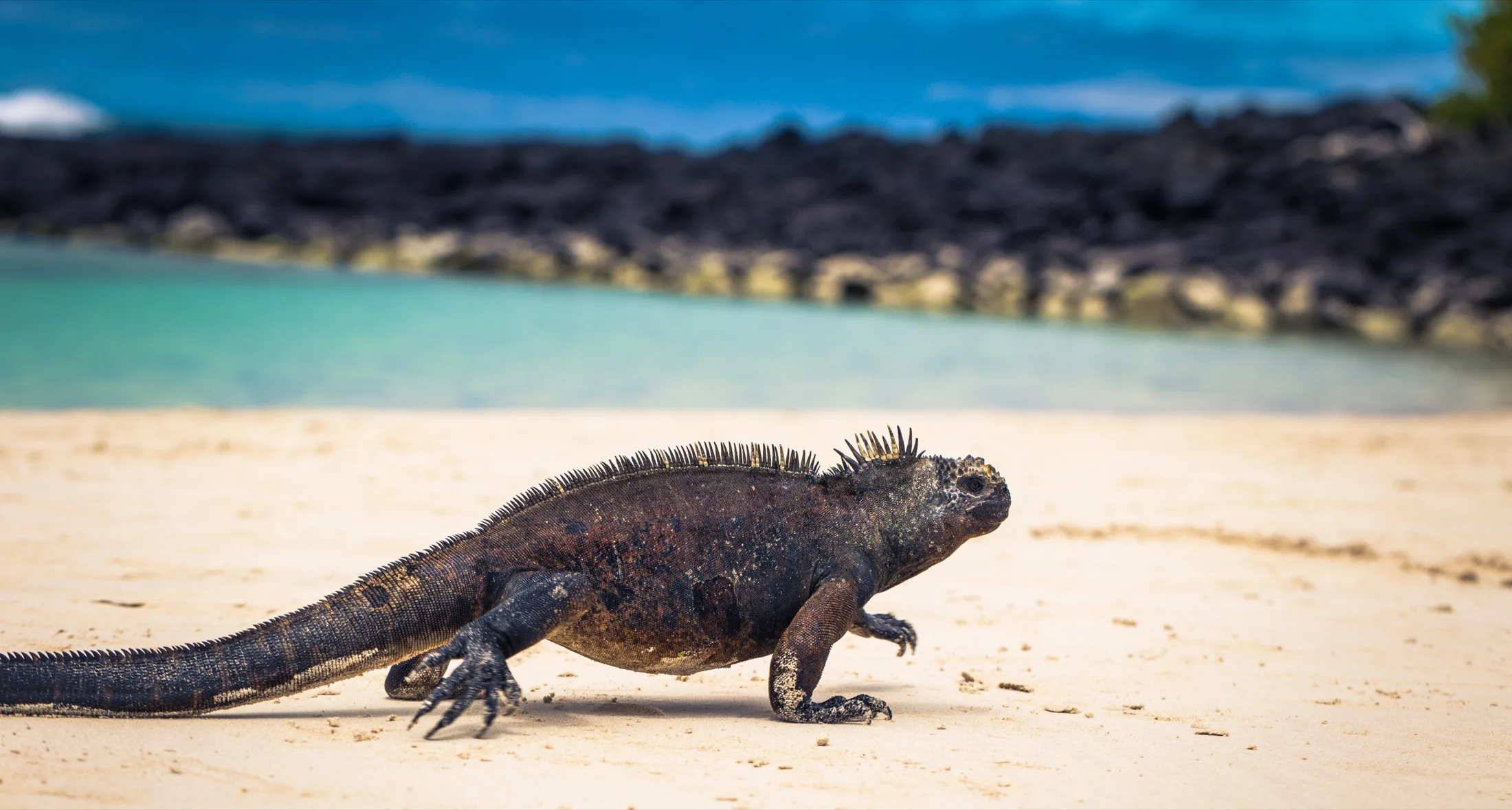
Fernandina and western Isabela are the cold-water islands, fed by the Cromwell upwelling. Punta Espinosa on Fernandina holds vast basking rafts of marine iguanas alongside flightless cormorants, and this is the most reliable region for Galápagos penguins — the only penguin that lives at the equator.
The highlands of Santa Cruz are where wild giant tortoises are found, grazing in farm pasture and pools well above the coastal zone. Tortoise viewing is a highland activity, not a beach one, which surprises many first-time visitors.
North Seymour and Genovesa carry the seabird colonies: blue-footed and Nazca boobies nesting beside the path, magnificent frigatebirds inflating their scarlet throat pouches in display, and on Genovesa, red-footed boobies in the low scrub.
Much of the archipelago's best wildlife is underwater, so bring or rent a mask — snorkelling with sea lions, turtles and reef fish is a routine part of most itineraries rather than an add-on.
Rules that shape the trip
Every visit to a national park site must be accompanied by a certified naturalist guide; this has been the rule since 1975 and there is no independent hiking at visitor sites. You must stay on marked trails, keep about two metres from wildlife even when an animal approaches you, and flash photography is not permitted.
Budget for the fees separately from your tour price: foreign adult visitors pay a national park entrance fee of 200 US dollars, with reduced rates for children and for Andean Community, Mercosur and Ecuadorian nationals, plus a 20 dollar transit control card. Both are paid on arrival at the airport, and the park fee is commonly cash only — check with your operator before you fly.
Gallery
Wildlife Species
Giant Tortoise
CommonReptile · Best time: All Day
Marine Iguana
CommonReptile · Best time: Morning
Blue-footed Booby
CommonBird · Best time: All Day
Galápagos Sea Lion
AbundantMammal · Best time: All Day
Galápagos Penguin
UncommonBird · Best time: Morning
Geography
- Terrain
- Volcanic islands with varied ecosystems
- Elevation
- 0-1,707m
- Climate
- Tropical dry/semi-arid
- Area
- 7,880 km²
Weather
- Best Months
- DecemberJanuaryFebruaryMarch
- Avg. Temperature
- 22-30°C
- Rainfall
- Low to moderate
- Humidity
- 70-85%
Getting There
Seymour Airport (Baltra) or San Cristóbal Airport
Flight from Quito/Guayaquil (2 hours)
- Cruise ship tours
- Island hopping by speedboat
- Land-based tours
Tours & Experiences
Local guides substantially improve Galápagos Penguin sighting odds — compare independent operators and dates for Galápagos Islands below.
(Affiliate links — we may earn a commission.)
Where to Stay
Finch Bay Galápagos Hotel
$$$$Eco Hotel · Santa Cruz Island
Check availability on Booking.com →Hotels in Puerto Ayora
$$$Hotel · Puerto Ayora
Check availability on Booking.com →Lodges in Santa Cruz
$$$$Lodge · Santa Cruz Highlands
Check availability on Booking.com →(Affiliate links — we may earn a commission.)