Antarctic Peninsula Protected Areas
Antarctic Peninsula Protected Areas
The Antarctic Peninsula is the accessible edge of the last true wilderness, where penguin colonies, seals, and whales gather along ice-choked channels and volcanic shores through the brief austral summer. It is strongest for travelers who want a genuine expedition, extraordinary landscape photography, and wildlife that has no fear of people.
Where to find the wildlife
Almost all Antarctic wildlife lives at the edge — on the beaches, the ice, and in the water — because the interior is a frozen desert that supports almost nothing. Practically, that means your experience is made of zodiac cruises and shore landings along the peninsula's protected western side, and what you see depends far more on when you go than where.
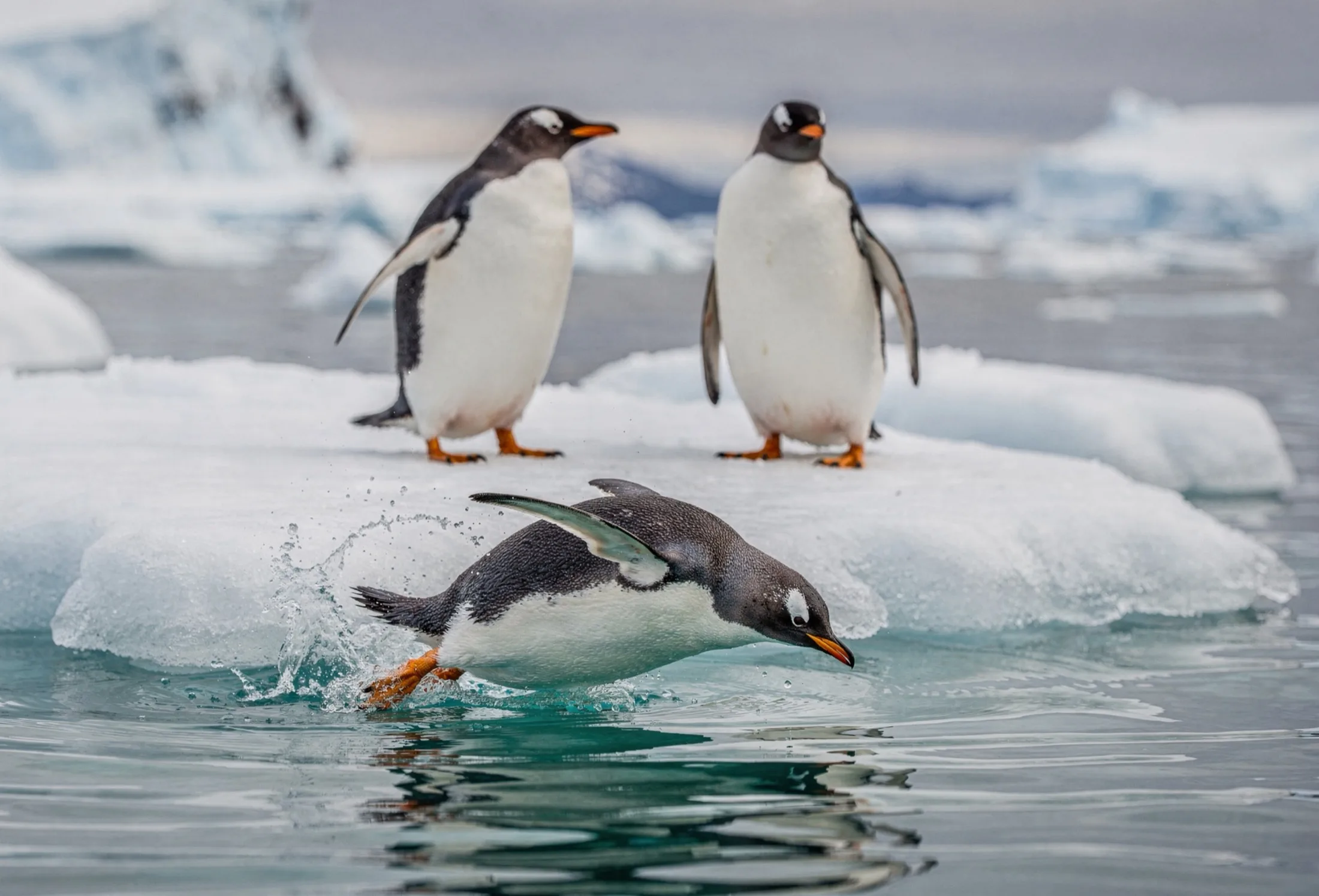
The penguin colonies are the anchor of every landing. Gentoos are the most widespread and the most likely to be nesting a few metres from the marked path; chinstraps hold the steeper, noisier rookeries; Adélies are the true ice specialists, found further south and declining in the northern peninsula as the climate warms.
The ice itself is where the seals are. Crabeater seals haul out on floes in numbers, Weddell seals lie fat and motionless near fast ice, and leopard seals patrol the edges of penguin colonies — a zodiac cruise through brash ice is the most productive seal watching of the trip.
The channels and bays — the Lemaire, Wilhelmina, Neko Harbour — are where whales concentrate. Humpbacks feeding on krill are the main event, often approaching stationary zodiacs of their own accord, with minke whales in the ice and orca as an occasional bonus.
Timing changes the trip completely. November brings pristine snow, courtship and nest building; December and January the long days, hatching chicks and the peak of activity; February and March the fattest chicks, the most whales, and the best chance of finding the humpbacks in numbers.
How visiting works
Everything is regulated by the Antarctic Treaty system and, in practice, by IAATO, whose members run essentially all tourist voyages. No more than 100 passengers may be ashore at a site at any time, which is why ships carrying more than about 500 passengers cannot land at all — vessel size is the single most consequential choice you make.
Ashore, you must keep at least five metres from wildlife and ten metres from the edge of a penguin colony, stay off their pathways to the sea, and let any animal that approaches you do so on its own terms. Boots and outer clothing are decontaminated between landings. Nothing is taken, nothing is left, and no food is eaten ashore.
Most voyages leave from Ushuaia and cross the Drake Passage in about two days each way — budget for that being rough, or pay considerably more to fly across it to King George Island.
Gallery
Wildlife Species
Gentoo, chinstrap, and Adélie penguins
CommonBird · Best time: Austral summer
Weddell, leopard, and crabeater seals
UncommonMammal · Best time: Austral summer
Humpback and minke whales
UncommonMammal · Best time: Late season
Skuas, petrels, and other seabirds
CommonBird · Best time: Austral summer
Geography
- Terrain
- Polar coastline, glaciers, pack ice, islands, rocky penguin shores
- Elevation
- Sea level to steep glaciated mountains
- Climate
- Maritime Antarctic
- Area
- Expedition route across multiple landing zones and protected coastal sectors
Weather
- Best Months
- NovemberDecemberJanuaryFebruary
- Avg. Temperature
- -15 to 5°C
- Rainfall
- Snow, wind, sea ice, and swell determine access more than rainfall totals
- Humidity
- 55-100%
Getting There
Usually reached by expedition ship from Ushuaia, sometimes after a fly-cruise link
One of the least accessible destinations in the dataset, with the Drake Passage and weather windows central to trip planning
- Classic Antarctic Peninsula expedition cruise
- Fly-cruise with ship-based landings
- Photographic polar expedition
Tours & Experiences
Local guides substantially improve animal sighting odds — compare independent operators and dates for Antarctic Peninsula Protected Areas below.
(Affiliate links — we may earn a commission.)
Where to Stay
Expedition ship cabins
Premium to LuxuryShip Cabin · The standard and usually only realistic lodging model
Pre-voyage hotels in Ushuaia
Mid-range to PremiumHotel · Used before and after embarkation
Check availability on Booking.com →(Affiliate links — we may earn a commission.)