Falkland Islands Nature Reserves
Falkland Islands Nature Reserves
The Falkland Islands offer the most approachable subantarctic wildlife anywhere, an archipelago of windswept grassland and tussac-covered coasts where five penguin species, black-browed albatross colonies, and elephant seals breed within walking distance of small island lodges. It is strongest for travelers who want South Georgia's species without a ship, and photographers who want time rather than a landing window.
Where to find the wildlife
The Falklands' great advantage over a cruise is time. Instead of a two-hour landing you can stay on a wildlife island for several days and wait for the light, the weather, and the behaviour you came for. The trade-off is that almost every island is a separate destination reached by a small aircraft, so an itinerary is built island by island.
Volunteer Point, on East Falkland, holds the archipelago's largest king penguin colony, with gentoos and Magellanics on the same stretch of beach and dune. It is reached from Stanley by a long, rough drive across camp and is the one major site most day visitors see. It sits on private land and access must be arranged in advance.
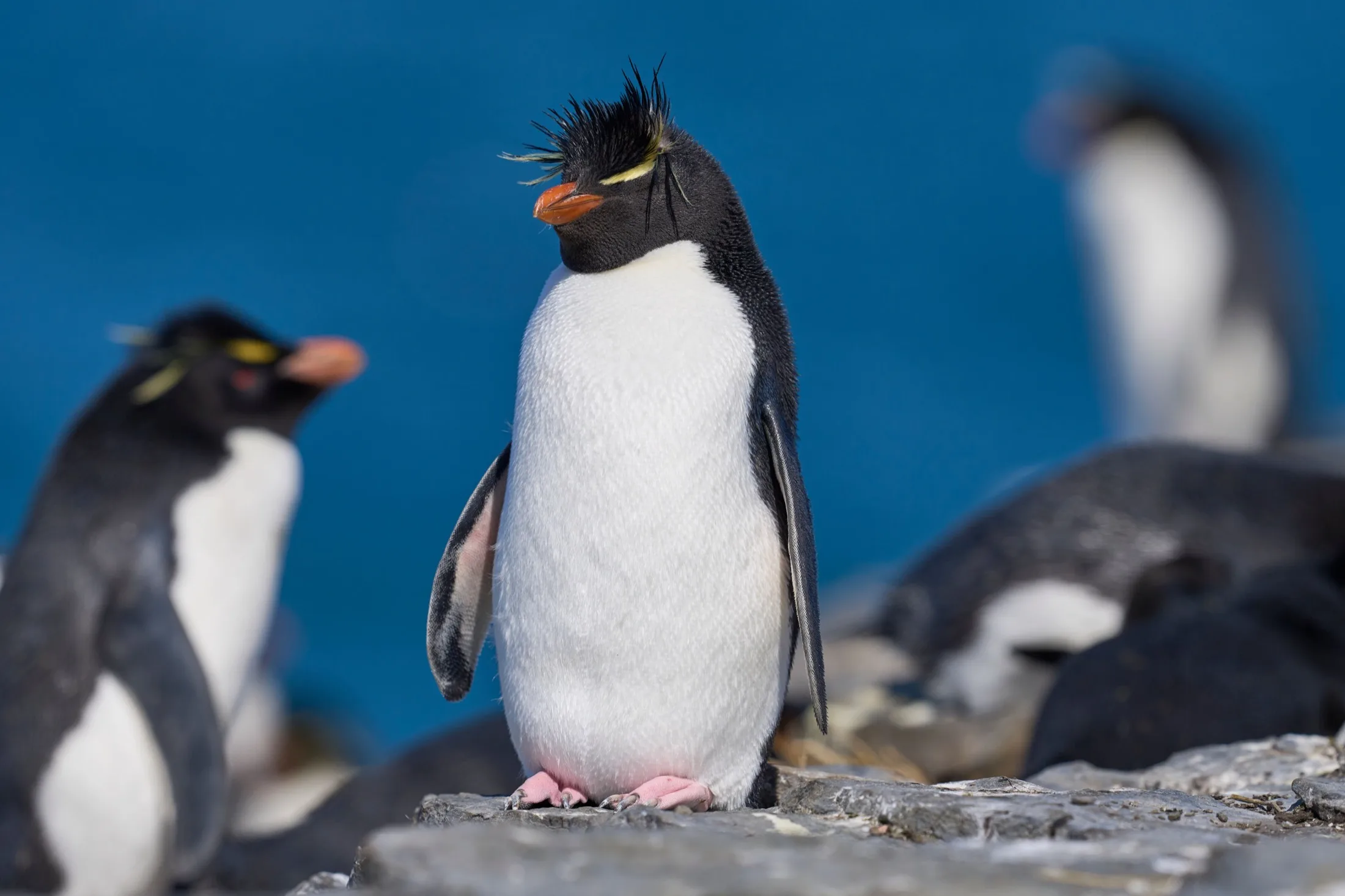
Saunders Island is the classic multi-species island. The Neck, a narrow isthmus between two hills, puts rockhopper, gentoo, Magellanic and king penguins within a short walk of one another, and a black-browed albatross colony of thousands of pairs sits on the cliffs above — one of the easiest great-albatross colonies in the world to reach on foot.
Sea Lion Island is the mammal island: the Falklands' most important southern elephant seal breeding beach, with bulls hauled out and fighting through October, plus sea lions, orca patrolling offshore in season, and rockhoppers and gentoos ashore.
Carcass Island is rat-free, which means its tussac holds small birds that have vanished elsewhere — Cobb's wren, tussacbird and Falkland thrush come close enough to trip you up — alongside sheltered beaches of gentoos and Magellanic burrows.
October to March is the season: elephant seals ashore in October, penguins on eggs in November and December, chicks through January and February. The wind is constant year-round and shapes every day's plan.
Practicalities
Inter-island travel is by FIGAS, the government air service, flying small aircraft on routes fixed a day ahead according to who has booked — you find out your departure time the evening before, and baggage allowances are strict. Nearly all land is privately owned, so visits are arranged through island owners and lodges; permits are needed for government-owned islands. Book the whole chain of flights and lodges well ahead, since capacity on the small islands is only a handful of beds.
Gallery
Wildlife Species
King, gentoo, rockhopper, and Magellanic penguins
CommonBird · Best time: Austral summer
Black-browed albatross and seabird colonies
CommonBird · Best time: Austral summer
Southern elephant seals and sea lions
UncommonMammal · Best time: Spring and summer
Upland geese and island endemics
UncommonBird · Best time: All season
Geography
- Terrain
- Subantarctic islands, tussock coast, cliffs, beaches, offshore rookeries
- Elevation
- Sea level to low hills
- Climate
- Cool windy maritime
- Area
- Archipelago-wide wildlife circuit across East, West, and outer islands
Weather
- Best Months
- OctoberNovemberDecemberJanuaryFebruary
- Avg. Temperature
- 0-18°C
- Rainfall
- Moderate, with wind and sea conditions strongly shaping island access
- Humidity
- 55-95%
Getting There
Mount Pleasant Complex with onward island flights, ferries, or 4x4 travel
Quite remote but much more practical than most polar expedition destinations
- Outer-island wildlife circuit
- Penguin and albatross photography trip
- Stanley-based mixed island itinerary
Tours & Experiences
Local guides substantially improve animal sighting odds — compare independent operators and dates for Falkland Islands Nature Reserves below.
(Affiliate links — we may earn a commission.)
Where to Stay
Farm lodges and guesthouses on outer islands
Mid-range to PremiumGuesthouse or Lodge · Often close to key colonies
Check availability on Booking.com →Hotels in Stanley
Mid-rangeHotel · Main gateway base
Check availability on Booking.com →(Affiliate links — we may earn a commission.)