Gir National Park
Gir National Park
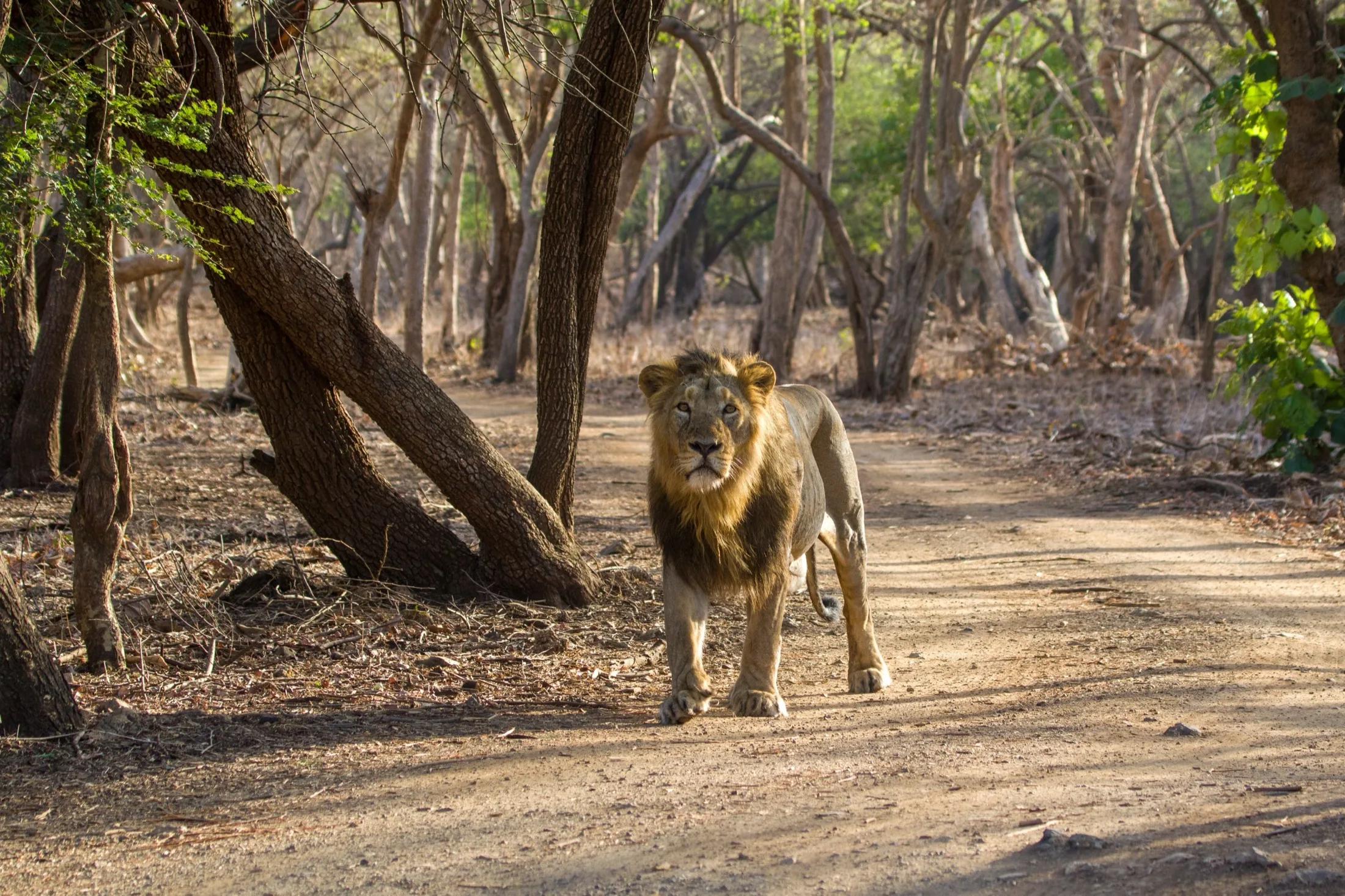
Gir National Park in Gujarat is the last wild home of the Asiatic lion, a dry teak and acacia forest where a population that once fell to a few dozen animals has recovered into the hundreds. It is strongest for travelers who want to see a subspecies that exists in the wild nowhere else on Earth.
Where to find the wildlife
Gir's lions are the whole point, and the reserve runs on a permit-and-zone system that assigns you a route rather than letting you choose. That randomness means multiple safaris are the sensible strategy — and it also means guides matter, since local knowledge of where prides have been operating is what turns a zone into a sighting.
The core zones around Kamleshwar Dam hold the highest lion densities and the classic Gir habitat of teak forest opening onto scrub. Lions here rest up through the heat and move at either end of the day; sightings are common but rarely as open as African savanna viewing.
The riverbeds and water points are where to concentrate in the hot months. Gir's rivers dry into pools, and lion, leopard, sambar and chital all use them.
The open grassland zones are better for the supporting cast — chital in large herds, nilgai, chinkara and the striking four-horned antelope — and for the reserve's very good bird list, which includes crested serpent eagle and Indian pitta.
Devalia, the interpretation zone, is a fenced enclosure where lions are effectively guaranteed from a bus. It is not a wild sighting and should not be confused with one, but it is a reasonable fallback when permits are unavailable or the main park is closed.
December to March is the most comfortable window; April to mid-June is hot and gives the best sightings as animals concentrate at water.
Practicalities
The park closes for the monsoon, from mid-June to mid-October. Permits are released online roughly 90 days ahead by zone and shift, and peak dates sell out.
Worth knowing for context: the lion population has grown past the point where the protected area can hold it, and a substantial share of Asiatic lions now live outside the sanctuary in the surrounding agricultural landscape, coexisting with people. That coexistence — not the park alone — is the real story of this species' recovery.
Gallery
Wildlife Species
Asiatic Lion
UncommonMammal · Best time: Morning or Evening
Leopard
UncommonMammal · Best time: Dawn or Dusk
Chital
CommonMammal · Best time: All Day
Marsh Crocodile
CommonReptile · Best time: All Day
Geography
- Terrain
- Dry deciduous forest, scrub, grassland, rivers
- Elevation
- 150-530m
- Climate
- Semi arid tropical
- Area
- About 1412 km2 protected landscape
Weather
- Best Months
- DecemberJanuaryFebruaryMarchApril
- Avg. Temperature
- 10-42°C
- Rainfall
- Low in dry season
- Humidity
- 30-70%
Getting There
Rajkot, Diu, or Ahmedabad with road transfer
Reached by road to Sasan Gir
- Permit based jeep safaris
- Birding in buffer zones
- Multiple safari routes
(Affiliate link — we may earn a commission.)
Tours & Experiences
Local guides substantially improve Asiatic Lion sighting odds — compare independent operators and dates for Gir National Park below.
(Affiliate links — we may earn a commission.)
Where to Stay
Safari lodges in Sasan Gir
Budget to PremiumLodge · Near main gates
Check availability on Booking.com →Guesthouses and resorts in gateway villages
Mid-rangeResort · Short drive to entrances
Check availability on Booking.com →(Affiliate links — we may earn a commission.)