Ranthambore
Ranthambore
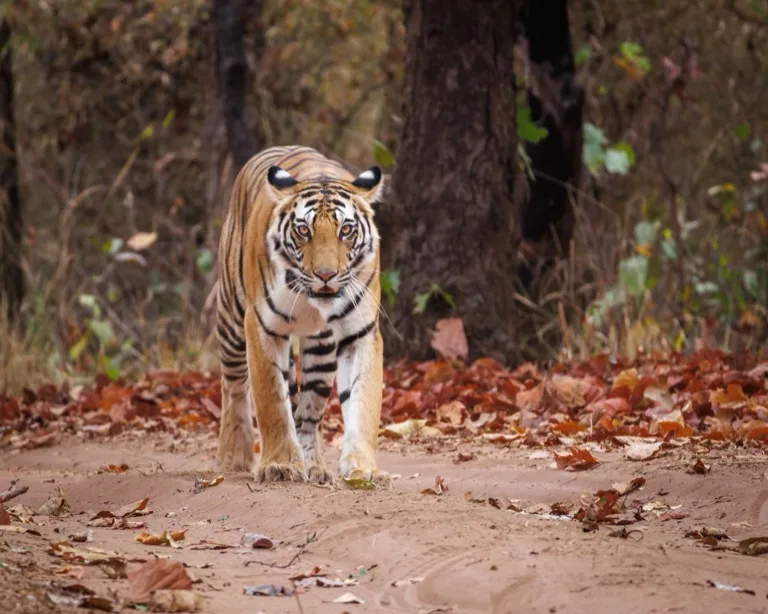
Ranthambore National Park is India's most famous tiger reserve, a landscape of dry deciduous forest, lakes, and ruined pavilions beneath a thousand-year-old fort in Rajasthan. It is strongest for travelers who want tigers in a setting no other reserve can match, combined easily with the Golden Triangle.
Where to find the wildlife
Ranthambore's tigers are habituated to vehicles and its terrain is relatively open, which makes it one of the better reserves for sightings — but access runs on a strict zone-and-permit system, and understanding it is the difference between a good visit and a frustrating one.
Zones 1 to 5 are the historic core and hold the highest tiger density. Zones 3, 4 and 5 in particular contain the lakes — Padam Talao, Rajbagh and Malik Talao — whose permanent water holds tigers through the hot months and gives the classic Ranthambore images of a tiger against ruined stonework.
The lakes themselves are the set pieces. Marsh crocodiles bask on the banks, sambar wade shoulder-deep to feed on water plants, and the ruined hunting pavilions on the shore are where the reserve's photographs come from.
Zones 6 to 10, the outer areas, are quieter, drier and were once dismissed — but tiger numbers here have risen and sightings are now genuinely competitive with the core, with far fewer vehicles.
Beyond tigers, the park holds leopard on the fort's rocky slopes, sloth bear, striped hyena, and an excellent bird list around the lakes.
April to June is the peak window, when water is scarce and cats come to the lakes; it is punishingly hot. October to March is comfortable and beautiful, with morning mist over the water.
Practicalities
Permits are booked online through the state's official system, released roughly 120 days ahead, and sell out for peak dates. Zone allocation is randomised rather than chosen, so the practical strategy is to book three or four safaris across your stay — that gives you a strong chance of at least one core zone, and outer zones are worth doing on their own merits.
The park closes for the monsoon, roughly July to September. Sawai Madhopur is on the Delhi-Mumbai railway line, which makes Ranthambore one of the easiest tiger reserves to reach in India.
Gallery
Wildlife Species
Bengal Tiger
UncommonMammal · Best time: Morning/Evening
Indian Leopard
RareMammal · Best time: Dawn/Dusk
Sloth Bear
UncommonMammal · Best time: Morning
Sambar Deer
CommonMammal · Best time: All Day
Marsh Crocodile
CommonReptile · Best time: Midday
Geography
- Terrain
- Dry deciduous forest, lakes, rocky hills
- Elevation
- 215-505m
- Climate
- Semi-arid
- Area
- 1,334 km²
Weather
- Best Months
- OctoberNovemberMarchAprilMay
- Avg. Temperature
- 20-45°C
- Rainfall
- Low
- Humidity
- 20-60%
Getting There
Jaipur International Airport
180km from Jaipur
- Train to Sawai Madhopur (direct)
- Road transfer from Jaipur (3.5 hours)
- Private vehicle recommended
(Affiliate link — we may earn a commission.)
Tours & Experiences
Local guides substantially improve Bengal Tiger sighting odds — compare independent operators and dates for Ranthambore below.
(Affiliate links — we may earn a commission.)
Where to Stay
The Oberoi Vanyavilas
$$$$Luxury Tented Camp · Near park entrance
Check availability on Booking.com →Tiger Den Resort
$$Resort · Near park
Check availability on Booking.com →Hotels in Sawai Madhopur
$ to $$$$Hotel · Gateway town
Check availability on Booking.com →(Affiliate links — we may earn a commission.)