Little Rann of Kutch Wildlife Sanctuary
Little Rann of Kutch Wildlife Sanctuary
The Little Rann of Kutch is a vast salt desert in Gujarat, a flat expanse of cracked mud and seasonal wetland that holds the world's last population of Asiatic wild ass along with enormous flocks of flamingos and cranes. It is strongest for travelers who want a genuinely strange landscape and species found nowhere else.
Where to find the wildlife
The Rann is a seasonal saline flat that floods in the monsoon and bakes dry the rest of the year, dotted with slightly raised grassy islands called bets. Wildlife concentrates on the bets and around the remaining water, and viewing is done by 4x4 driving across the open flats.
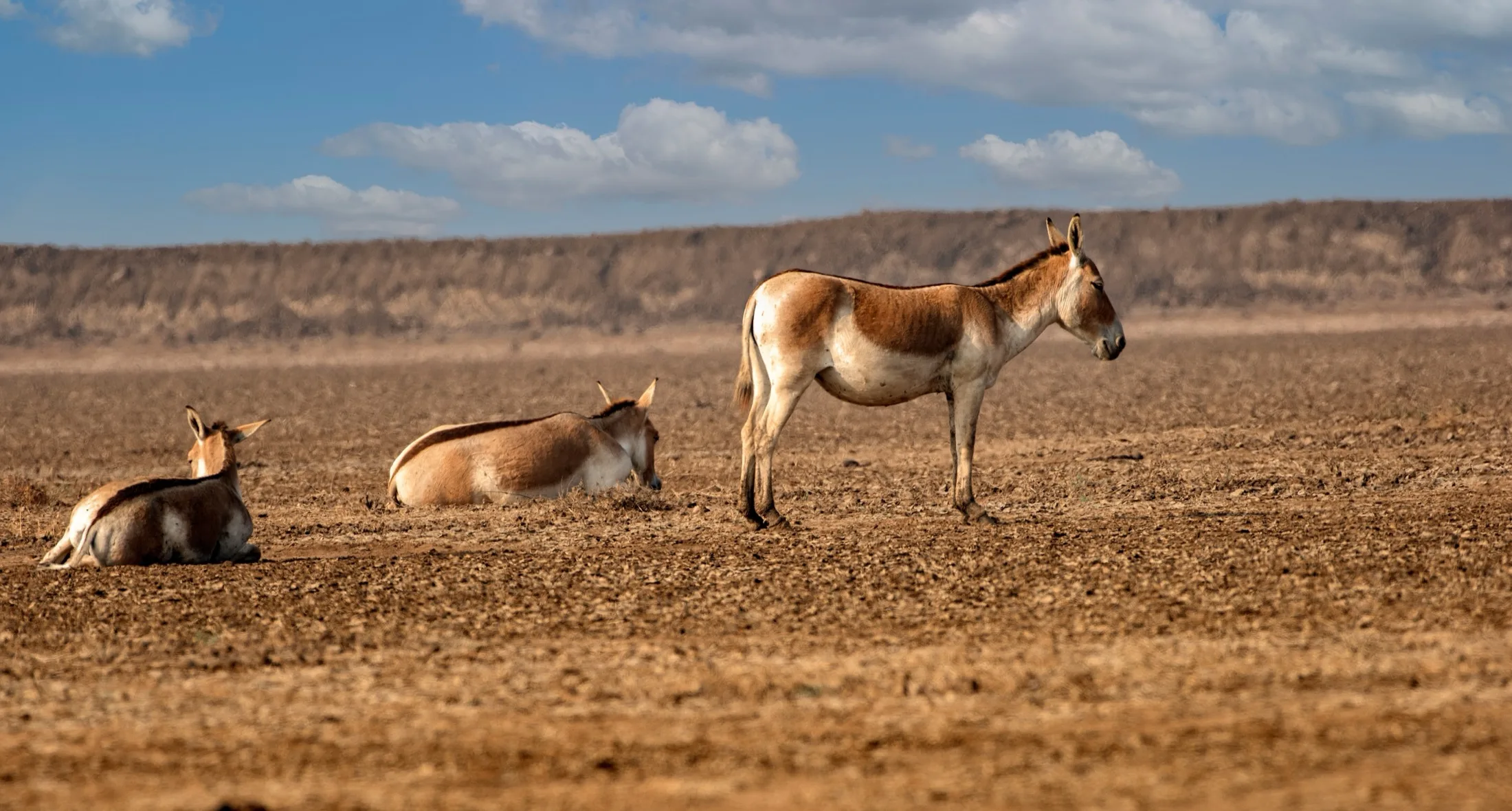
The bets and open flats hold the khur — the Indian wild ass — which exists in the wild only here. Herds run across the salt in a way that is genuinely spectacular, and they are easy to find and approach by vehicle.
The seasonal wetlands and freshwater pools hold both greater and lesser flamingos in thousands, along with pelicans, cranes and a huge diversity of waders. The birding here in winter is on a scale few Indian sites match.
The scrub and grass margins hold desert and Indian foxes, jackals, nilgai, chinkara and the wolves that hunt them — the Rann is one of the better places in India for Indian wolf.
The agricultural edges are where the raptors concentrate: harriers roosting communally in grassland, along with eagles and the occasional houbara bustard.
The salt pans worked by the Agariya salt farmers are part of the landscape and its economy, and their families live out on the flats through the working season.
October to March is the season, with the birds present and temperatures manageable. Summer is brutally hot and the monsoon floods the flats entirely.
Practicalities
The usual bases are the small resorts around Dasada and Bajana, a few hours from Ahmedabad. Safaris are by open 4x4 with local guides who know where the herds and the flamingo flocks are that week.
The Little Rann pairs naturally with Gir to the south and with the Greater Rann to the north, where the Banni grasslands hold a different set of species again.
Gallery
Wildlife Species
Indian wild ass
CommonMammal · Best time: Cool dry-season daylight
Flamingos, cranes, and arid wetland birds
UncommonBird · Best time: Winter
Desert fox and smaller mammals
UncommonMammal · Best time: Morning and dusk
Raptors and bustards in wider landscapes
RareBird · Best time: Morning
Geography
- Terrain
- Salt flats, scrub, dry grassland, seasonal wetland pans, desert-edge plains
- Elevation
- Low arid plain
- Climate
- Hot semi-arid
- Area
- Large wildlife sanctuary in Gujarat
Weather
- Best Months
- NovemberDecemberJanuaryFebruaryMarch
- Avg. Temperature
- 8-42°C
- Rainfall
- Cool dry-season months are the clear best period for wildlife and birding
- Humidity
- 20-75%
Getting There
Ahmedabad with onward road transfer
Quite practical by Indian standards, especially through lodge-supported desert safaris
- Jeep safari on salt flats
- Birding and wild-ass trip
- Gujarat wildlife circuit
(Affiliate link — we may earn a commission.)
Tours & Experiences
Local guides substantially improve Indian wild ass sighting odds — compare independent operators and dates for Little Rann of Kutch Wildlife Sanctuary below.
(Affiliate links — we may earn a commission.)
Where to Stay
Desert lodges and safari camps around sanctuary gateways
Budget to Mid-rangeLodge or Camp · Best base for jeep outings
Check availability on Booking.com →Ahmedabad hotels for short extensions
Budget to PremiumHotel · Useful on wider Gujarat itineraries
Check availability on Booking.com →(Affiliate links — we may earn a commission.)