Manu National Park
Manu National Park
Manu National Park is Peru's greatest wilderness, dropping from Andean cloud forest to lowland Amazon across an unbroken altitudinal gradient that produces one of the highest species counts of any protected area on Earth. It is strongest for travelers willing to trade comfort and time for genuinely wild forest and its full range of habitats.
Where to find the wildlife
Manu's defining feature is the descent. A trip here starts high in the Andes and works down through cloud forest to the lowland rivers, and each band of altitude has its own species. That gradient is the reason to come, and it is why Manu trips are measured in a week rather than a couple of nights.
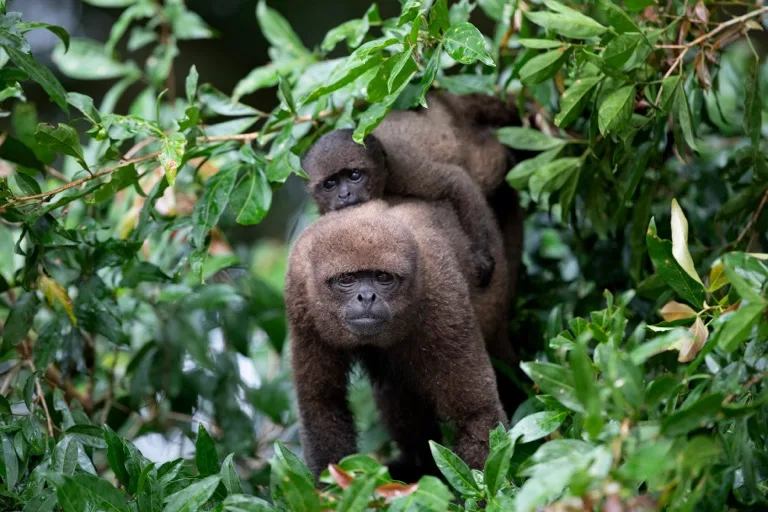
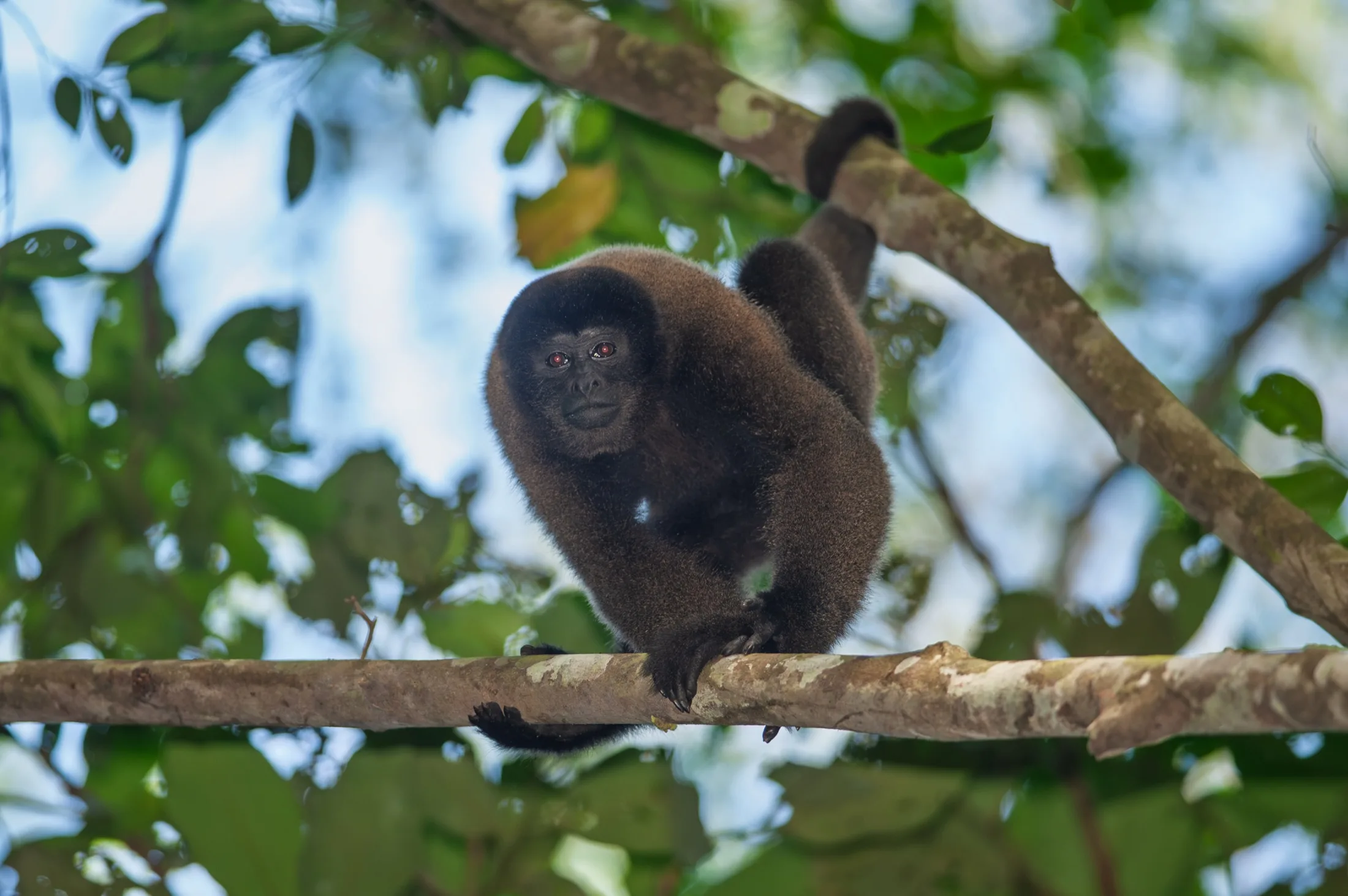
The cloud forest on the road down from Paucartambo is the first act, and it holds the Andean cock-of-the-rock. Males gather at traditional display leks at dawn, and the sight of a dozen scarlet birds bouncing and calling in the mist is the single most reliable spectacle of the whole trip. This stretch is also the best for mixed tanager flocks, quetzals and woolly monkeys.
The oxbow lakes of the Reserved Zone — Cocha Salvador and Cocha Otorongo above all — are the wildlife heart of the lowlands. Salvador is the largest and holds resident giant river otters, watched from a catamaran raft; hoatzin crowd the margins, and black caiman lie along the banks.
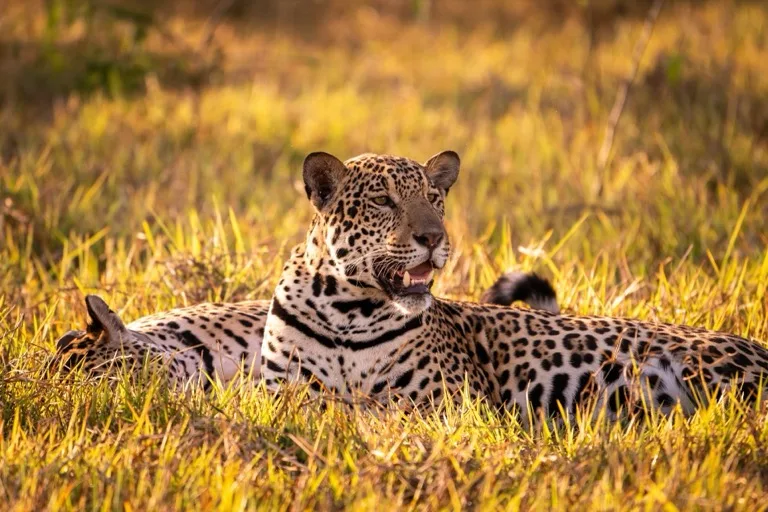
The river beaches and clay banks are where you scan for jaguar. Manu produces regular sightings of cats resting on the sand in the dry season, and capybara, tapir tracks and macaws at riverside clay licks come with the same slow boat work.
The lowland forest trails and canopy platforms add the primates: Manu holds more than a dozen species, including emperor tamarin and the spider and woolly monkeys that vanish quickly from hunted forest.
The dry season from May to August is the window — rivers are navigable, beaches exposed, trails passable. Dawn dominates, particularly for the lek and for macaw activity.
Practicalities
Entry to the Reserved Zone requires authorisation from SERNANP, arranged for you by a licensed operator; there is no independent visiting. Most trips run overland from Cusco — a long, spectacular descent of a day or more — and return by light aircraft from Boca Manu, or run the whole thing by road in both directions on a cheaper itinerary. Budget a minimum of five days; shorter trips that advertise Manu often only reach the cultural zone downstream, which is not the same place.
Gallery
Wildlife Species
Cock-of-the-rock
UncommonBird · Best time: Early Morning
Jaguar
RareMammal · Best time: Dawn or Dusk
Giant Otter
UncommonMammal · Best time: Morning
Woolly Monkey
UncommonMammal · Best time: Morning
Geography
- Terrain
- Cloud forest, foothills, lowland rainforest, rivers
- Elevation
- 300-4000m
- Climate
- Tropical and montane
- Area
- About 17160 km2
Weather
- Best Months
- MayJuneJulyAugust
- Avg. Temperature
- 10-31°C
- Rainfall
- Lower in the dry season
- Humidity
- 70-100%
Getting There
Cusco Airport with overland and river journey
Multi-stage access from Cusco
- Guided overland expeditions
- River transport deeper into Manu
- Multi-day wildlife itineraries
(Affiliate link — we may earn a commission.)
Tours & Experiences
Local guides substantially improve Cock-of-the-rock sighting odds — compare independent operators and dates for Manu National Park below.
(Affiliate links — we may earn a commission.)
Where to Stay
Remote jungle lodges on guided itineraries
Mid-range to PremiumLodge · Inside access corridors
Check availability on Booking.com →Research stations and basic camps
Budget to Mid-rangeField Camp · Deep forest routes
Check availability on Booking.com →(Affiliate links — we may earn a commission.)