Maria Island National Park
Maria Island National Park
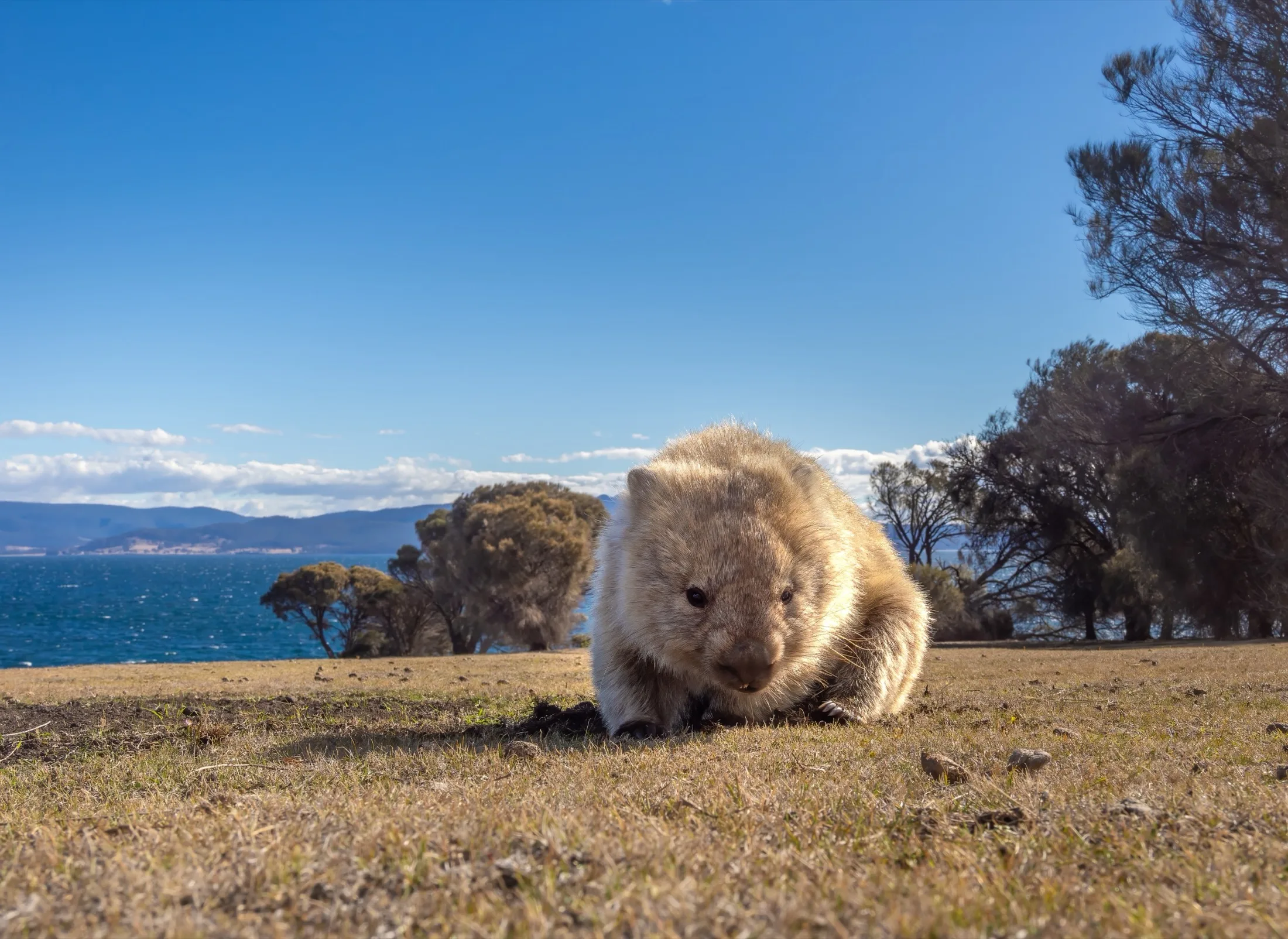
Maria Island off Tasmania's east coast is an island sanctuary with no cars and no shops, where wombats graze the old convict settlement lawns and Tasmanian devils have been established as an insurance population. It is strongest for travelers who want Australian wildlife at absurdly close range with no crowds.
Where to find the wildlife
Maria has no predators to speak of and no vehicle traffic, and its animals have never learned to fear people. The result is that the wildlife comes to you around the historic settlement at Darlington, which is where nearly everything happens.
The Darlington settlement lawns are the main event. Common wombats graze in the open through the afternoon and evening, entirely unbothered — Maria is probably the easiest place in the world to watch wild wombats — along with Forester kangaroos, Bennett's wallabies and Cape Barren geese.
The island's trails hold echidnas trundling across the path, pademelons at forest edges, and the introduced Tasmanian devils, which are nocturnal and rarely seen but present as an insurance population against the facial tumour disease devastating mainland Tasmania.
The Painted Cliffs and Fossil Cliffs are the geological set pieces, the former a wave-sculpted sandstone at the water's edge best visited at low tide.
The Bishop and Clerk and Mount Maria walks climb into forest with sea eagles overhead and views across the whole island.
The waters offshore hold fur seals, dolphins and, in season, migrating whales.
Wildlife is present year-round; spring and summer bring the longest days, and autumn is quiet and mild. The island is exposed and the ferry is weather-dependent.
Practicalities
A passenger ferry runs from Triabunna, around 90 minutes from Hobart. There are no shops, no fuel and no vehicles on the island — bring all food and water, and either camp or book the basic bunkhouse in the old penitentiary.
Bicycles can be taken on the ferry and are the practical way to cover the island. Do not feed the wildlife, however close it comes: habituated wombats and geese are already a management problem here.
Gallery
Wildlife Species
Common Wombat
CommonMammal · Best time: Late afternoon and evening in open grassland
Forester Kangaroo and wallabies
CommonMammal · Best time: Dawn and dusk
Tasmanian birds and seabirds
UncommonBird · Best time: Morning around coast and open country
Cape Barren Goose
UncommonBird · Best time: Open grassland and shoreline
Geography
- Terrain
- Island coastline, grassland, woodland, cliffs, beaches, low hills
- Elevation
- Sea level to low uplands
- Climate
- Cool temperate maritime
- Area
- Island national park off Tasmania''s east coast
Weather
- Best Months
- OctoberNovemberDecemberJanuaryFebruaryMarchApril
- Avg. Temperature
- 5-25°C
- Rainfall
- Weather can change quickly, but access is generally reliable in the main travel season
- Humidity
- 45-95%
Getting There
Hobart with road transfer and ferry access
Quite practical, though day or overnight visits depend on ferry planning
- Day trip or overnight island wildlife visit
- Wombat and wallaby photography
- Combined Tasmania east-coast itinerary
Tours & Experiences
Local guides substantially improve Cape Barren Goose sighting odds — compare independent operators and dates for Maria Island National Park below.
(Affiliate links — we may earn a commission.)
Where to Stay
Basic park accommodation and camping
BudgetCamp or Bunkhouse · Inside the island park
Check availability on Booking.com →Hotels and guesthouses on Tasmania''s east coast ferry gateway
Budget to Mid-rangeHotel or Guesthouse · Useful for day-trip access
Check availability on Booking.com →(Affiliate links — we may earn a commission.)