Sinharaja Forest Reserve
Sinharaja Forest Reserve
Sinharaja Forest Reserve is Sri Lanka's last substantial tract of primary lowland rainforest, a UNESCO site in the island's southwest where almost all the country's endemic birds and a remarkable amphibian fauna are concentrated. It is strongest for birders and naturalists rather than for large-mammal watchers.
Where to find the wildlife
Sinharaja's wildlife is small, cryptic and mostly endemic, and it is found by walking slowly with a guide who knows the calls. The single most important thing to understand is the mixed-species feeding flock — the reserve is famous for them, and encountering one is the highlight of most visits.
The main trails from Kudawa and Deniyaya are where the flocks move. A single flock can hold dozens of species and hundreds of individuals travelling together — orange-billed babblers and greater racket-tailed drongos at the core, with red-faced malkoha, Sri Lanka blue magpie and ashy-headed laughingthrush among them. The reserve holds the longest-running study of such flocks anywhere.
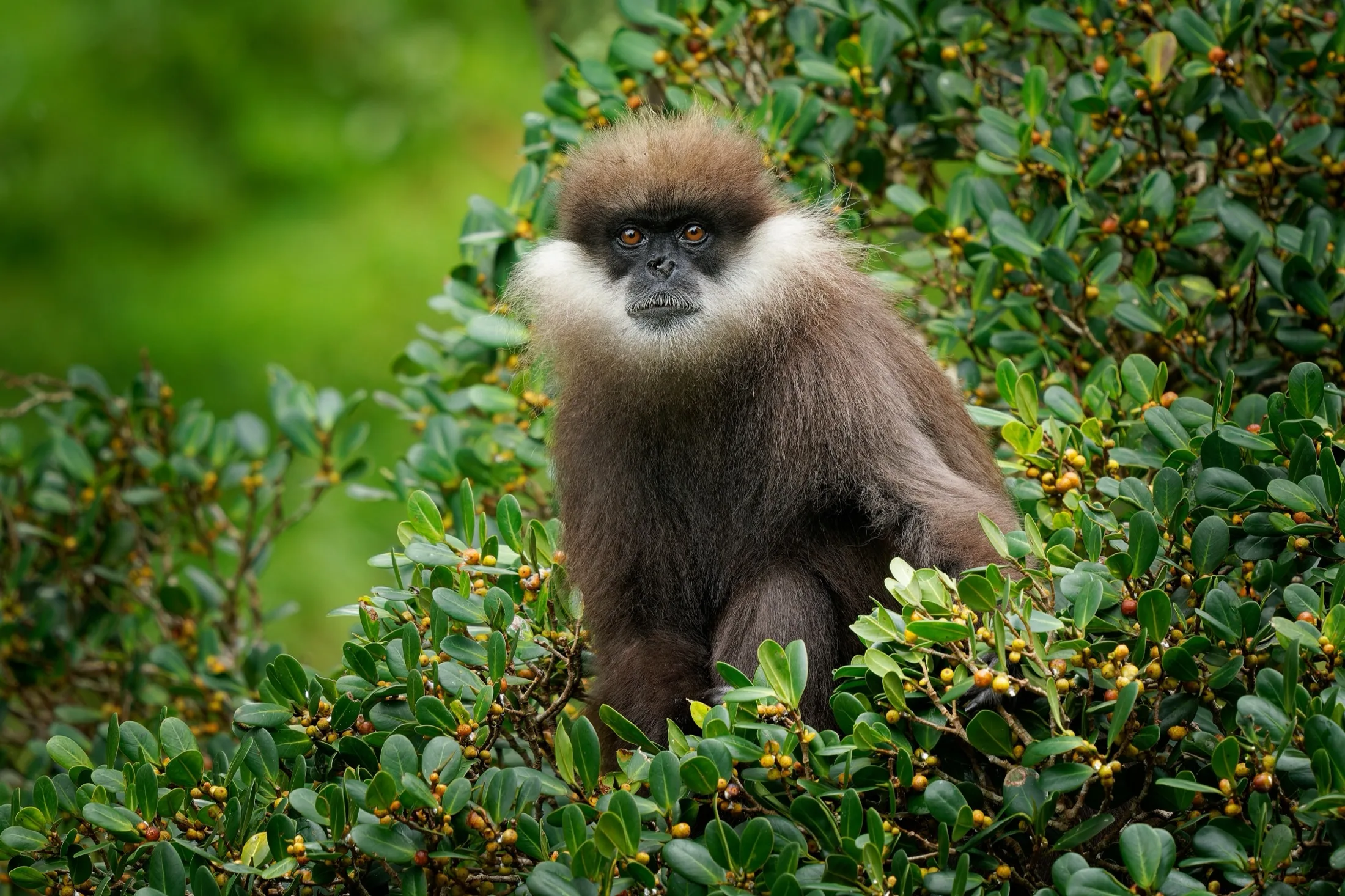
The forest interior holds most of Sri Lanka's endemic birds — some thirty species, of which the great majority occur here — along with purple-faced langur and giant squirrel in the canopy.
The streams and leaf litter are where the reserve's herpetological fame lies: dozens of endemic amphibians including tiny shrub frogs, plus hump-nosed lizards and the green pit viper.
The night walks outside the reserve boundary add the endemic slender loris, tree frogs and the extraordinary insect life.
January to April and August to September are the drier windows. Rain is likely in any month, and leeches are guaranteed after it.
Practicalities
Kudawa in the northwest and Deniyaya in the southeast are the two main entrances, each with its own guides and lodges. A registered guide is compulsory.
Guides vary enormously — ask specifically for one who knows the endemic birds if that is your interest. Leech socks are essential and locally available. The reserve is a few hours from Galle or Colombo on winding roads.
Gallery
Wildlife Species
Sri Lanka blue magpie, red-faced malkoha, and green-billed coucal
UncommonBird · Best time: Morning mixed flocks
Sri Lanka spurfowl, laughingthrushes, and forest endemics
UncommonBird · Best time: Early morning
Purple-faced langur and giant squirrel
UncommonMammal · Best time: Forest canopy activity
Reptiles, amphibians, butterflies, and rainforest macro subjects
CommonOther · Best time: Humid forest walks
Geography
- Terrain
- Lowland and foothill rainforest, ridges, streams, humid forest trails
- Elevation
- About 300-1170m
- Climate
- Humid tropical rainforest
- Area
- UNESCO-listed forest reserve in Sri Lanka''s wet zone
Weather
- Best Months
- JanuaryFebruaryMarchAugustSeptember
- Avg. Temperature
- 20-30°C
- Rainfall
- Rain is possible year-round, with relatively drier windows best for trails and birding
- Humidity
- 75-100%
Getting There
Colombo with road transfer to Deniyaya, Kudawa, or other forest gateways
Moderate road access, but forest trails are wet and local guides are important
- Endemic birding walks
- Rainforest natural-history trip
- Sri Lanka wet-zone bird photography route
(Affiliate link — we may earn a commission.)
Tours & Experiences
Local guides substantially improve animal sighting odds — compare independent operators and dates for Sinharaja Forest Reserve below.
(Affiliate links — we may earn a commission.)
Where to Stay
Sinharaja gateway lodges and guesthouses
Budget to Mid-rangeLodge or Guesthouse · Best access from Deniyaya or Kudawa sides
Check availability on Booking.com →Wet-zone eco-lodges
Mid-rangeEco-lodge · Useful for birding-focused itineraries
Check availability on Booking.com →(Affiliate links — we may earn a commission.)