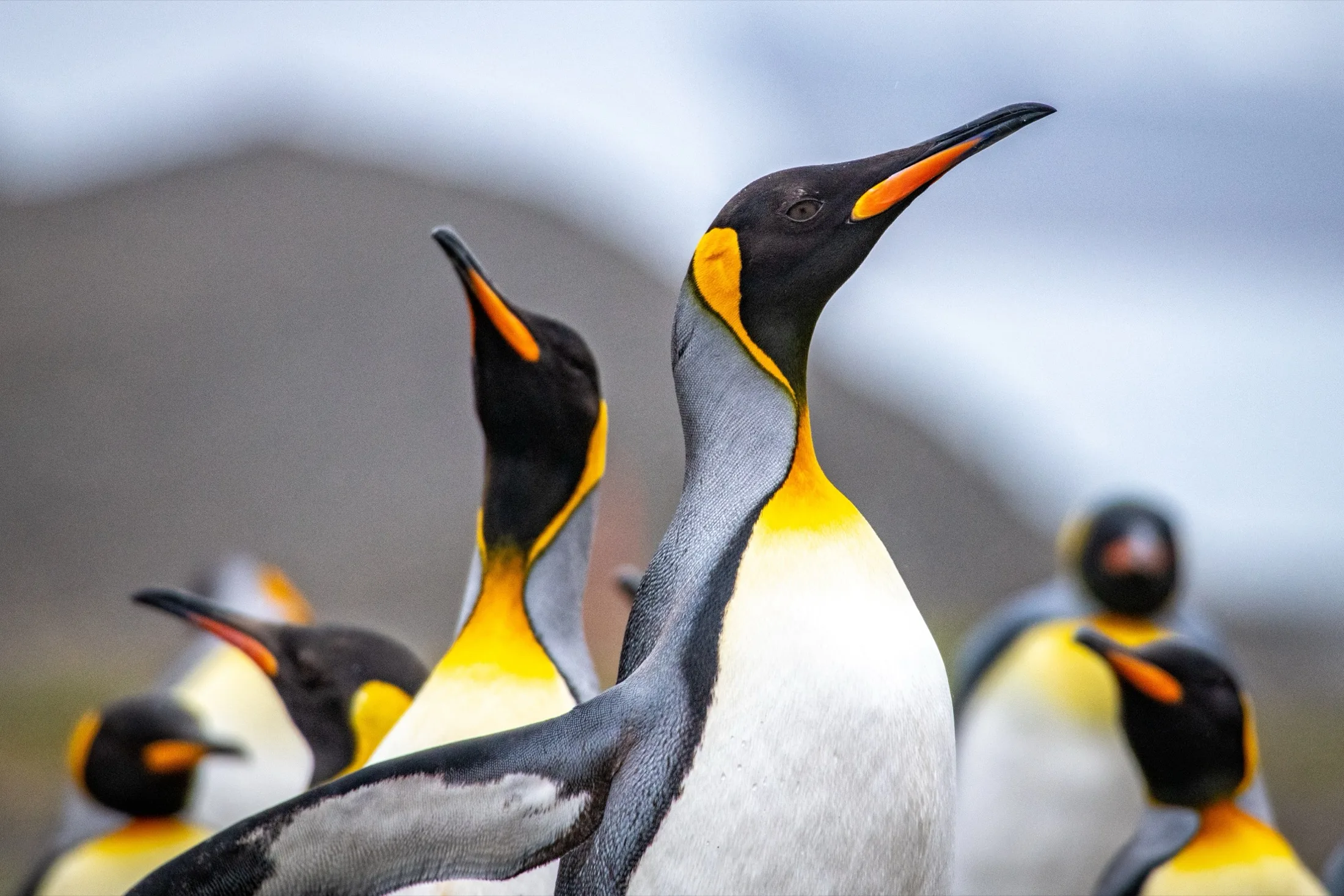
South Georgia Island
South Georgia Island
South Georgia is the greatest wildlife island on Earth, a remote chain of glaciated peaks in the Southern Ocean where king penguin colonies run to hundreds of thousands of birds and beaches disappear under breeding seals. It is the highlight of any subantarctic voyage, and for sheer biomass on a shoreline it has no rival anywhere.
Where to find the wildlife
There is no airport and no independent travel here: essentially every visitor arrives by expedition ship, and the itinerary is decided by weather as much as by plan. What that means practically is that you should judge a voyage by how many days it allocates to South Georgia, because landings are frequently lost to swell and wind and a two-day call can easily become one.
Salisbury Plain and St Andrews Bay are the great king penguin colonies, each holding tens of thousands of breeding pairs on open ground behind the beach. Because king penguins take more than a year to raise a chick, the colonies are occupied year-round and you will see eggs, brown-woolly chicks and adults all at once — the sound and the smell are as much a part of it as the sight.
The tussac slopes and cliffs hold the great seabirds. Wandering albatross breed on Prion Island, light-mantled sooty albatross nest on the ledges, and giant petrels and skuas patrol the beaches. Access to some of these sites is restricted to protect breeding birds, so which ones your ship can land at varies.
The beaches themselves belong to the seals. Southern elephant seals haul out to breed from around October, with bulls fighting for beach territory; Antarctic fur seals follow in vast numbers through December and January, and the young males are genuinely aggressive — expect to be shepherded by guides carrying poles.
Grytviken, the old whaling station, adds the human layer: a museum, a church, Shackleton's grave, and reindeer-free hillsides recovering since the island's rat eradication, with South Georgia pipits and pintails now back.
November to March is the season. October and November bring seal breeding and snow-covered landscapes, December and January the peak of activity and the longest days, February and March the fattest penguin chicks and the best whale watching offshore.
Biosecurity
South Georgia enforces the strictest biosecurity of any wildlife destination: boots, clothing, bags and tripods are inspected and cleaned before you land, and boots are disinfected on the way ashore and back. Only your boots may touch the ground — you may not put bags down or sit. Highly pathogenic avian influenza has been present in the region since 2023, and while landing sites including the major king colonies have remained open, expect guides to scout each site before passengers land and to close one at short notice.
Gallery
Wildlife Species
King Penguin colonies at Salisbury Plain, St Andrews Bay, and other landing sites
CommonBird · Best time: December to February
Wandering Albatross, light-mantled albatross, and other great seabirds
UncommonBird · Best time: November to March
Southern Elephant Seal and Antarctic Fur Seal
CommonMammal · Best time: October to February
Macaroni Penguin, gentoo penguin, and other subantarctic seabirds
UncommonBird · Best time: Austral summer
Geography
- Terrain
- Subantarctic island, glaciated mountains, tussock grass, beaches, penguin colonies, seal beaches, offshore islets
- Elevation
- Sea level to peaks over 2900m
- Climate
- Cold, windy, oceanic subantarctic climate
- Area
- Large remote island and surrounding wildlife-rich coastal waters
Weather
- Best Months
- NovemberDecemberJanuaryFebruaryMarch
- Avg. Temperature
- -5 to 10°C
- Rainfall
- Frequent precipitation, snow on higher ground, and rough seas are normal through the visitor season
- Humidity
- 65-100%
Getting There
Usually reached by expedition ship from Ushuaia, occasionally via the Falkland Islands as part of a longer voyage
One of the least accessible major wildlife destinations in the dataset, requiring long sea crossings, strict expedition scheduling, and weather tolerance
- Antarctica and South Georgia expedition cruise
- South Georgia-focused subantarctic wildlife voyage
- Photographic expedition with guided shore landings in suitable conditions
Tours & Experiences
Local guides substantially improve animal sighting odds — compare independent operators and dates for South Georgia Island below.
(Affiliate links — we may earn a commission.)
Where to Stay
Expedition cruise cabins
Premium to LuxuryShip Cabin · The only realistic way to stay close to the wildlife areas during a normal visit
Pre- and post-voyage hotels in Ushuaia or Stanley
Mid-range to PremiumHotel · Useful staging accommodation, but not on South Georgia itself
Check availability on Booking.com →(Affiliate links — we may earn a commission.)