Sundarbans National Park
Sundarbans National Park
The Sundarbans is the largest mangrove forest on Earth, a vast tidal delta shared by India and Bangladesh where Bengal tigers swim between islands and the forest floods twice a day. It is strongest for travelers who want a genuinely strange ecosystem and are realistic about the odds of seeing its most famous resident.
Where to find the wildlife
There is no land to walk on for most of the Sundarbans — everything happens from a boat, moving through creeks between mangrove islands. That makes the wildlife viewing quite unlike any other tiger reserve: you are looking at a wall of vegetation from the water, watching for movement and tracks on the mud.
The creeks and channels at low tide are where the tracks are. Tiger pugmarks on the exposed mud are common; the animals themselves are seen by a small minority of visitors, and anyone promising a sighting is selling something. Treat it as a bonus, not the plan.
The watchtowers at Sudhanyakhali, Sajnekhali and Dobanki in the Indian sector overlook freshwater pools and clearings maintained for wildlife, and are the most likely places for deer, wild boar and, occasionally, a tiger coming to drink.
The mudflats and banks hold estuarine crocodiles, water monitors, and the fiddler crabs and mudskippers that carpet the mud at low tide.
The birdlife is the reliable reward: brown-winged, collared and black-capped kingfishers, lesser adjutants, herons, and the raptors that patrol the channels. Winter adds waders and wildfowl in numbers.
The Irrawaddy dolphins in the larger channels are a genuine possibility, and Ganges river dolphins occur in the fresher upstream reaches.
November to February is the comfortable season with the best birding. Summer is hot and humid; the monsoon brings storms and difficult boating.
Practicalities
On the Indian side, trips run from Godkhali near Kolkata, typically as two- or three-night boat packages with permits arranged by the operator. Bangladesh's side is reached from Khulna and Mongla.
Permits are required, boats must carry a forest department guide, and landing is restricted to designated points — not bureaucracy for its own sake, but a response to a forest where tigers genuinely do attack people who wander into it.
Gallery
Wildlife Species
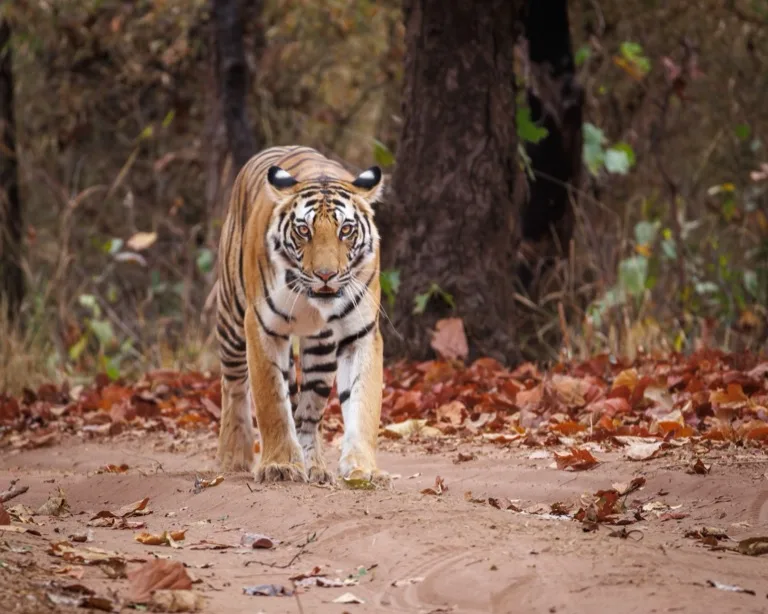
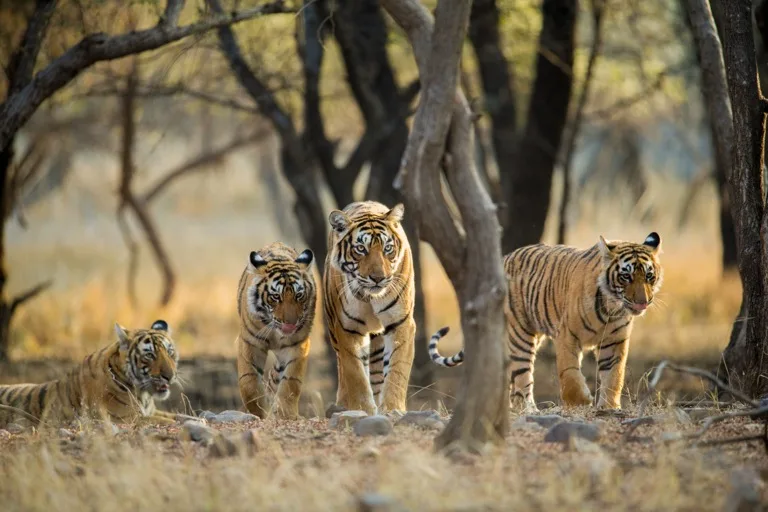
Bengal Tiger
RareMammal · Best time: Dawn or Dusk
Estuarine Crocodile
UncommonReptile · Best time: All Day
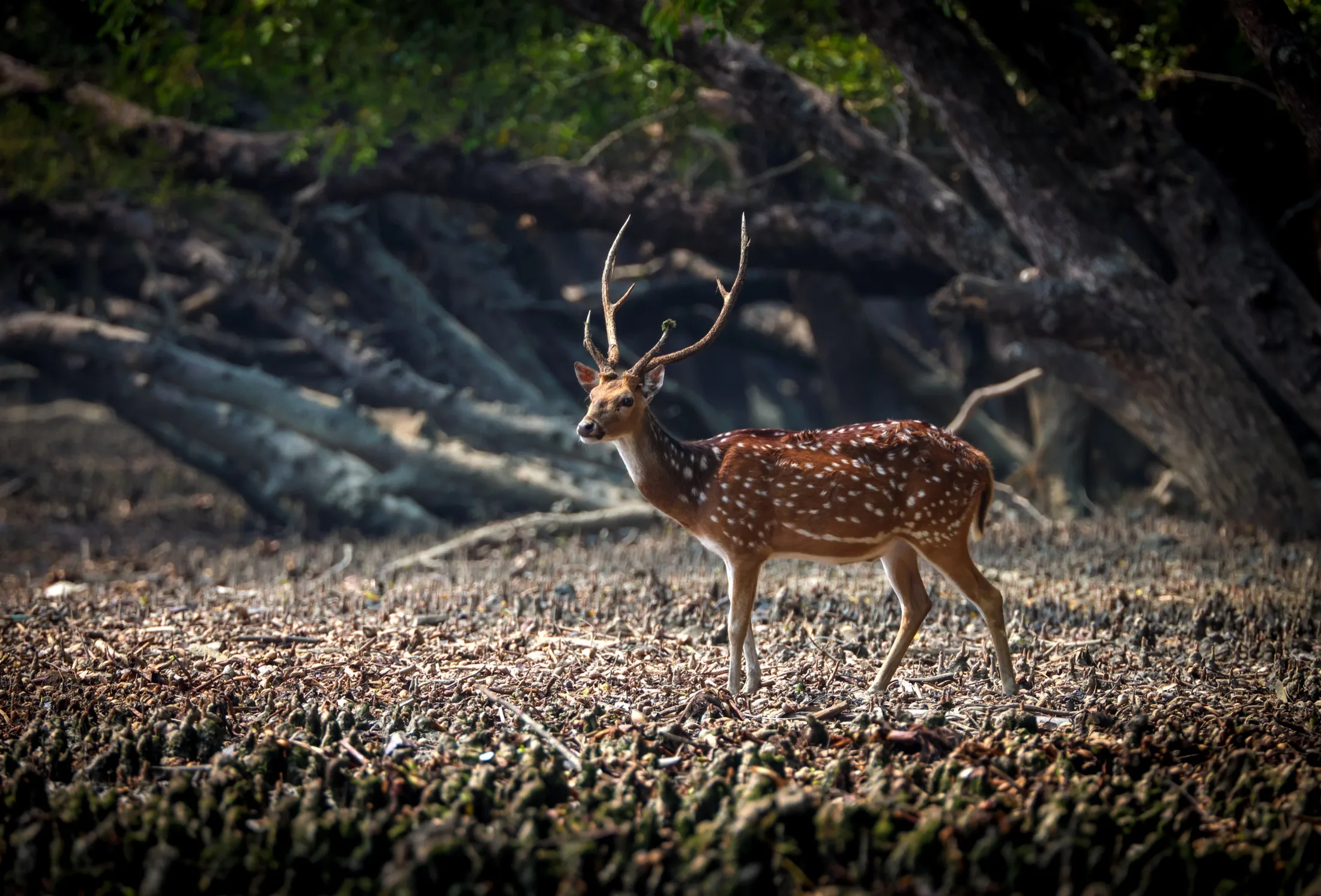
Spotted Deer
CommonMammal · Best time: Morning
Brown-winged Kingfisher
UncommonBird · Best time: Morning
Geography
- Terrain
- Mangrove forest, tidal rivers, mudflats, estuarine islands
- Elevation
- Sea level
- Climate
- Tropical deltaic
- Area
- About 1330 km2 national park within larger reserve
Weather
- Best Months
- NovemberDecemberJanuaryFebruaryMarch
- Avg. Temperature
- 12-34°C
- Rainfall
- Lower in winter
- Humidity
- 60-95%
Getting There
Kolkata Airport
Road and boat transfer from gateway jetties
- Boat safaris through creek systems
- Stay on houseboats or lodges
- Guided estuary wildlife trips
(Affiliate link — we may earn a commission.)
Tours & Experiences
Local guides substantially improve Bengal Tiger sighting odds — compare independent operators and dates for Sundarbans National Park below.
(Affiliate links — we may earn a commission.)
Where to Stay
Boat based safari vessels and floating stays
Budget to Mid-rangeBoat Stay · Inside access routes
Check availability on Booking.com →Lodges in Sundarbans gateway villages
Budget to Mid-rangeLodge · Near embarkation points
Check availability on Booking.com →(Affiliate links — we may earn a commission.)