Corcovado National Park
Corcovado National Park
Corcovado National Park is one of the best lowland rainforest wildlife destinations in Central America, with a strong sense of intact forest, coastline, and remote trail-based exploration. It is especially good for monkeys, tapirs, scarlet macaws, and broad rainforest immersion.
Where to find the wildlife
The park is split into several sectors, and which one you enter largely determines what you see. Sirena is the only station in the park's interior — La Leona, San Pedrillo and Los Patos all sit at or near the boundary, where animals move between protected forest and the surrounding landscape. That difference shows up immediately in the wildlife.
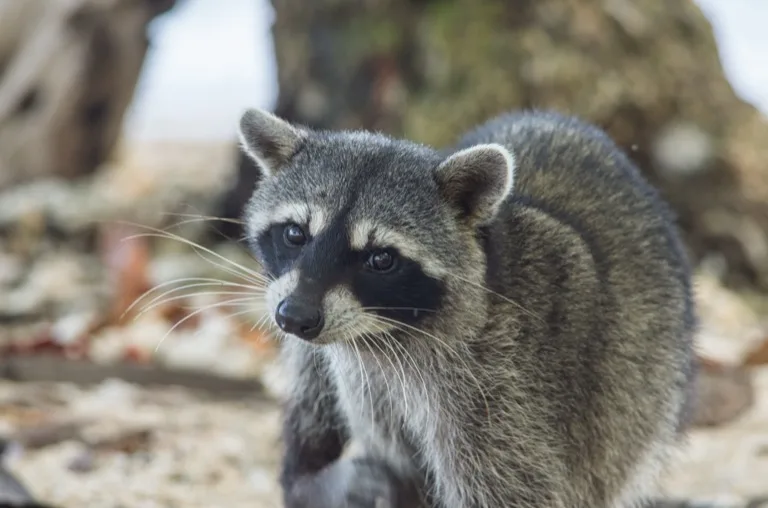
Sirena is the strongest option overall. Tapirs wander near the station buildings in the late afternoon, peccary and coati encounters are a daily occurrence, and this is where most jaguar sightings are concentrated. For scarlet macaws, head straight for the beach almond trees around the station and the airstrip edge — the almond trees pull macaws in throughout the day, with reliable flyovers morning and afternoon. Mated pairs cutting across trails and perching in almendro trees are the classic sighting here.
La Leona, entered from Carate, is the easiest and cheapest sector to reach. The flat coastal trail runs through primary forest and along the beach, and regularly produces monkeys, sloths, anteaters and scarlet macaws.
San Pedrillo, reached by boat from Drake Bay, leans towards birding rather than large-mammal density. Trogons, manakins, toucans and scarlet macaws are typical, alongside all the coastal monkey species, in a quieter setting with fewer visitors. A waterfall about thirty minutes' walk from the station and deserted beaches make it a good day trip from Drake Bay lodges.
Across every sector, the first two hours after sunrise and the last two before dusk are worth prioritising — activity drops sharply through the middle of the day.
Guides are mandatory
You cannot enter Corcovado on your own. Since February 2014, every visitor must be accompanied by an ICT-certified guide who appears on SINAC's approved list. The guide also has to be registered for the specific station you are entering.
Permits are tied to that guide. SINAC requires the guide's name and cédula number on your permit reservation before it can be confirmed, so the permit cannot be booked without a registered guide already attached. Daily numbers are capped at 330 visitors across all sectors, with Sirena limited to 100 day visitors and 80 overnight guests. In high season between December and April, Sirena permits can sell out weeks ahead.
In practice this makes booking through a licensed operator the simplest route, and the guide requirement is not much of a compromise — certified guides complete an ICT-accredited course covering species identification, first aid and navigation, and the specialists working here identify birds by call and track tapir prints.
Gallery
Wildlife Species
Baird Tapir
UncommonMammal · Best time: Morning or Evening
Scarlet Macaw
CommonBird · Best time: Morning
White-lipped Peccary
UncommonMammal · Best time: Morning
Spider Monkey
CommonMammal · Best time: Morning
Central American squirrel monkey
UncommonMammal · Best time: Morning
Mantled howler monkey
CommonMammal · Best time: Morning
Jaguar
Very RareBig-Cat · Best time: Morning for footprints
White-Faced Capuchin
CommonMammal · Best time: Daytime
American crocodile
CommonReptile · Best time: Dry Season
Geography
- Terrain
- Lowland rainforest, mangroves, beaches, rivers
- Elevation
- Sea level to 745m
- Climate
- Humid tropical
- Area
- About 424 km2
Weather
- Best Months
- JanuaryFebruaryMarchApril
- Avg. Temperature
- 23-32°C
- Rainfall
- Lower in dry season
- Humidity
- 75-100%
Getting There
Puerto Jimenez or Drake Bay access
Reached by local flight, boat, and hiking routes
- Boat to Sirena sector
- Guided park hiking
- Remote lodge stays
(Affiliate link — we may earn a commission.)
Tours & Experiences
Local guides substantially improve Baird Tapir sighting odds — compare independent operators and dates for Corcovado National Park below.
(Affiliate links — we may earn a commission.)
Our Pick
Where to Stay
Lodges in Drake Bay and Puerto Jimenez
Budget to PremiumLodge · Gateway bases
Check availability on Booking.com →Remote eco lodges near La Leona park entrance
Mid-rangeEco Lodge · Near trail access
Check availability on Booking.com →Remote eco lodges near San Pedrillo park entrance
Mid-range to PremiumEco Lodge · Near trail access
Check availability on Booking.com →(Affiliate links — we may earn a commission.)
Our Pick
Sirena Ranger Station
As a part of guided tourBunk Beds · Inside the park