Lake Furen / Shunkunitai / Notsuke Peninsula
Lake Furen / Shunkunitai / Notsuke Peninsula
Lake Furen, Shunkunitai and the Notsuke Peninsula form eastern Hokkaido's great winter wildlife area, where sea ice, tidal lagoons, and salt marsh draw eagles, cranes, and deer against a frozen landscape. It is strongest for photographers working the Japanese winter and for birders after northern specialities.
Where to find the wildlife
This corner of Hokkaido is a cluster of shallow lagoons and sand spits along the Nemuro Strait, and its wildlife is overwhelmingly a winter phenomenon. The area is small enough to work from a single base, with each site offering something the others do not.
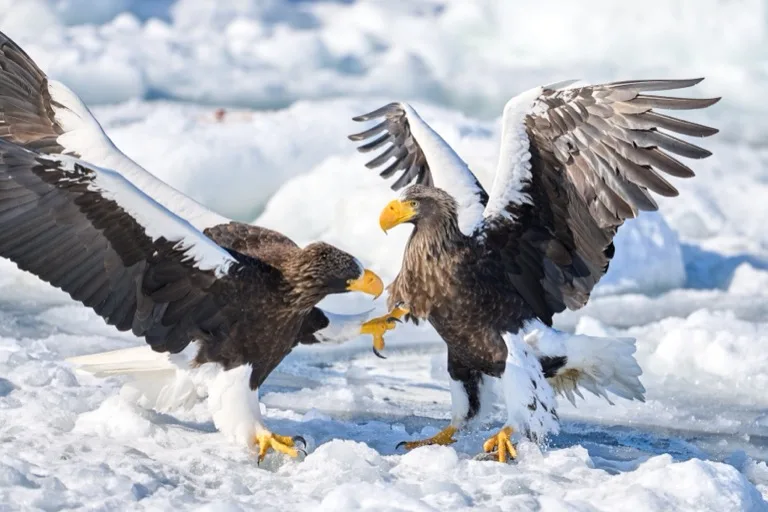
Lake Furen and Shunkunitai hold the winter eagles. Steller's sea eagles and white-tailed eagles gather where fishermen work the ice edge, perching in the shoreline trees in numbers that make a single frame with a dozen birds possible. The Shunkunitai sand spit's forest is also good for Blakiston's fish owl — the world's largest owl, which winters here and is seen at a handful of managed sites.
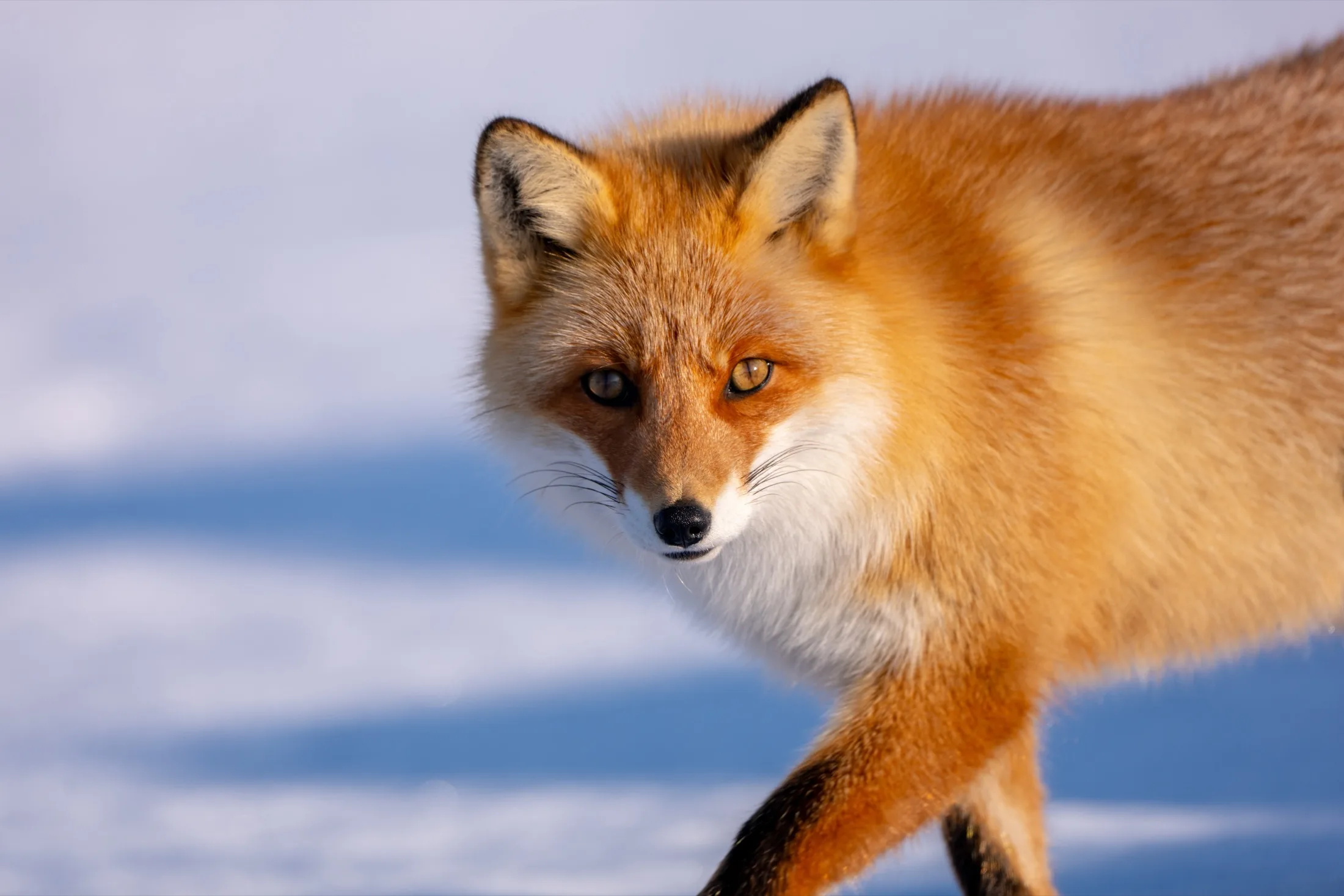
The Notsuke Peninsula, a long curving sand spit, is the landscape site: a dead forest of salt-killed trees, sika deer standing in snow, and red foxes hunting the tideline. Its shallow bays hold sea ducks — harlequin, long-tailed and both scoters — close inshore.
The Nemuro Strait coast around Rausu is where the drift ice arrives in February, and the eagle cruises out of Rausu harbour are the classic photographic experience of the region.
The wider area in summer is a different place: breeding waders on the marsh, orchids, and boat trips for whales and dolphins.
Late January to early March is the season for the ice, eagles and clean snow. Numbers of Steller's sea eagles fluctuate year to year with ice conditions.
Practicalities
Nemuro and Rausu are the practical bases, reached by road from Kushiro or Memanbetsu airports — a few hours in winter conditions on ploughed but icy roads. A proper winter vehicle and experience of driving on ice are essential.
Much of the best photography here is arranged through local operators who know the eagle and fish owl sites; independent visitors should be careful not to disturb roosting birds, particularly the fish owls.
Gallery
Wildlife Species
Steller's Sea Eagle and White-tailed Eagle
UncommonBird · Best time: Winter
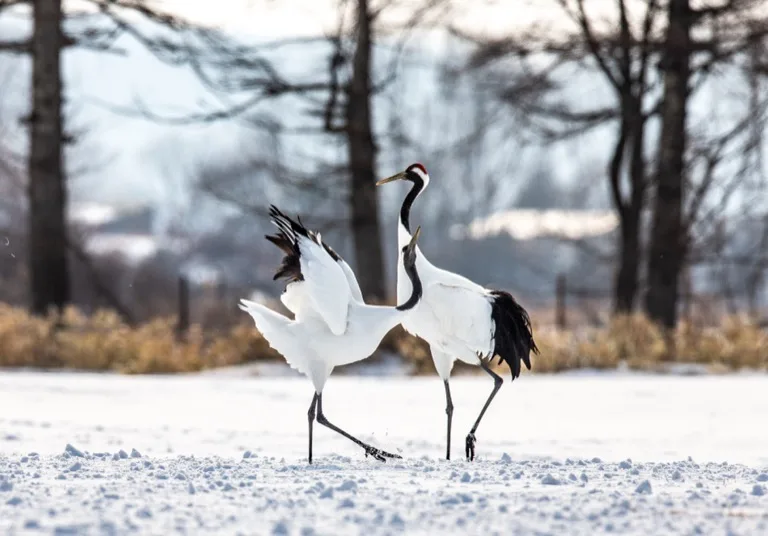
Red-crowned Crane
UncommonBird · Best time: Breeding season and wider regional movements
Whooper Swan and waterfowl concentrations
CommonBird · Best time: Autumn to winter
Shorebirds, geese, and northern coastal specialists
UncommonBird · Best time: Migration seasons
Geography
- Terrain
- Brackish lake, tidal flats, sandspit peninsula, coastal dunes, marsh, spruce forest, bays
- Elevation
- Sea level
- Climate
- Cool maritime northern climate
- Area
- Broad East Hokkaido coastal complex including Ramsar wetlands and natural park sectors
Weather
- Best Months
- JanuaryFebruaryMarchMayJuneOctoberNovember
- Avg. Temperature
- -15-22°C
- Rainfall
- Winter is best for sea eagles and swans, while migration seasons and early summer add shorebirds, cranes, and breeding species
- Humidity
- 50-95%
Getting There
Nakashibetsu, Kushiro, or Nemuro-linked access with onward driving to Nemuro and Betsukai sectors
Remote but straightforward with a car, and best experienced as part of a self-drive East Hokkaido birding route
- Multi-day Hokkaido bird photography circuit
- Sea eagle and swan winter itinerary
- Migration-season shorebird and wetland birding trip
(Affiliate link — we may earn a commission.)
Tours & Experiences
Local guides substantially improve Red-crowned Crane sighting odds — compare independent operators and dates for Lake Furen / Shunkunitai / Notsuke Peninsula below.
(Affiliate links — we may earn a commission.)
Where to Stay
Small hotels and guesthouses in Nemuro
Budget to Mid-rangeHotel or Guesthouse · Main base for Lake Furen and Shunkunitai
Check availability on Booking.com →Inns and pensions in Betsukai and Notsuke sectors
Budget to Mid-rangeGuesthouse · Useful for early starts and lower-crowd access
Check availability on Booking.com →(Affiliate links — we may earn a commission.)