Shiretoko National Park
Shiretoko National Park
Shiretoko National Park occupies a remote volcanic peninsula in northeastern Hokkaido, where brown bears, sea eagles, and seasonal drift ice meet in one of Japan's last great wildernesses. It is strongest for travelers who want Japanese wildlife at its wildest, with a winter season as remarkable as the summer one.
Where to find the wildlife
Shiretoko is a narrow finger of mountains dropping straight into the Sea of Okhotsk, with no road along much of its length. That inaccessibility is why the bear density here is among the highest in the world — and it means most of the best viewing is done from a boat looking back at the shore.
The Rusha coast, reachable only by sea, is the prime bear area. Sightseeing boats from Utoro run along the cliffs in summer, finding bears foraging on the shoreline, turning rocks and fishing at river mouths. Sows with cubs are regularly seen from the water in the same way.
The Shiretoko Five Lakes give the land-based option, on an elevated boardwalk with a guided ground trail. Access rules change with the season according to bear activity, and during the highest-risk period the ground loop can only be walked with a registered guide — check the current status before driving out.
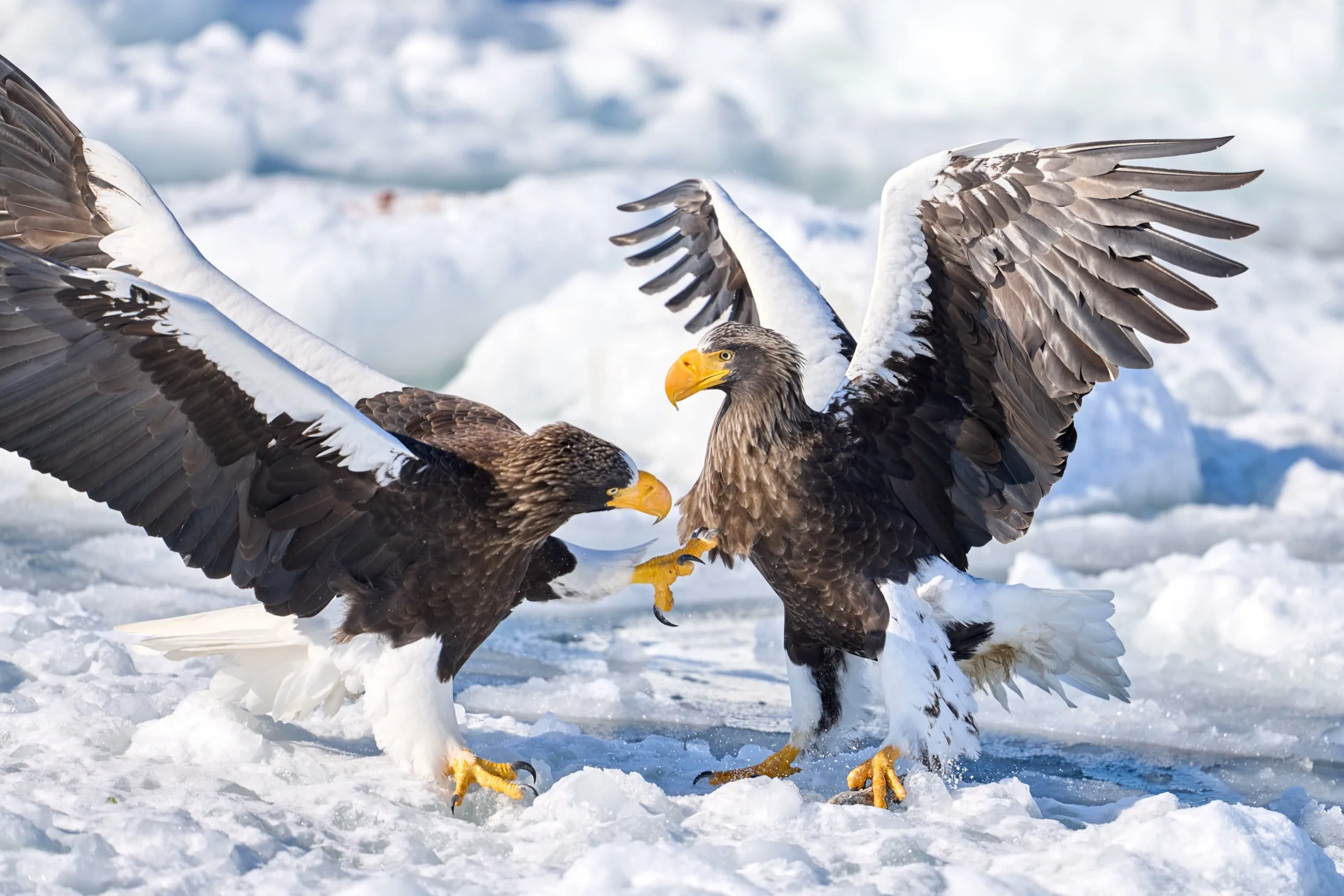
The Rausu side, on the peninsula's east coast, is the boat-based marine destination. Summer cruises look for sperm whales, orca and dolphins in the deep Nemuro Strait; winter cruises push into the drift ice for Steller's sea eagle and white-tailed eagle, which gather on the floes in numbers found nowhere else on Earth.
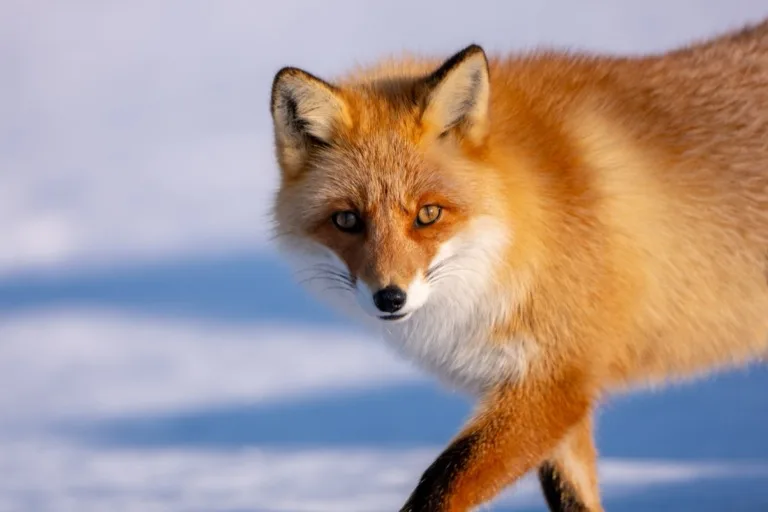
The Shiretoko Pass road between Utoro and Rausu is good for Ezo deer and, at dawn, foxes, though it closes for the winter with the snow.
Summer, roughly June to September, is the bear and marine-mammal season. February is the drift ice month, when the eagles concentrate and the whole seascape changes — the two experiences are so different that many people come twice.
Practicalities
Memanbetsu is the usual airport, with a drive of around two hours to Utoro. Book winter eagle cruises well ahead: they run on small boats, weather cancels them freely, and the ice arrives on nobody's schedule. Bears here are wild and unhabituated — on foot, carry a bell, keep food sealed and follow the park's guidance rather than treating it as advisory.
Gallery
Wildlife Species
Hokkaido Brown Bear
UncommonMammal · Best time: Summer and early autumn around salmon rivers
Steller's Sea Eagle and White-tailed Eagle
UncommonBird · Best time: Winter drift-ice season
Killer Whale and other cetaceans
UncommonMammal · Best time: Boat season in calmer months
Spotted Seal
UncommonMammal · Best time: Winter and spring around coastal and ice-influenced waters
Geography
- Terrain
- Sea cliffs, salmon rivers, mixed forest, volcanic mountains, drift-ice coast, marine waters
- Elevation
- Sea level to over 1600m
- Climate
- Cool maritime to subarctic northern climate
- Area
- About 711 km2 terrestrial and marine world heritage area
Weather
- Best Months
- FebruaryMarchJuneJulyAugustSeptember
- Avg. Temperature
- -10-22°C
- Rainfall
- Winter is best for drift ice and eagles, while summer to early autumn is strongest for bears, salmon, and boat-based marine watching
- Humidity
- 50-95%
Getting There
Memanbetsu, Nakashibetsu, or Kushiro with onward road transfer to Utoro and other gateways
Manageable but clearly remote by Japan standards, often involving a long drive once on Hokkaido
- Brown bear and salmon-season natural-history trip
- Drift-ice and sea-eagle winter journey
- Boat-based whale, dolphin, and coastal wildlife excursion
(Affiliate link — we may earn a commission.)
Tours & Experiences
Local guides substantially improve Hokkaido Brown Bear sighting odds — compare independent operators and dates for Shiretoko National Park below.
(Affiliate links — we may earn a commission.)
Where to Stay
Hotels, onsen stays, and lodges in Utoro and Rausu
Mid-range to PremiumHotel or Ryokan · Main practical bases for the peninsula
Check availability on Booking.com →Guesthouses and small inns in Shari-area gateways
Budget to Mid-rangeGuesthouse · Useful for self-drive and lower-cost itineraries
Check availability on Booking.com →(Affiliate links — we may earn a commission.)