Wolong National Nature Reserve / Giant Panda Sanctuaries
Wolong National Nature Reserve / Giant Panda Sanctuaries
Wolong National Nature Reserve is the heart of China's giant panda conservation effort, a steep, misty reserve on the eastern edge of the Tibetan Plateau in Sichuan holding wild pandas, golden monkeys, and an extraordinary temperate flora. It is strongest for travelers who want the panda story in its actual landscape rather than in a city zoo.
Where to find the wildlife
Be realistic before you go: wild giant pandas are almost never seen. They live at low density in dense bamboo on steep slopes, and even researchers rely on camera traps and droppings. What Wolong offers is the breeding centre, the mountain habitat itself, and an excellent supporting cast of Himalayan species.
The Shenshuping panda base at Gengda is where visitors actually see pandas. Rebuilt after the 2008 Wenchuan earthquake destroyed the original facility, it holds pandas in large enclosures on the forested hillside and runs the captive breeding and release-training programme that is the reserve's core work.
The Balang Mountain road, climbing over 4,000 metres above the reserve, is the wildlife highlight for many visitors. Its alpine meadows and scrub hold blue sheep, Chinese monal, snow partridge and Tibetan snowcock, and the flowering in June and July is spectacular.
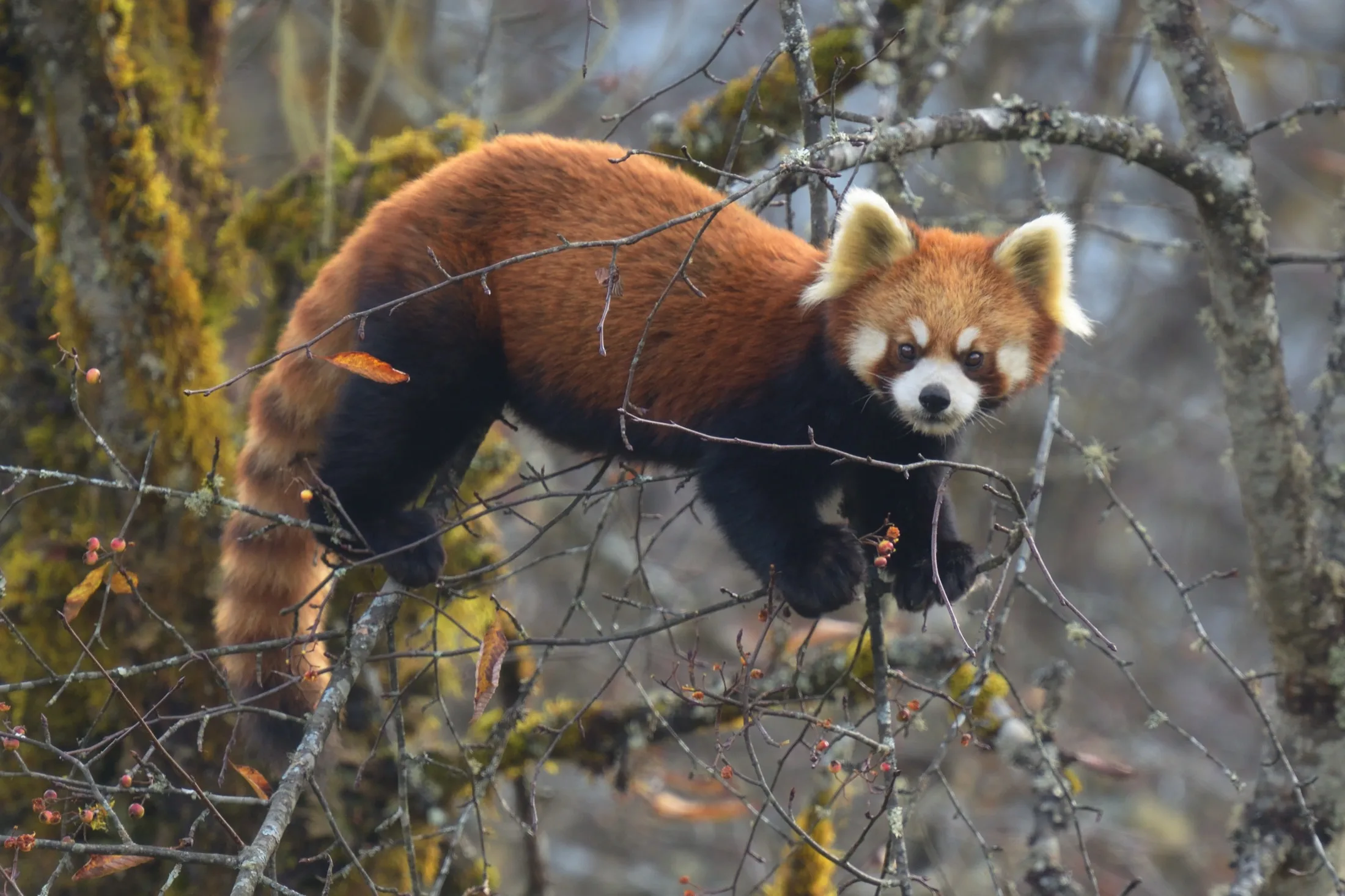
The mid-altitude forest holds golden snub-nosed monkey troops, red panda — a genuinely possible sighting with patience — takin, and a long list of pheasants including golden and koklass.
The bamboo understory is where the giant pandas are, and guided walks explain the signs: chewed culms, distinctive droppings and scent-marked trees. Treat any actual sighting as extraordinary luck.
April to October is the practical season; the high road can close for snow, and the mountains are frequently in cloud.
Practicalities
Wolong is around three to four hours from Chengdu by road through the mountains, a route that has been repeatedly rebuilt after earthquakes and landslides. Altitude is a real consideration on the Balang road — ascend gradually.
If your priority is simply seeing pandas rather than their habitat, the bases nearer Chengdu are easier. Wolong is worth the extra journey for the mountains and the birds as much as for the bears.
Gallery
Wildlife Species
Giant Panda
Very RareMammal · Best time: Possible but exceptionally difficult in the wild
Takin and other mountain mammals
RareMammal · Best time: Quiet sectors and broader reserve routes
Pheasants and Sichuan mountain birds
UncommonBird · Best time: Spring and early summer
Red Panda and forest carnivores
Very RareMammal · Best time: Specialist search effort
Geography
- Terrain
- Steep mountain forest, bamboo understorey, river valleys, alpine meadows, temperate broadleaf and conifer forest
- Elevation
- About 1,200m to over 6,000m across the wider sanctuary system
- Climate
- Mountain temperate climate with wet summers and cool winters
- Area
- Part of the UNESCO Sichuan Giant Panda Sanctuaries totaling over 9,200 km2
Weather
- Best Months
- AprilMayJuneSeptemberOctober
- Avg. Temperature
- 0-24°C
- Rainfall
- Spring and autumn usually offer the best balance of access, forest activity, and mountain visibility, while summer can be wet and landslide-prone
- Humidity
- 50-100%
Getting There
Chengdu with long onward road transfer into Wolong and other sanctuary gateways
Reachable from a major city but still a serious mountain trip, with weather and road conditions shaping how easy it feels
- Panda habitat and mountain natural-history trip
- Sichuan pheasant and forest birding route
- Multi-day reserve-based wildlife and landscape photography stay
(Affiliate link — we may earn a commission.)
Tours & Experiences
Local guides substantially improve Giant Panda sighting odds — compare independent operators and dates for Wolong National Nature Reserve / Giant Panda Sanctuaries below.
(Affiliate links — we may earn a commission.)
Where to Stay
Guesthouses and simple hotels in Wolong-area gateways
Budget to Mid-rangeGuesthouse or Hotel · Most practical base for reserve access
Check availability on Booking.com →Hotels in Chengdu for staging before and after mountain travel
Budget to PremiumHotel · Common access base for the sanctuary region
Check availability on Booking.com →(Affiliate links — we may earn a commission.)